What Is an Indulgence? Plenary and Partial, Explained

A word that arrived carrying its own controversy
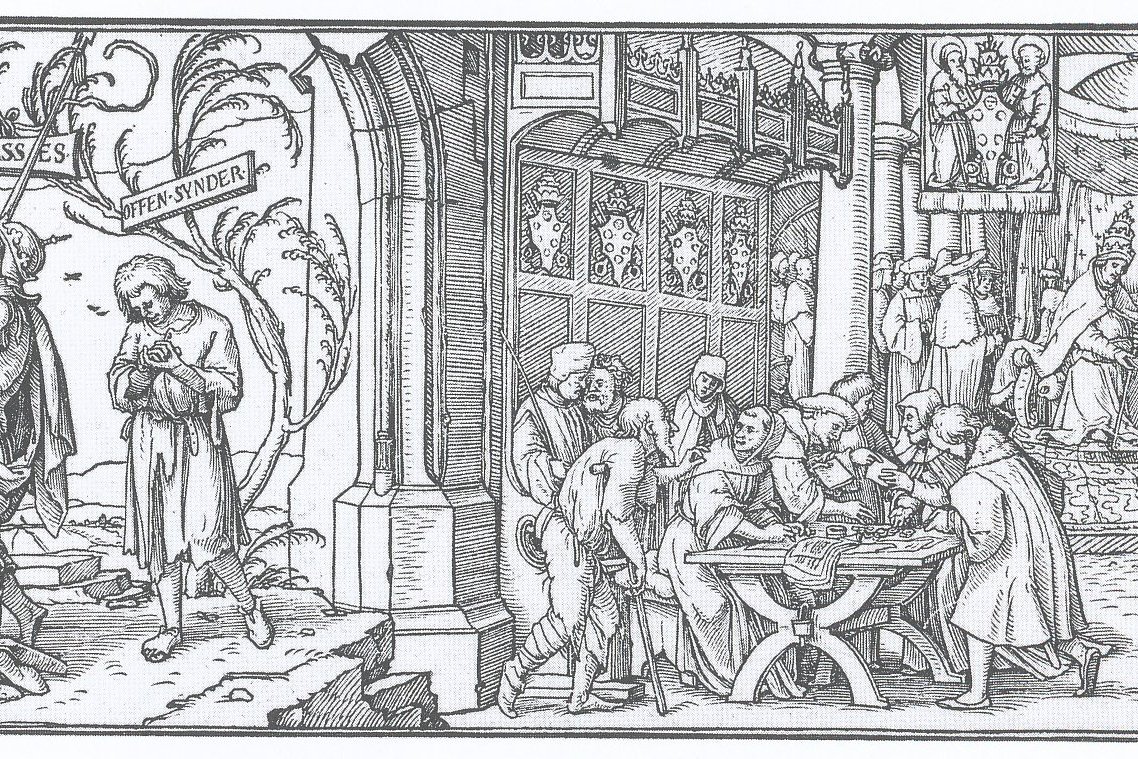
It's hard to write about indulgences without acknowledging the historical weight the word carries. The sale of indulgences by some clergy in the sixteenth century — the practice of offering the remission of temporal punishment in exchange for money — was one of the specific abuses Martin Luther attacked in his Ninety-Five Theses in 1517, and it remains one of the most commonly cited flashpoints of the Reformation. That history is real, and the Catholic Church itself eventually addressed it directly: the Council of Trent, meeting later in that same century, explicitly condemned the abuses connected with indulgences even while reaffirming the underlying doctrine as legitimate. Understanding what an indulgence actually is, separated from the historical scandal attached to its misuse, requires starting somewhere the controversy usually skips past: the difference between guilt and punishment.

Pietro Longhi, The Confession, c. 1750s, Gallerie dell'Accademia, Venice — public domain.
Two consequences of sin, not one
The Catechism's explanation of indulgences opens with a distinction that does most of the conceptual work: "sin has a double consequence. Grave sin deprives us of communion with God... the 'eternal punishment' of sin. On the other hand every sin, even venial, entails an unhealthy attachment to creatures, which must be purified either here on earth, or after death in the state called Purgatory... the 'temporal punishment' of sin" (CCC 1472).
In plain terms: when a Catholic goes to Confession and receives absolution, the guilt of sin — and with it, the eternal punishment that guilt would otherwise carry — is forgiven. But a residual effect can remain, described here as an "unhealthy attachment to creatures," a kind of lingering disorder in the soul that forgiveness alone doesn't automatically undo. That residual effect is what the Church calls temporal punishment, and it's specifically this — not the guilt of sin itself — that an indulgence addresses.
What an indulgence actually does
With that distinction in place, the Catechism's formal definition becomes much clearer: an indulgence "is obtained through the Church who, by virtue of the power of binding and loosing granted her by Christ Jesus, intervenes in favor of individual Christians and opens for them the treasury of the merits of Christ and the saints to obtain from the Father of mercies the remission of the temporal punishments due for their sins" (CCC 1478).
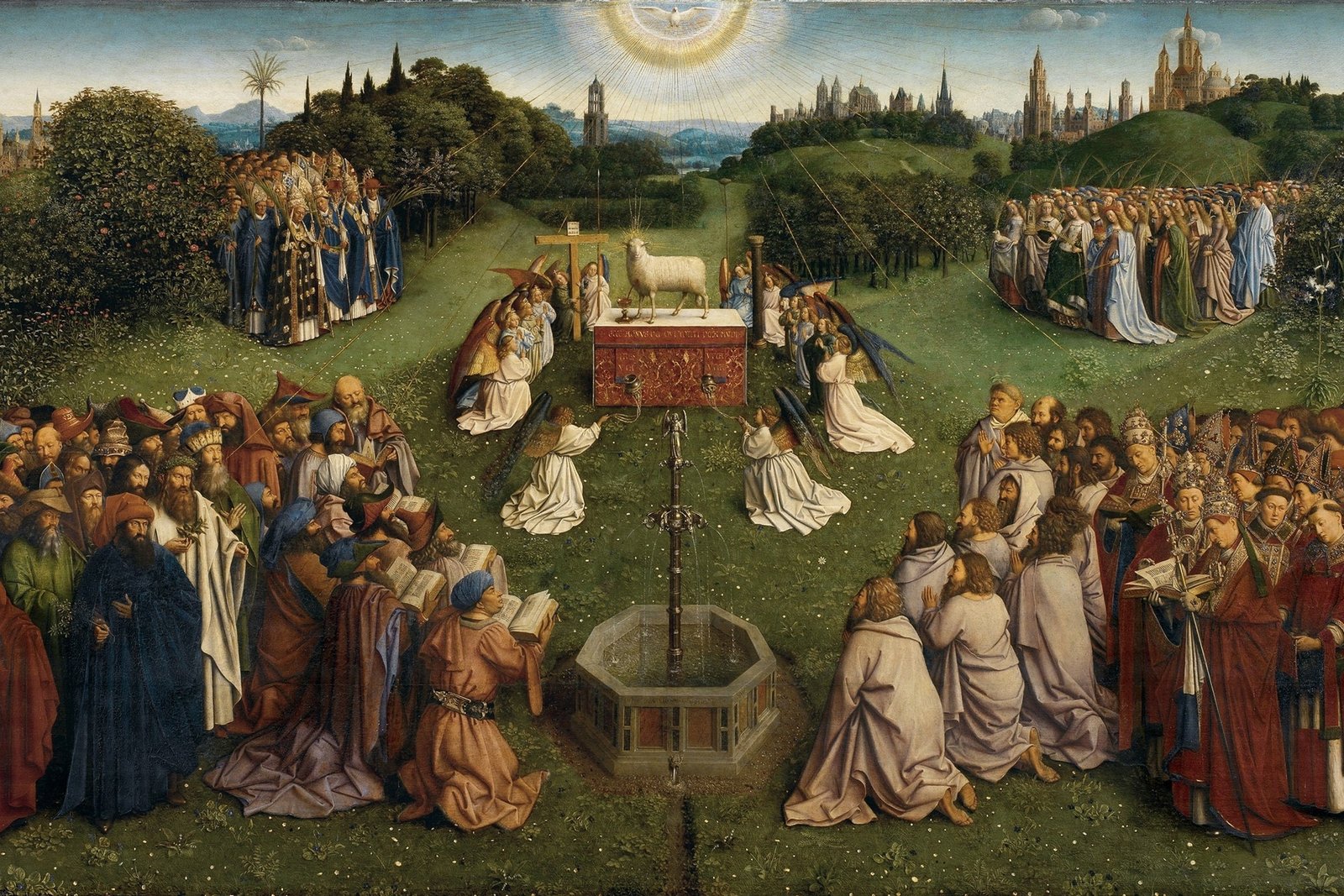
The "treasury" language points to another key idea underneath the doctrine: the Church teaches that the merits of Christ, along with the prayers and good works of Mary and the saints, form an inexhaustible spiritual resource — "the infinite value, which can never be exhausted, which Christ's merits have before God" (CCC 1476) — that the Church can draw on and apply to individual believers through an indulgence. This is tied directly to the doctrine of the communion of saints (see the Communion of Saints explained): because believers are bound together in one spiritual family, the holiness and merit of one can genuinely benefit another, "well beyond the harm that the sin of one could cause others" (CCC 1475).
Plenary versus partial
Indulgences come in two forms. A plenary indulgence remits the entire temporal punishment due for sin at the moment it's obtained. A partial indulgence remits only part of it. Both require the person receiving the indulgence to be in a state of grace — meaning free of unconfessed grave sin — and to have at least a general intention of fulfilling the specific conditions attached.
For a plenary indulgence, those conditions typically include sacramental Confession (within roughly a window of days before or after the indulgenced act), reception of Holy Communion, prayer for the intentions of the Pope, and complete detachment from even venial sin — a requirement the Church treats seriously, since falling short of full detachment reduces what would have been a plenary indulgence to a partial one instead. Specific acts the Church attaches indulgences to vary — certain prayers, visits to particular churches during a Holy Year, specific devotions — and the current, authoritative list is maintained in the Church's Enchiridion of Indulgences.
Not a purchase, and not automatic
Two misunderstandings tend to follow the word "indulgence" wherever it goes, and both are worth naming directly. First: an indulgence has nothing to do with money. Whatever happened historically, current Church law and teaching explicitly forbid tying an indulgence to any financial exchange — the abuses of the sixteenth century are treated as exactly that, abuses, not a legitimate expression of the doctrine. Second: an indulgence doesn't forgive sin. Only sacramental Confession (or, for mortal sin, formal absolution) addresses the guilt of sin and the eternal punishment attached to it. An indulgence works only on temporal punishment already remaining after that forgiveness has taken place — it presupposes forgiveness rather than replacing it.
Extending the benefit to the dead
One further dimension the Catechism highlights: indulgences aren't limited in benefit to the living person who obtains them. "Since the faithful departed now being purified are also members of the same communion of saints, one way we can help them is to obtain indulgences for them, so that the temporal punishments due for their sins may be remitted" (CCC 1479). This is the doctrinal basis for the Catholic custom of offering an indulgence "for the souls in purgatory" — treating it as a genuine act of charity toward someone who has died, not merely a private spiritual benefit for the person performing the act.
A doctrine easy to caricature, harder to dismiss once explained
Stripped of the historical scandal that still clings to the word, what the Church actually teaches about indulgences is a fairly narrow and specific claim: that temporal consequences of sin can remain after guilt is forgiven, and that the Church, drawing on the shared spiritual resources of the communion of saints, can apply remission of those consequences to individual believers under specific conditions. It was never meant to function as a purchase of salvation, and Church teaching today is explicit that it doesn't — but the caricature has outlived the correction in a lot of popular understanding, five centuries on.
Trivia
What is an indulgence, according to Catholic teaching?
What's the difference between a plenary and a partial indulgence?
Can indulgences be obtained for people who have already died?
Did the Catholic Church ever allow indulgences to be sold for money?
Does receiving an indulgence forgive sin?
Related Reading