Praying in Hard Times: 7 Practical Steps

Step one: stop expecting yourself to pray the way you used to
The first and most freeing thing to accept in a crisis is that prayer during suffering often looks nothing like prayer during ordinary life, and that this is not a spiritual failure. The Catechism describes prayer, at its core, as a raising of the heart and mind to God, a living relationship rather than a performance measured by eloquence or composure (CCC 2559). A single repeated word, a wordless sitting in silence, or a prayer that's mostly complaint counts as real prayer. The goal in a crisis isn't to sound the way you sounded before; it's to stay in contact.

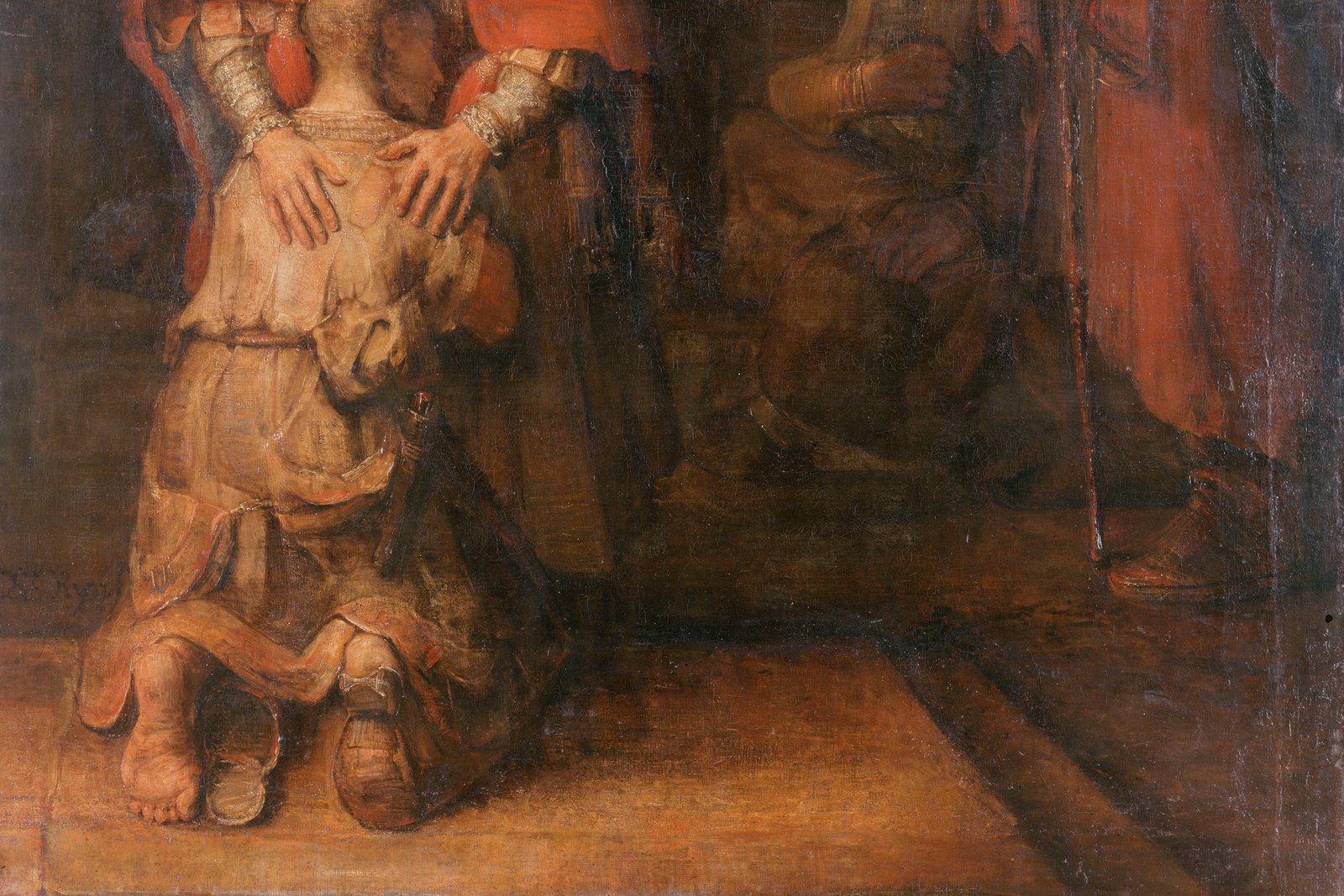
Painting evoking the biblical figure of Job in suffering and prayer — public domain.
Step two: let anger and grief be said out loud, to God directly
Scripture never asks grieving or frightened people to perform calm before God. The Psalms of lament — Psalm 22, which opens "My God, my God, why have you forsaken me?"; Psalm 13, which asks "How long, O Lord? Will you forget me forever?"; Psalm 88, one of the bleakest prayers in the Bible, which ends without resolution at all — model raw, unfiltered honesty directed straight at God rather than around him. Naming exactly what hurts, including anger at God himself, isn't a lapse in faith; it's one of the oldest and most scripturally grounded forms prayer can take.
Step three: borrow words when you don't have your own
There's no requirement to generate original prayers from scratch in the middle of a crisis, and trying to often makes things harder. Praying a Psalm of lament directly, slowly, even one line repeated several times, gives grief somewhere to go without requiring composition. The Our Father works the same way — its petition "deliver us from evil" carries different weight prayed from inside real suffering than it does on an ordinary Tuesday, and reciting it slowly can hold a person up when nothing else comes to mind.
Step four: don't confuse suffering with punishment
One of the most damaging ideas a person can carry into a crisis — often absorbed informally rather than taught outright — is that suffering must be deserved, payment for some past failure. The Gospel of John confronts this directly: when Jesus's disciples ask whether a man was born blind because of his own sin or his parents', Jesus rejects the premise of the question entirely (John 9:1-3). The Catholic Church does not teach that illness, grief, or tragedy are punishments sent by God for personal wrongdoing. Whatever meaning suffering can carry, it is never on those terms.
Step five: it's possible to unite suffering to Christ, without needing to feel that yet
Catholic teaching does hold that suffering, offered in union with Christ's own suffering, can become spiritually fruitful rather than simply wasted (CCC 1521), language rooted in Saint Paul's own words: "Now I rejoice in my sufferings for your sake, and in my flesh I am filling up what is lacking in the afflictions of Christ on behalf of his body, which is the church," (Colossians 1:24). This is worth knowing about, but it is not a feeling a suffering person needs to manufacture on demand, and it is never a claim that God caused the suffering in order to produce that fruit. It's an invitation available whenever, if ever, a person is ready for it — not a task added on top of an already difficult moment.
Step six: let other people carry some of the praying
Crisis is exactly the situation the Catholic understanding of intercessory prayer — asking others, living or among the saints, to pray on one's behalf — is built for. Asking a friend, a parish prayer chain, or a priest to pray for you isn't a lesser substitute for praying yourself; it's the Church acting as a single body, carrying weight together that one person alone often can't. There is no failure in saying plainly, "I can't pray right now — please pray for me."
Step seven: return to a small, steady rhythm as soon as you can
Once the sharpest edge of a crisis has passed even slightly, a short, simple, repeatable prayer practice — even just a minute at the same point each day — tends to help more than waiting to feel ready for something bigger. This mirrors the same principle behind a simple daily prayer routine: consistency matters far more than intensity, especially when energy and concentration are both in short supply. A single Our Father said at the same moment each day can function as an anchor point even on days when nothing else feels possible.
None of this needs to happen in order, or all at once
These seven steps aren't a checklist to complete in sequence during an active crisis — some days will only have room for step one, or step two, and that's enough. What holds them together is a single conviction at the center of Catholic teaching on suffering: that God does not abandon someone in pain, does not send suffering as punishment, and remains reachable even through anger, silence, or prayers that don't feel like they're landing anywhere. The Psalms of lament exist in Scripture precisely because that experience is universal and expected, not a sign that something has gone wrong with a person's faith. Staying in contact, however imperfectly, is what the whole practice comes down to.
Trivia
Is it a sin to feel angry at God during a crisis?
What are the Psalms of lament and how can they help during hard times?
Does the Catholic Church teach that suffering is a punishment from God?
What does it mean to 'unite suffering to Christ'?
Is it okay to pray very short, simple prayers during a crisis instead of longer ones?
Related Reading