The Basilica of the Sacred Heart, Paray-le-Monial

A Cluniac Priory in a Small Burgundy Town
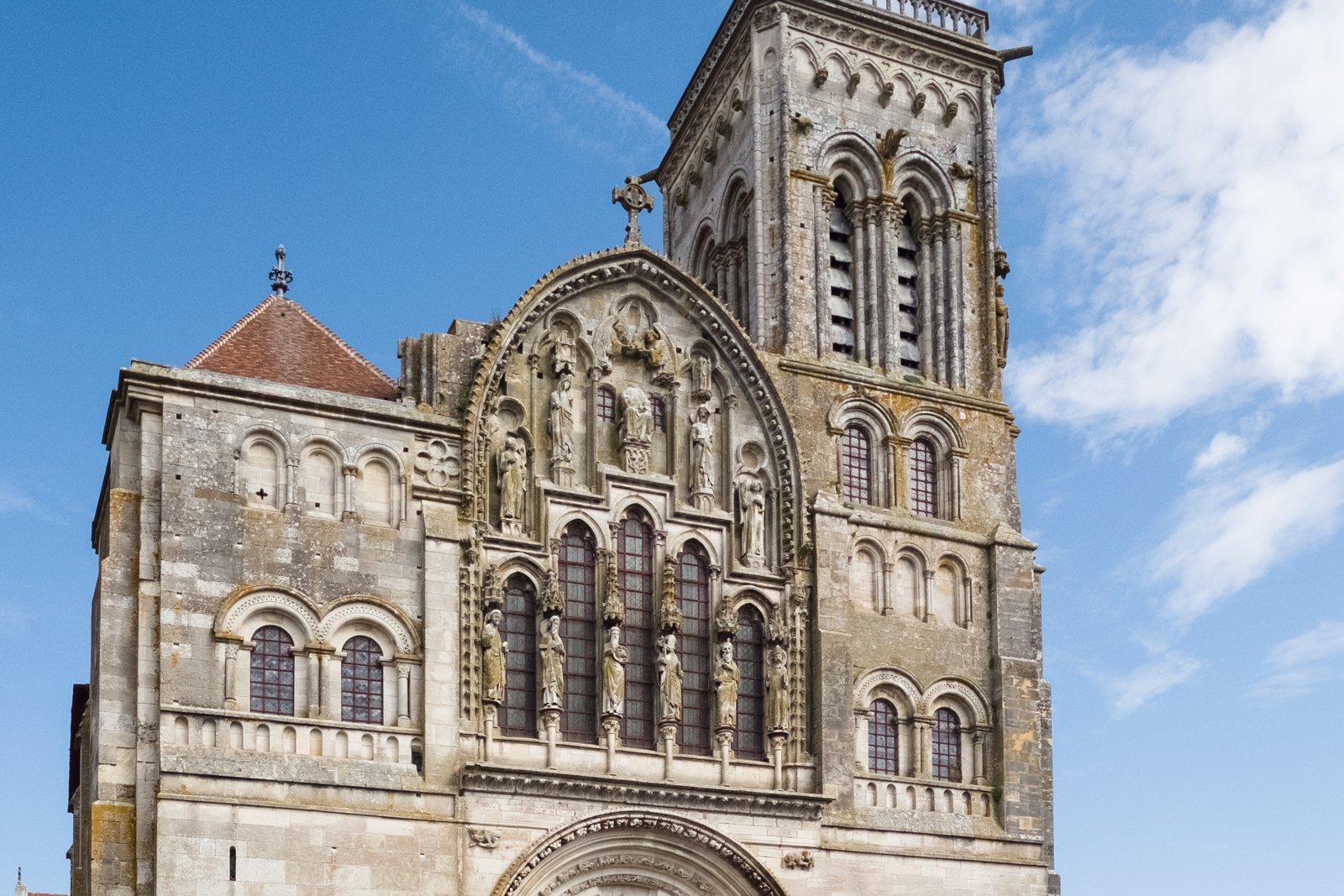
Long before it had anything to do with the Sacred Heart, the church at Paray-le-Monial was a Benedictine priory attached to the great abbey of Cluny, some sixty miles away. Cluny was, in the 11th and 12th centuries, the most influential monastic order in Western Christendom, and its mother church was the largest building in Europe until Saint Peter's Basilica surpassed it centuries later. The priory church at Paray, built mostly between about 1090 and 1109, was designed as a smaller echo of Cluny's abbey — a deliberate architectural quotation, so that pilgrims and monks moving between the two houses would recognize the family resemblance in the rounded Romanesque arches, the tiered apse, and the twin towers of the west front.
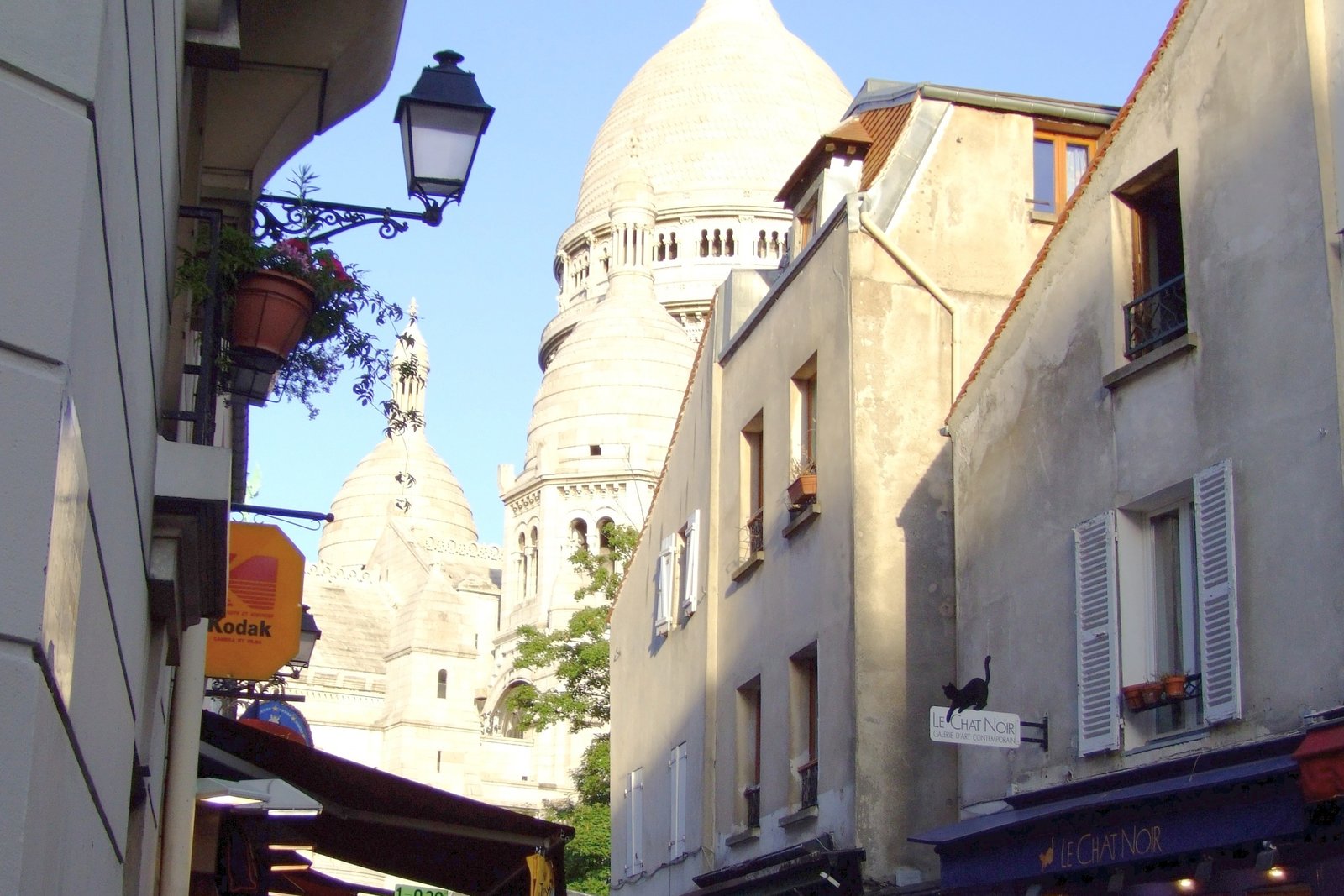
AlfvanBeem, Basilique du Sacré Coeur, Paray-le-Monial, 2008 — public domain (CC0).
The town itself takes its name from the Latin Paredum, and it developed around the priory in the centuries that followed, remaining a modest provincial settlement in the Charolais region of Burgundy — the kind of place with no particular claim on history until the 1670s, when a young nun in its Visitation convent began describing what she saw in prayer.
Margaret Mary Alacoque and the Visions
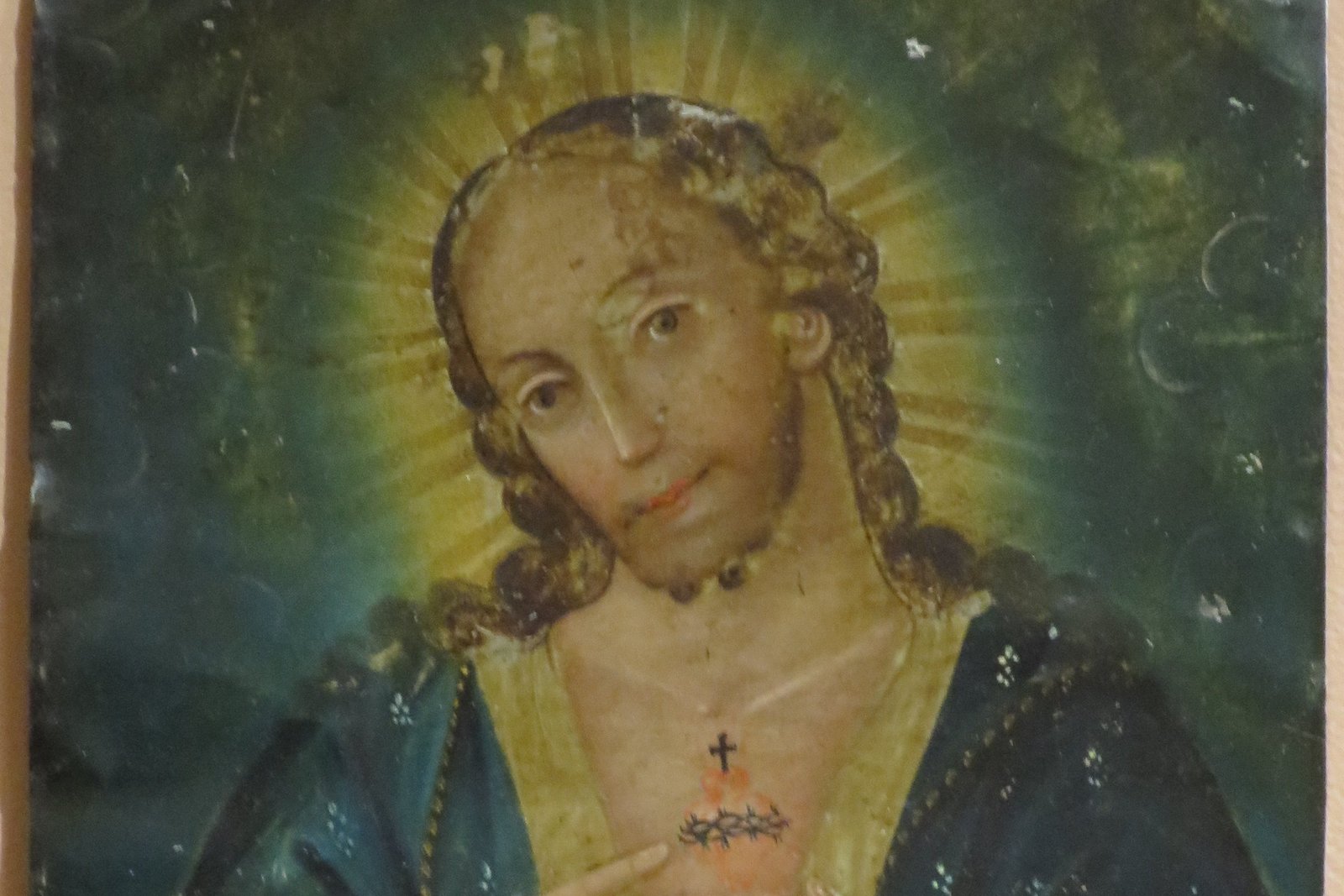
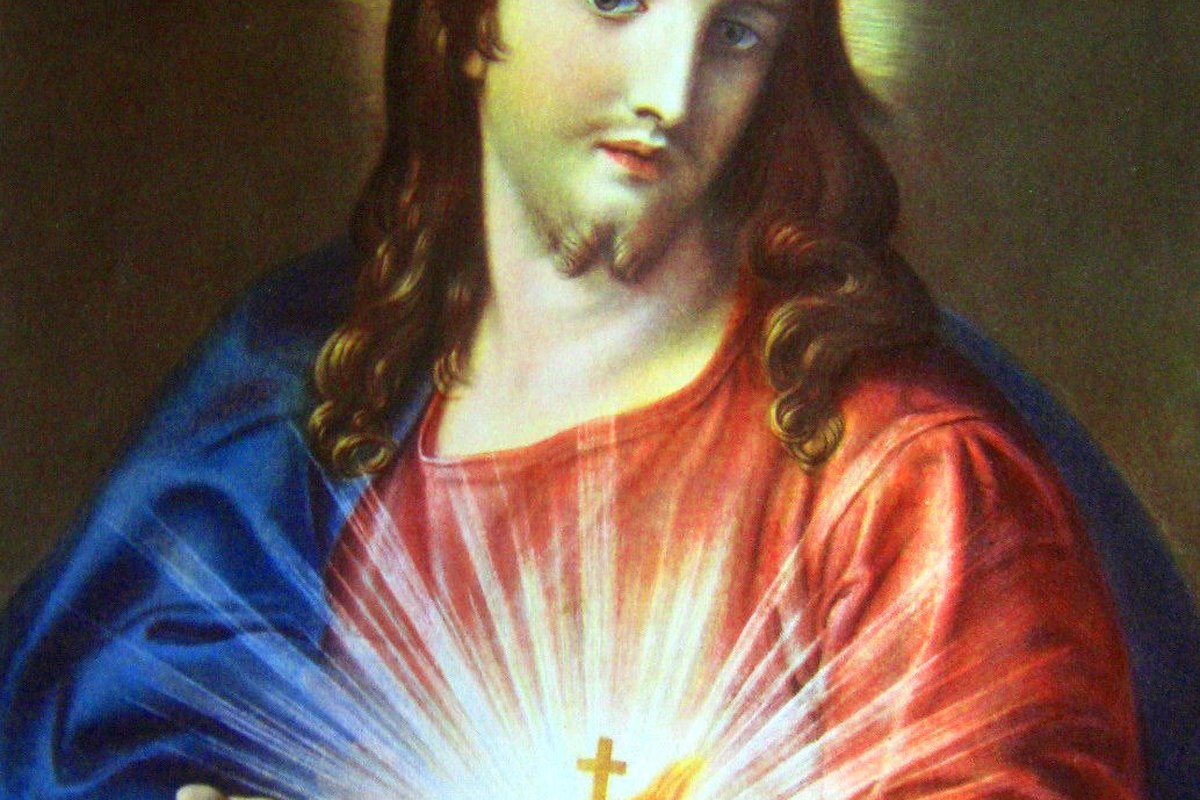
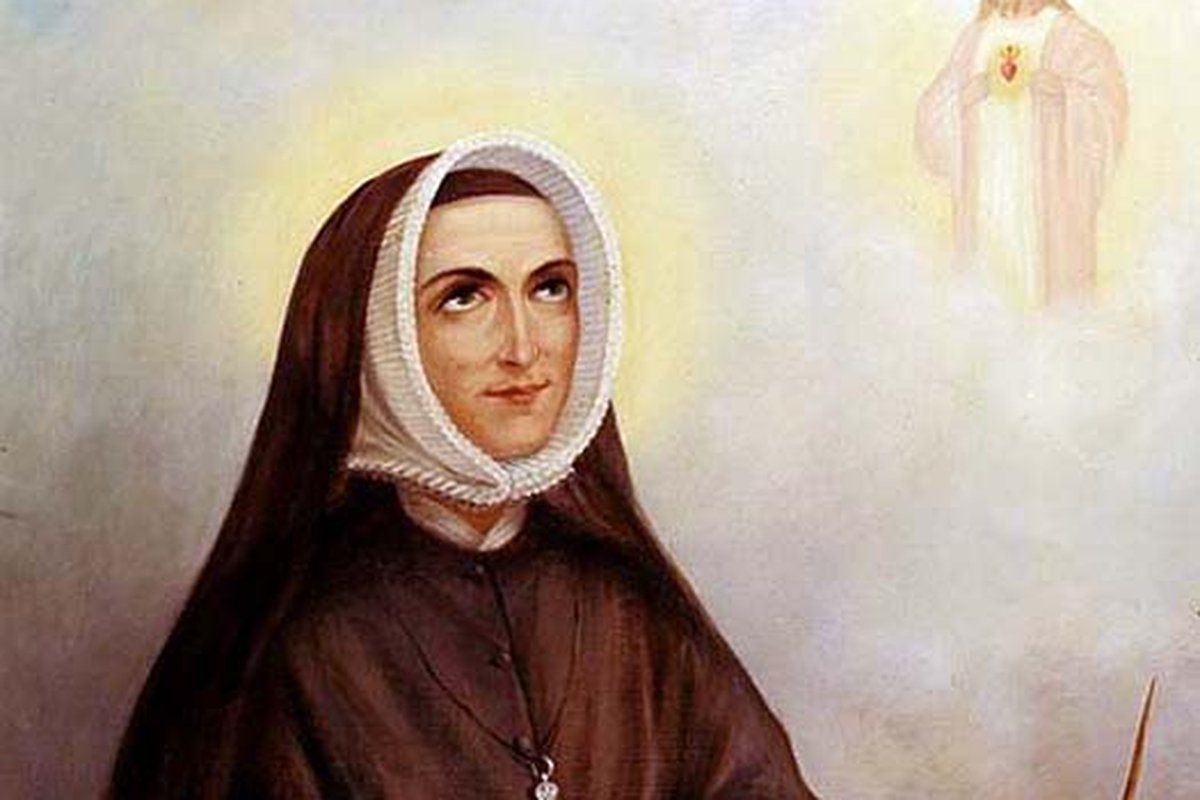
Margaret Mary Alacoque entered the Visitation convent at Paray-le-Monial in 1671, at the age of twenty-four, after a childhood marked by illness and a strong, early attraction to religious life. Between December 1673 and June 1675, she reported a series of visions of Christ, the most significant occurring on the octave of Corpus Christi in June 1675, in which she described Christ showing her his heart and asking that a feast be established in its honor, with reparation offered for the coldness and ingratitude he said he received from those he loved.
The visions were not immediately welcomed, even within her own religious community — her superiors were initially skeptical, and it took the support of her spiritual director, the Jesuit priest Claude La Colombière, who was stationed at Paray from 1675 to 1676, to give the reported experiences credibility that eventually reached Rome. The Church's approach to private revelations like these has always been cautious and gradual: the Vatican does not require Catholics to believe every visionary's account, but it can, after careful investigation, recognize a set of reported apparitions as worthy of belief and spiritually fruitful, which is the status Margaret Mary's visions eventually received. She was canonized in 1920.
From a Provincial Devotion to a Universal Feast
The devotion Margaret Mary described spread slowly at first, largely through Jesuit promotion, and met resistance in some theological circles that questioned the propriety of venerating a physical organ, even symbolically. That resistance eased over the following century as theologians clarified that devotion to the Sacred Heart honors Christ's human and divine love as a whole, using the heart as its traditional symbol — not the physical organ in isolation. Pope Pius IX extended the Feast of the Sacred Heart to the universal Church calendar in 1856, and Pope Leo XIII consecrated the entire human race to the Sacred Heart in 1899, cementing the devotion's place as one of the most significant in modern Catholic practice.
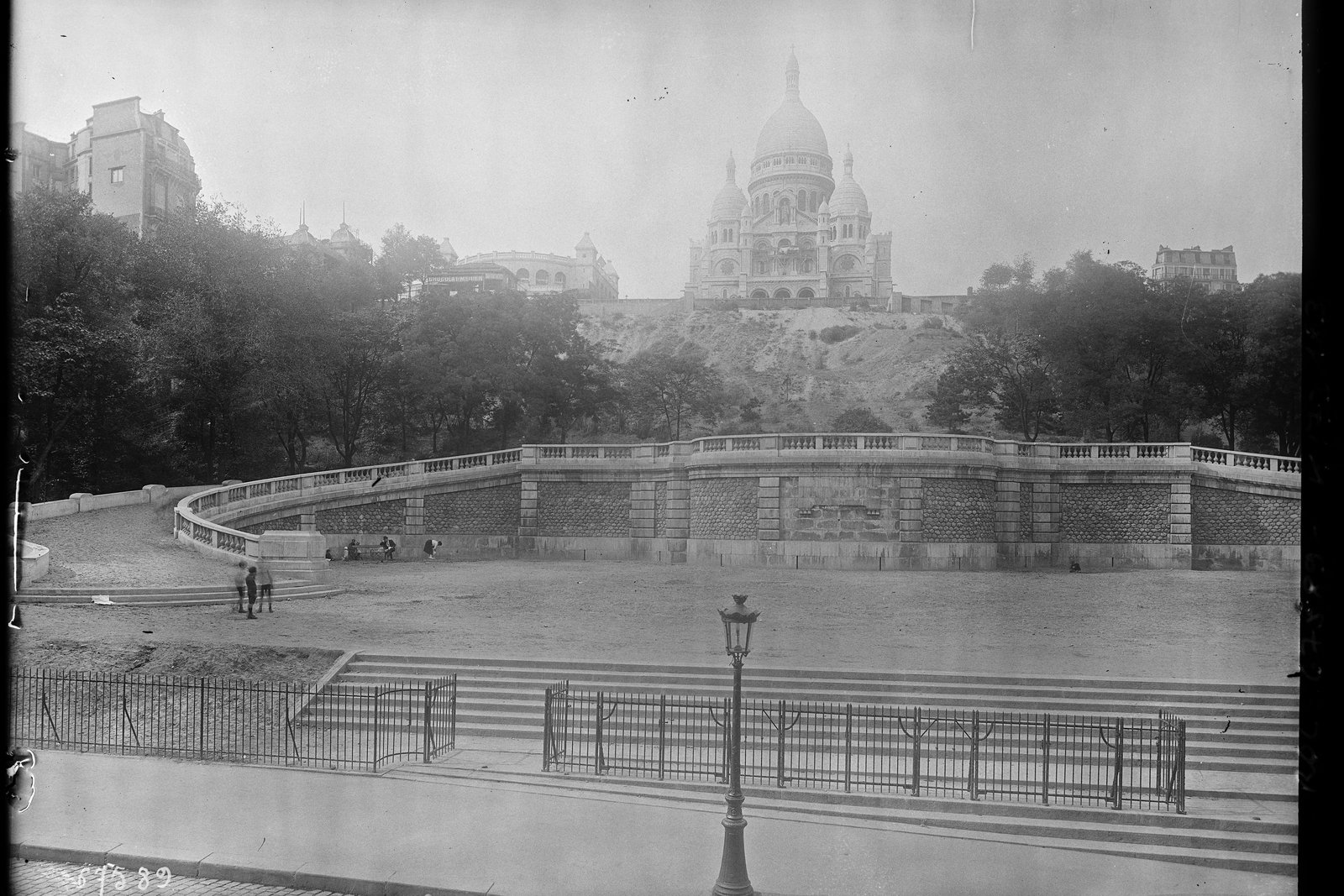
The priory church itself was elevated to the rank of minor basilica in 1875, two centuries after the visions and in the same decade that saw a surge of renewed devotional interest across France, partly in response to the national trauma of the Franco-Prussian War — a period that also produced the Basilica of Sacré-Cœur in Paris, dedicated to the same devotion on a much larger, more famous stage.
The Romanesque Church Today
What makes Paray-le-Monial distinctive among Sacred Heart pilgrimage sites is that its architecture predates the devotion by nearly six centuries. Unlike the Sacré-Cœur in Paris, purpose-built in the late 19th century specifically to house the new devotion, the basilica at Paray is a genuine Romanesque survival — one of the best-preserved Cluniac-style churches in France, with its rounded barrel-vaulted nave, its stepped apse with radiating chapels, and the sober, weighty stonework typical of monastic architecture from the era of Cluny's greatest influence. Visitors walking its nave are standing in essentially the same physical space Margaret Mary would have known, unchanged in its basic form since long before her lifetime.
The convent where she lived, known today as the Chapel of the Apparitions, stands adjacent to the basilica and holds her relics; it remains the more intimate devotional focus for many pilgrims, while the basilica itself continues to function as a parish and pilgrimage church and hosts a large annual summer gathering associated with the Chemin Neuf Community.
For more on how the Church distinguishes approved private revelation from formally defined dogma, and for other pilgrimage sites tied to reported visions, see Grotto of Massabielle, Lourdes and Sanctuary of Our Lady of Fátima. Readers interested in the Cluniac monastic tradition that shaped this church's architecture can read more in Abbey of Cluny.
Trivia
Who had the visions of the Sacred Heart at Paray-le-Monial?
What kind of building is the Basilica of the Sacred Heart?
Is the Feast of the Sacred Heart an official Church celebration?
Does the Church require belief in the Paray-le-Monial visions?
What happens at Paray-le-Monial today?
Related Reading