The Sacred Heart Novena: The Prayer Padre Pio Prayed Daily

A prayer built on three promises, not one request
Most novenas repeat a single prayer, day after day, for nine days. The Sacred Heart Novena works differently. Its most widely circulated traditional form, called the "Efficacious Novena to the Sacred Heart of Jesus" and attributed to Saint Margaret Mary Alacoque, is structured around three separate sayings of Jesus, each treated as a distinct petition within a single prayer session — and that full three-part prayer is what gets repeated across the nine days of the novena, rather than one short formula.
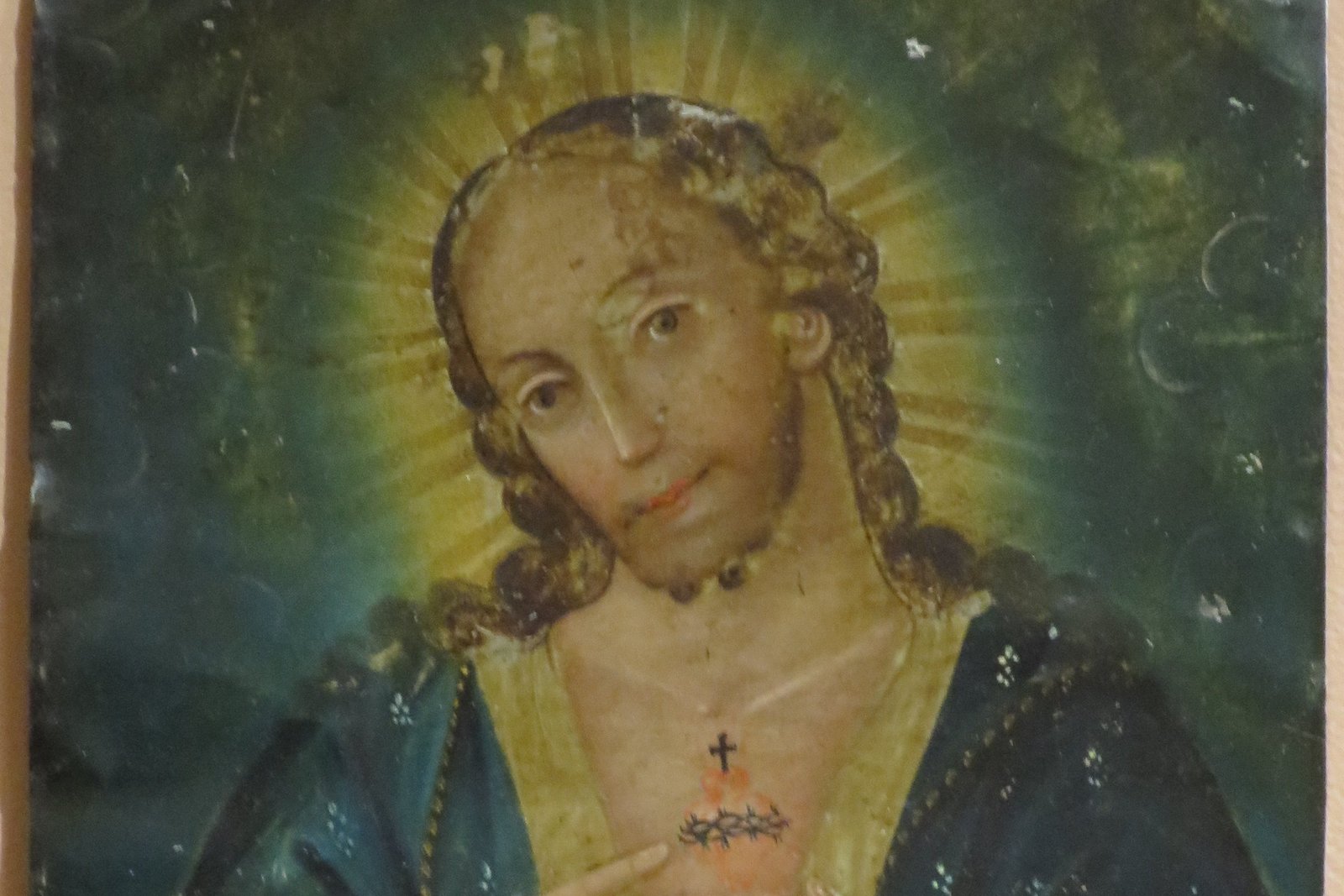
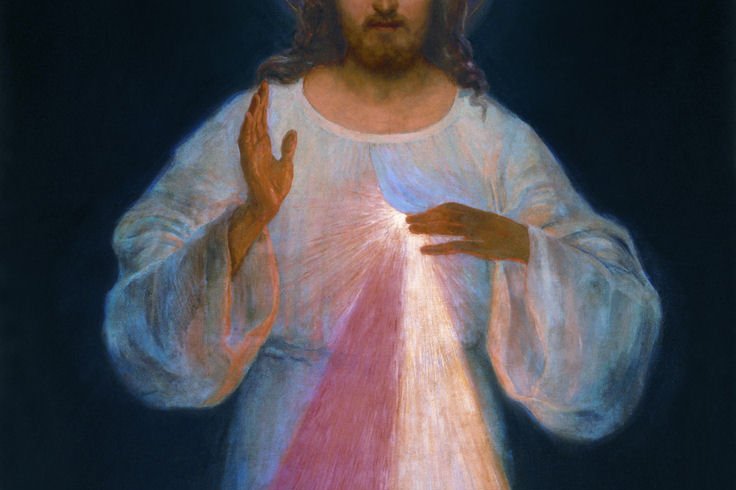
Anonymous Mexican painter, The Sacred Heart of Jesus, oil on tin, mid-19th century, El Paso Museum of Art — public domain.
Each of the three parts opens with Jesus's own words, echoing Gospel teaching on persistent prayer — the first recalling his promise that "ask and you will receive, seek and you will find, knock and it will be opened to you" (compare Matthew 7:7, NABRE) — followed by the petitioner naming a specific request, then an Our Father, a Hail Mary, and a Glory Be. Each of the three sections closes with the same refrain: "Sacred Heart of Jesus, I place all my trust in you."
The full traditional text
I. O my Jesus, you have said: "Truly I say to you, ask and you will receive, seek and you will find, knock and it will be opened to you." Behold I knock, I seek and ask for the grace of... (here name your request). Our Father... Hail Mary... Glory Be to the Father... Sacred Heart of Jesus, I place all my trust in you.
II. O my Jesus, you have said: "Truly I say to you, if you ask anything of the Father in my name, he will give it to you." Behold, in your name, I ask the Father for the grace of... (here name your request). Our Father... Hail Mary... Glory Be to the Father... Sacred Heart of Jesus, I place all my trust in you.
III. O my Jesus, you have said: "Truly I say to you, heaven and earth will pass away but my words will not pass away." Encouraged by your infallible words I now ask for the grace of... (here name your request). Our Father... Hail Mary... Glory Be to the Father... Sacred Heart of Jesus, I place all my trust in you.
O Sacred Heart of Jesus, for whom it is impossible not to have compassion on the afflicted, have pity on us miserable sinners and grant us the grace which we ask of you, through the Sorrowful and Immaculate Heart of Mary, your tender Mother and ours.
The prayer traditionally closes with the Hail, Holy Queen and an invocation of Saint Joseph. As with most circulated devotional texts, the exact wording appears with minor variations across different printed sources; the version above follows the text distributed by EWTN under the same title.
Where the devotion comes from
The Sacred Heart Novena is inseparable from the visions of Margaret Mary Alacoque, a French Visitation nun who reported a series of apparitions of Jesus between December 1673 and June 1675 at the convent of Paray-le-Monial. In these visions, Alacoque said Jesus revealed his own heart to her directly — visible outside his chest, burning, encircled by a crown of thorns — and asked that devotion to it spread throughout the Church. The devotion faced early controversy and skepticism, including from within Alacoque's own community, before gradually gaining wider acceptance, championed especially by the Jesuits, until Pope Pius IX established the universal Feast of the Sacred Heart in 1856. For the full story of the visions and what the image's flames and thorns represent, see The Sacred Heart of Jesus, and for how artists have depicted the image across centuries, see The Sacred Heart in Art.
Padre Pio's daily prayer
What sets this particular novena apart from many others devoted to the Sacred Heart is a detail preserved in the way it's typically printed and distributed today: a note, appended directly beneath the prayer, stating that Padre Pio recited this novena every day for everyone who had asked him for prayers. Padre Pio — the twentieth-century Capuchin friar associated with the stigmata and reportedly extraordinary spiritual gifts — received a steady stream of written prayer requests throughout his life at the friary of San Giovanni Rotondo, and this novena became his daily response to all of them at once, folding an unknown number of individual petitions into a single, repeated act of trust in the Sacred Heart. For more on his life, see Saint Padre Pio, and for a novena built specifically around asking his own intercession, see The Padre Pio Novena.
Trust as the actual content of the prayer
Read closely, the Efficacious Novena isn't really about the specific favor being requested at all — the phrase "here name your request" appears three times precisely because the wording of the petition is left open, a blank the person praying fills in silently. What repeats, fixed and unchanging, is the act of trust: three quotations of Jesus's own promises about prayer, three acknowledgments that those promises still hold, and three declarations — "I place all my trust in you" — that frame confidence itself as the substance of what's being asked for, whatever the specific request turns out to be.
Trivia
What is the Efficacious Novena to the Sacred Heart of Jesus?
Is it true that Padre Pio prayed this novena every day?
When is the Sacred Heart Novena traditionally prayed?
What do the three quoted sayings of Jesus in the novena come from?
Why does the prayer repeat 'Sacred Heart of Jesus, I place all my trust in you' three times?
Related Reading