The Metropolitan Cathedral of Brasília

A capital built from nothing, and a cathedral built to match
Brasília exists because Brazil's government decided in the 1950s to move its capital from coastal Rio de Janeiro to a newly constructed city carved out of the country's central highlands, a project meant to symbolize national modernization and open up Brazil's underdeveloped interior. President Juscelino Kubitschek gave architect Oscar Niemeyer, already one of Latin America's most celebrated modernist designers, and urban planner Lúcio Costa the job of designing an entire capital essentially from a blank slate — government buildings, housing, boulevards, and, inevitably, a cathedral to serve the new city's Catholic population.
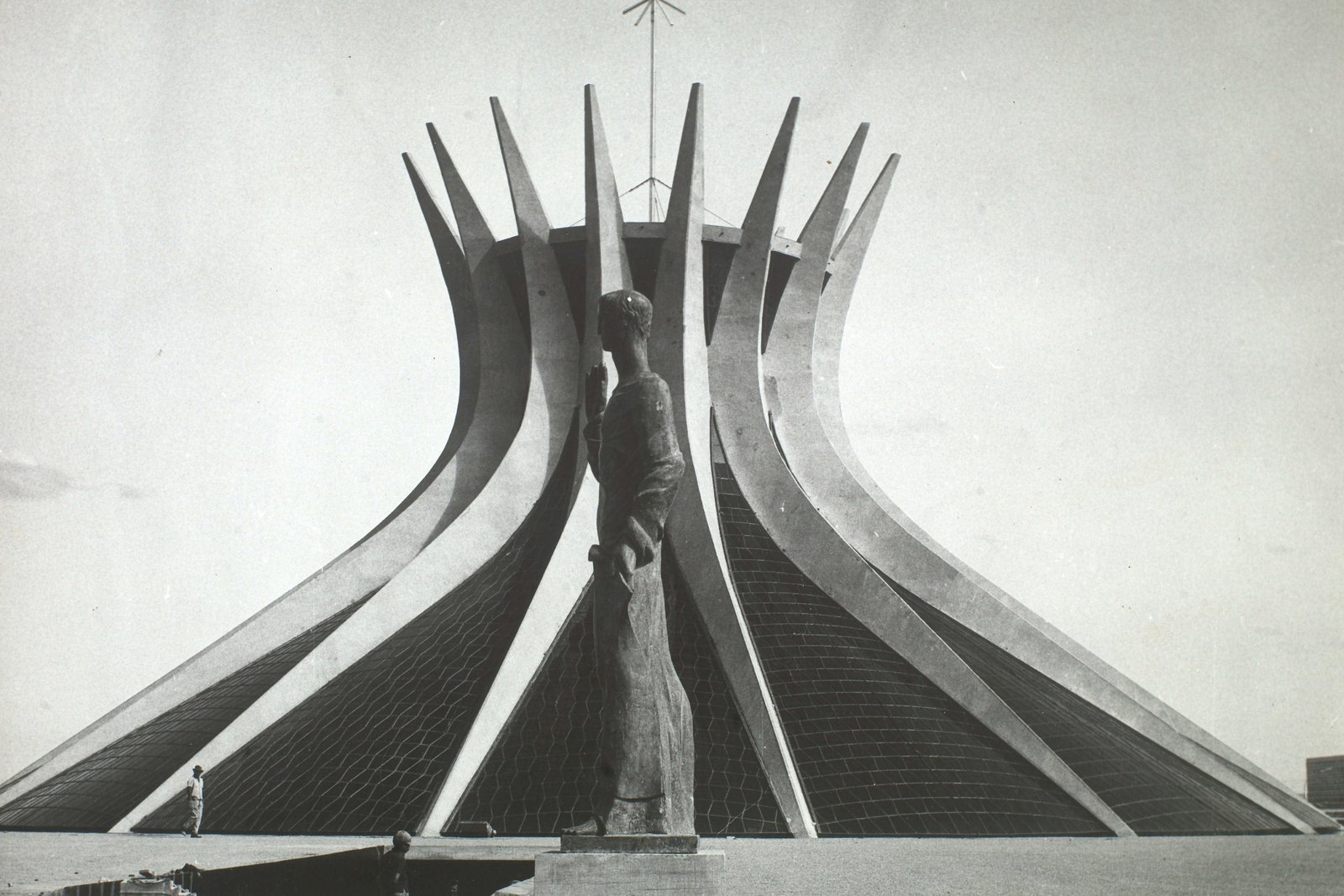
Photograph, 1970, unknown author, Arquivo Nacional do Brasil -- public domain, Wikimedia Commons.
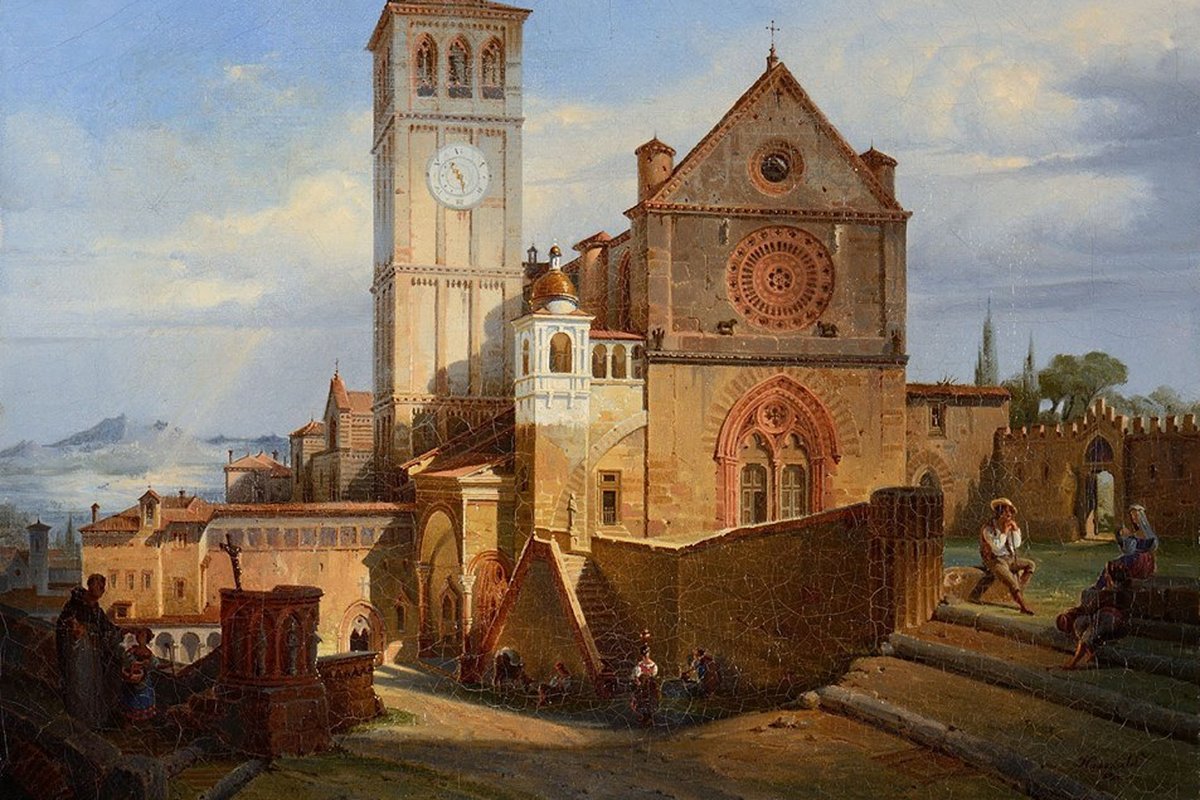
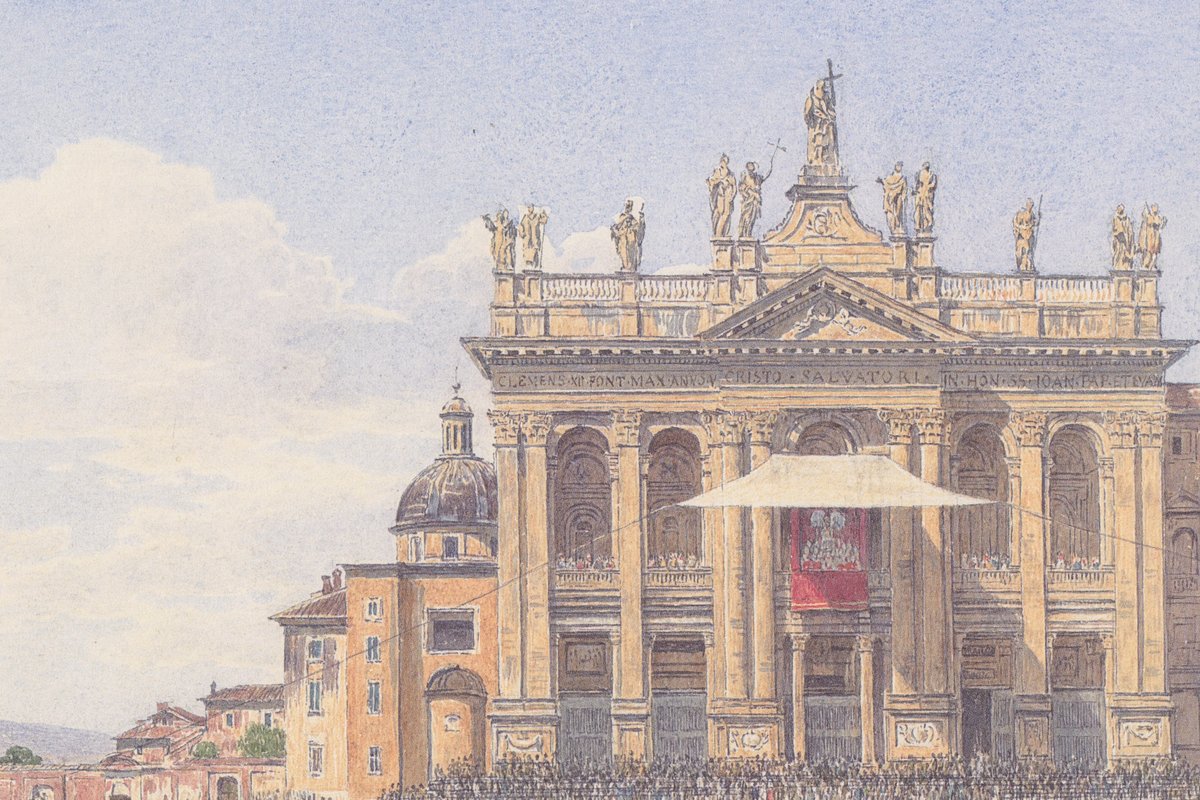
Niemeyer, a committed modernist who had spent decades developing a distinctive style built around sweeping curved concrete forms rather than the straight lines and right angles of most International Style architecture, had no interest in echoing the Gothic Revival cathedrals popular in 19th- and early 20th-century church-building elsewhere in the Americas, buildings like St. Patrick's Cathedral in New York. His design for Brasília's cathedral, developed alongside the rest of the new capital through the late 1950s, would instead become one of the purest expressions of his signature style ever built for religious use.
Sixteen columns and a hidden nave
The cathedral's structure is deceptively simple to describe and genuinely difficult to build: sixteen identical curved, hyperboloid concrete columns, each weighing more than 90 tons, arranged in a ring and angled outward and upward from a common base near ground level, fanning out as they rise before curving back inward slightly near their tips. Between the columns, panels of stained glass fill the gaps, letting colored light flood the interior. Seen from a distance, the whole structure reads immediately as a crown — an impression Niemeyer and the Church both leaned into by placing bronze statues of the crucified Christ and the twelve apostles outside the entrance, inviting the more specific and theologically loaded reading of a crown of thorns.
What surprises most first-time visitors is what the exterior columns don't reveal: almost the entire worship space of the cathedral sits below ground level. Visitors enter through a dim, low underground passageway — deliberately restrained and almost claustrophobic by design — before emerging suddenly into the main circular nave, where the sixteen columns soar overhead and the stained-glass ceiling, completed gradually through the 1970s in shades of blue, green, and white meant to evoke sky and sea, floods the space with color. The contrast between the dark approach and the sudden burst of light overhead is not accidental; it's the building's central architectural idea, engineered to produce something close to a physical experience of revelation.
Inside, three bronze angel figures by sculptor Alfredo Ceschiatti hang suspended on cables from the ceiling, appearing to hover weightlessly above worshippers below — a detail that reinforces the sense of an interior built around light and apparent weightlessness rather than the mass and permanence a stone Gothic nave conveys. A separate freestanding bell tower, disconnected from the main cathedral building, houses four bronze bells that were a gift from Spain, another deliberate architectural choice keeping the cathedral's circular form uninterrupted by any single dominant vertical element.
Consecrated in 1970, still finding its final form for years after
Construction on the cathedral ran alongside the broader building of Brasília itself through the late 1950s and 1960s, and the building was formally consecrated on May 31, 1970, even though several interior elements — including sections of the stained glass and some of the sculptural details — were completed only gradually over the years that followed. That staggered completion is itself fairly typical of the whole city Niemeyer and Costa designed: Brasília was built at extraordinary speed for a capital of its scale, inaugurated in 1960 after roughly four years of construction, but many of its individual buildings, the cathedral included, continued to be finished and refined well after their formal dedication ceremonies.
A deliberate departure, not an accident of era
It would be easy to read Brasília's cathedral simply as a product of its moment — a mid-century modernist building that happened to be a church, rather than a design that thought carefully about what a cathedral could be. That reading undersells what Niemeyer was actually doing. Compare the building to a cathedral like Chartres or Milan's Duomo, both built up over centuries by generations of masons working in stone, their height and ornament meant to draw the eye upward toward heaven through sheer physical mass and accumulated craft. Brasília's cathedral pursues the identical theological goal — a building meant to lift a worshipper's attention toward the transcendent — through the opposite means entirely: thin curved concrete instead of heavy stone, a single decade of construction instead of centuries, and a worship space hidden below ground that erupts into light rather than one that climbs visibly toward the sky from the outside. It's a genuinely different architectural language arguing for the same spiritual destination, and more than fifty years after its consecration, it remains one of the most distinctive religious buildings raised anywhere in the 20th century.
Trivia
Who designed the Metropolitan Cathedral of Brasília, and when was it built?
Why does the cathedral look like a crown or a crown of thorns?
Is most of the cathedral actually underground?
How does the cathedral's design compare to older European Gothic cathedrals?
What is inside the cathedral besides the stained-glass ceiling?
Related Reading