The Vatican Museums

A pope, a vineyard, and a statue
The Vatican Museums did not begin as a museum at all — they began as one Renaissance pope's personal enthusiasm for ancient sculpture. In January 1506, a vineyard owner working land near Rome's Esquiline Hill dug up a large, dramatically carved marble group depicting Laocoon, a Trojan priest, and his two sons being crushed by sea serpents. Pope Julius II, who had a genuine passion for classical antiquity, acquired it almost immediately and installed it in a courtyard of the Belvedere Palace, where it remains today.
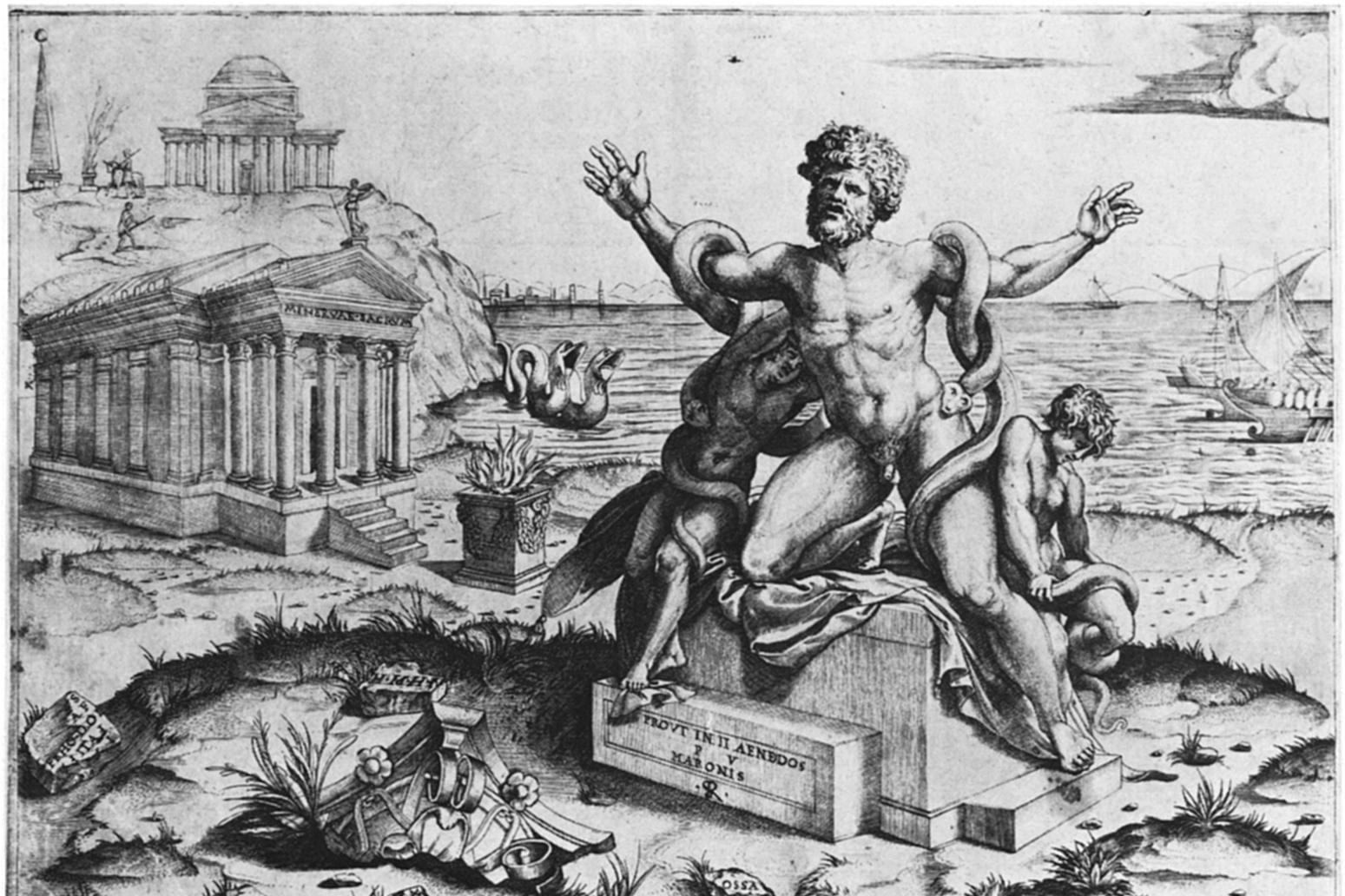
Marco Dente, engraving after the Laocoön group, c. 1510-1527 — public domain.
That purchase is generally treated as the founding moment of what would become the Vatican Museums, but it built on groundwork laid a half-century earlier. Pope Nicholas V, in the mid-1400s, had already begun assembling a papal library and commissioned the rebuilding of St. Peter's Basilica, establishing the Vatican as a serious center of patronage well before Julius arrived. Julius, though, was the one who turned that groundwork into a public-facing collection, commissioning the architect Donato Bramante to build the Belvedere Courtyard specifically to display his growing trove of ancient statuary.
The same pope who hired Michelangelo
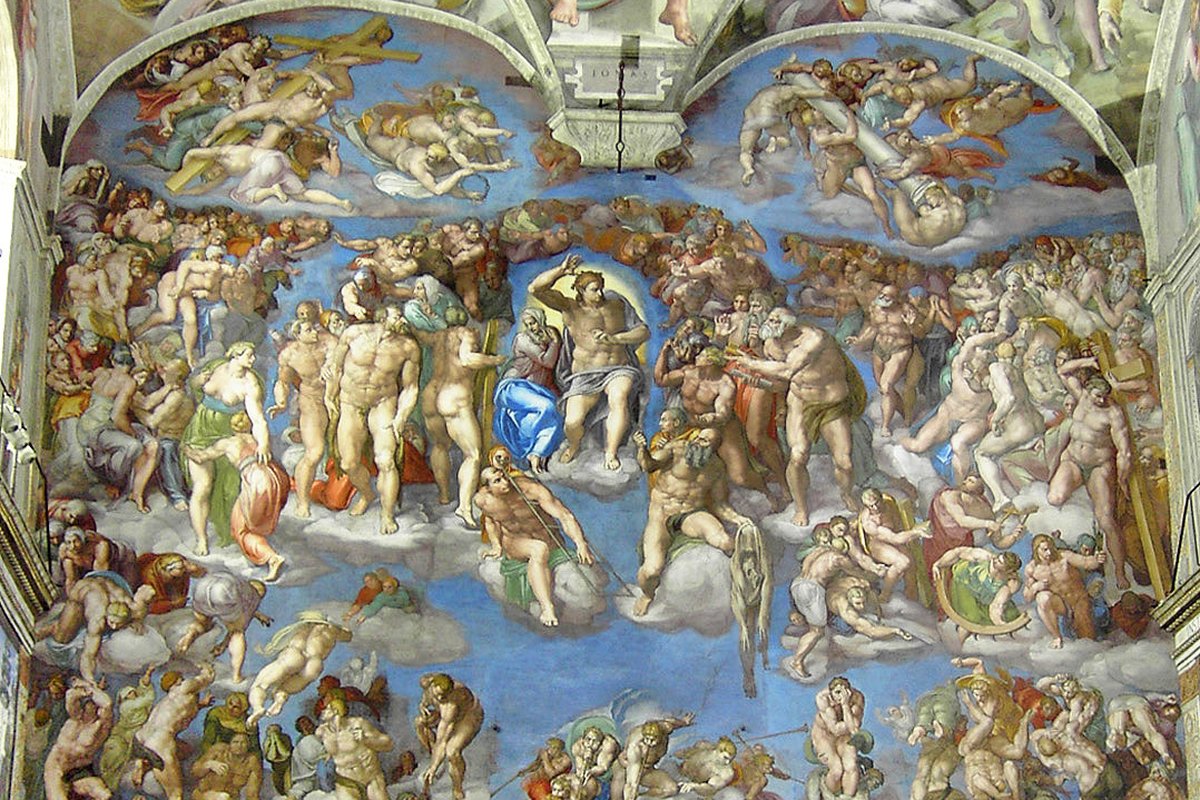
Julius II's influence on the Vatican's art collection goes well beyond the Laocoon. In the same decade, he commissioned Raphael to decorate a suite of papal apartments — now known simply as the Raphael Rooms — with frescoes including The School of Athens, one of the most reproduced images in Western art. And in 1508, Julius made the decision, over Michelangelo's own objections, to have him paint the ceiling of the Sistine Chapel, a project that took roughly four years and produced what remains the most famous ceiling in the world. Readers curious about that project specifically can find the full story in this blog's article on the Sistine Chapel, which today functions as one gallery within the larger Museums complex rather than a separate destination.
Successive popes kept expanding the collection for centuries afterward — through purchases, excavations, diplomatic gifts, and the incorporation of entire prior collections — turning what had started as one pope's personal taste into an institutional undertaking spanning the reigns of dozens of his successors.
Some of that later expansion came through dramatic circumstance rather than deliberate collecting. Napoleon's forces looted a substantial portion of the Vatican's holdings in the 1790s under the terms of the Treaty of Tolentino, carting statues, manuscripts, and paintings off to Paris; a number of these works were returned to Rome only after Napoleon's defeat, following diplomatic efforts led in part by the sculptor Antonio Canova, who negotiated on the papacy's behalf at the Congress of Vienna. That episode is a reminder that the Museums' current holdings reflect not just centuries of acquisition, but also, at points, the fallout and recovery from Europe's own political upheavals.
From private privilege to public museum
For much of the collection's early history, access was a matter of rank rather than right — Julius II permitted artists, nobles, and scholars into the Belvedere courtyards, but ordinary visitors had no such access. That changed in 1771, when Pope Clement XIV formally opened the papal collections to the public, a notably early date by the standards of European museums, many of which didn't open their doors to general visitors until the following century. Clement's successor, Pius VI, continued expanding public access and gallery space, and the two are jointly credited with transforming a papal hobby into something recognizably like a modern museum.
What's actually inside
The scale of the Vatican Museums today can be startling to first-time visitors expecting a single building. The complex spans dozens of separate galleries — commonly counted around 54 — connected through a network of papal palaces, courtyards, and corridors that together form one continuous route. Highlights include the Gallery of Maps, its ceiling and walls covered in enormous painted topographical maps of Italy; the Pio-Clementino Museum's collection of classical sculpture, including the Laocoon and the Apollo Belvedere; the Egyptian and Etruscan collections; and the Gallery of Tapestries. Nearly every corridor is itself decorated, meaning visitors are often looking at significant art on the ceilings and walls of rooms that exist purely to connect one gallery to the next.
The tour traditionally ends at the Sistine Chapel, which functions as the emotional and artistic climax of a visit precisely because it comes last — visitors arrive there having already walked past several kilometers of accumulated papal patronage, a five-century record of popes acting as some of history's most consequential art collectors.
A museum still growing
The Vatican Museums remain an active institution rather than a fixed historical monument — modern and contemporary religious art has been added to the collection over the past century, and conservation work continues constantly, including major restoration campaigns on the Sistine ceiling itself in the 1980s and '90s that revealed colors far brighter than anyone alive had ever seen on Michelangelo's frescoes. What began with one marble statue and a curious pope has become one of the most visited museum complexes on earth.
Trivia
When were the Vatican Museums founded?
Are the Sistine Chapel and the Vatican Museums the same thing?
When did the Vatican Museums open to the public?
How large are the Vatican Museums?
Who commissioned Raphael's Rooms in the Vatican Museums?
Related Reading