Saint Cornelius the Centurion

A soldier who prayed like a believer before he was one
Cornelius appears in Acts 10 already described in terms most first-century Jews would not have expected of a Roman officer: "devout and God-fearing," someone who "used to give alms generously to the Jewish people and pray to God constantly" (Acts 10:2, NABRE). He was a centurion of the "Italian Cohort," stationed at Caesarea Maritima, the Roman administrative capital of Judea — a man embedded in the very occupying power that ruled over the Jewish people, yet drawn, evidently for some time already, toward their God. Scholars often place him in the category of "God-fearers," Gentiles who admired and practiced elements of Jewish faith and ethics without undergoing full conversion to Judaism, including circumcision.
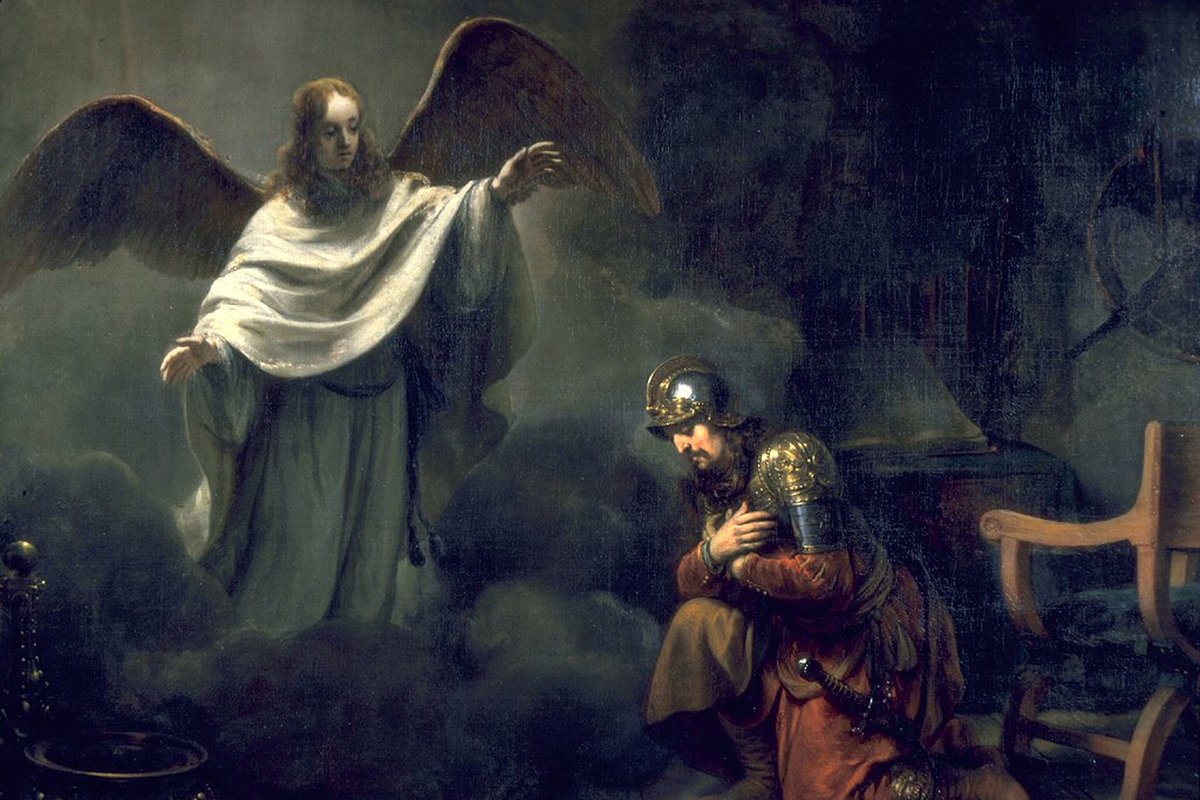
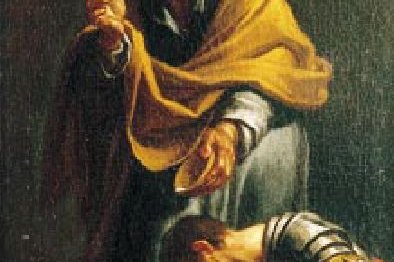
Gerbrand van den Eeckhout, 'Vision of Cornelius the Centurion,' 1664, Walters Art Museum — public domain.
Two visions, meeting in the middle
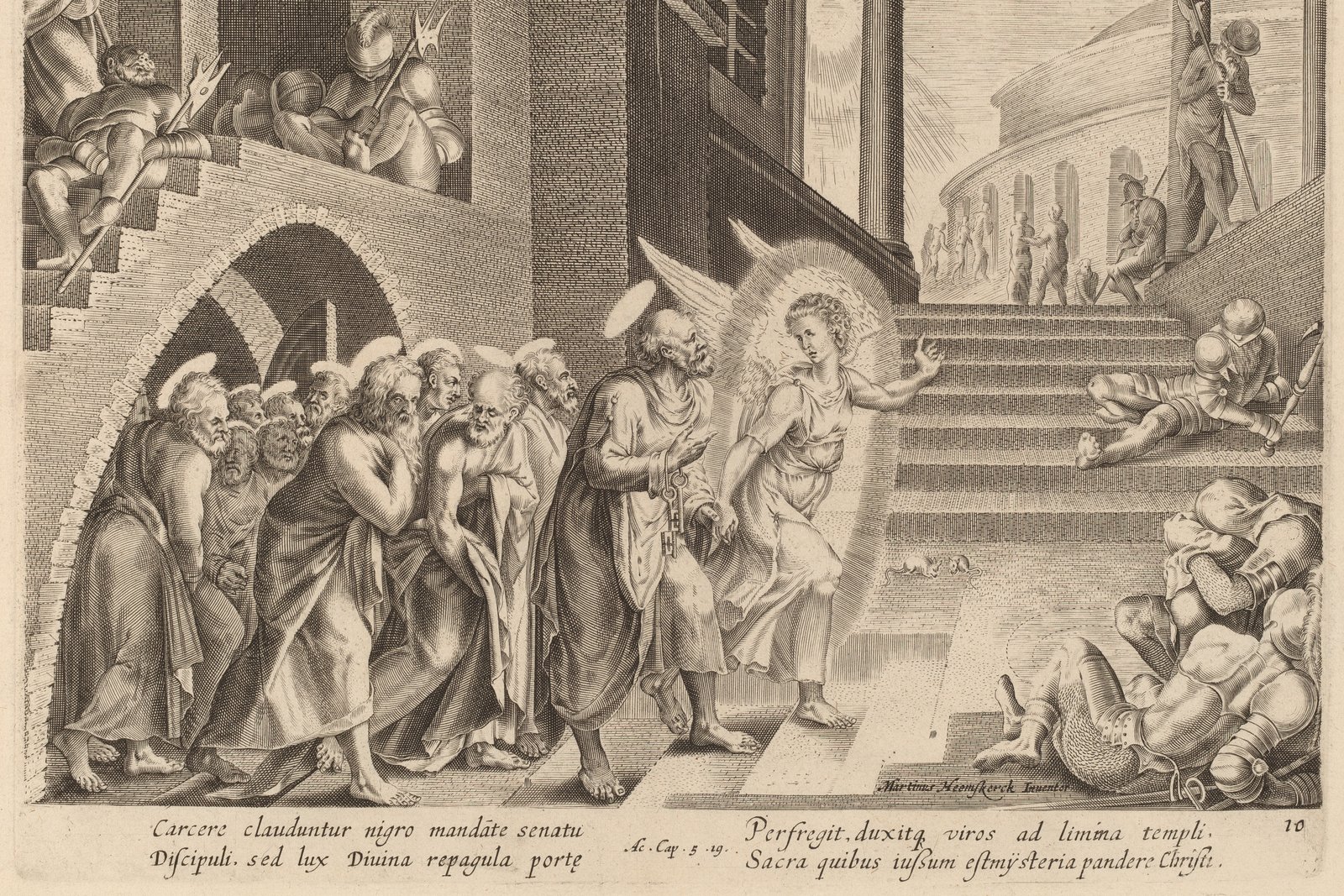
The story that follows unfolds through a pair of visions that arrive almost simultaneously. An angel appears to Cornelius and instructs him to send men to the coastal town of Joppa to find Simon Peter. At nearly the same moment, Peter — praying on a rooftop in Joppa — falls into a trance and sees a large sheet lowered from heaven, filled with every kind of animal, with a voice telling him three times, "What God has made clean, you are not to call profane" (Acts 10:15, NABRE). Peter wakes up puzzled by the vision's meaning, and the timing could hardly be plainer: Cornelius's messengers arrive at his door at that exact moment.
Peter travels to Caesarea, and what he says on arrival makes clear how much this crossing of boundaries cost him socially: "You know that it is unlawful for a Jewish man to associate with, or visit, a Gentile, but God has shown me that I should not call any person profane or unclean" (Acts 10:28, NABRE). Cornelius, for his part, has gathered his relatives and close friends to hear whatever Peter has to say — a household ready and waiting.
The moment the Church's mission changed shape
What happens next is the real hinge of the story. As Peter preaches — declaring that "everyone who believes in him will receive forgiveness of sins through his name" (Acts 10:43, NABRE) — the Holy Spirit falls on everyone listening, Gentiles included, in a scene Luke deliberately describes as parallel to Pentecost. Peter and the Jewish believers who came with him are astonished that "the gift of the holy Spirit should have been poured out on the Gentiles also" (Acts 10:45, NABRE). Peter then orders Cornelius and his household to be baptized, concluding plainly: "In truth, I see that God shows no partiality. Rather, in every nation whoever fears him and acts uprightly is acceptable to him" (Acts 10:34-35, NABRE).
This episode became the decisive precedent the early Church needed. Within a chapter, Peter is recounting the story to skeptical Jewish believers in Jerusalem to defend the inclusion of Gentiles, and the same question — whether Gentile converts needed to be circumcised and follow the full Law of Moses — would resurface at the Council of Jerusalem in Acts 15, with Cornelius's story cited as evidence that God had already answered it. Tradition consequently regards Cornelius as the first Gentile convert to Christianity, the household through which the young Church first fully realized its mission extended beyond Israel.
A story the early Church kept retelling
The Cornelius episode was important enough to the earliest Christians that Luke, the author of Acts, doesn't just narrate it once — he has Peter repeat the whole story almost verbatim in the following chapter, defending himself before skeptical believers in Jerusalem who had heard he'd eaten with uncircumcised Gentiles. That repetition is a signal of how contested the question still was, even after the events themselves had already happened. It also explains why Cornelius's household reappears later, at the Council of Jerusalem in Acts 15, as evidence in the debate over whether Gentile converts needed to be circumcised — Peter cites what happened at Caesarea directly, treating Cornelius's baptism as a settled precedent rather than an open question.
Echoes of Pentecost
Luke's decision to describe the Spirit falling on Cornelius's household in language that deliberately recalls Pentecost isn't incidental to the story — it's the whole argument. At Pentecost, the Spirit had come upon a room full of Jewish believers gathered in Jerusalem; at Caesarea, the same Spirit falls on Gentiles who hadn't been circumcised, hadn't kept the Mosaic Law, and hadn't done anything but listen and believe. By echoing Pentecost's imagery so closely, Luke is making a theological claim as much as a narrative one: whatever happened to launch the Church at Pentecost, God was now doing again, deliberately, for people entirely outside the covenant of Israel. Peter's own account of it, when he later defends himself in Jerusalem, leans on exactly that comparison, insisting the Spirit came upon Cornelius's household "As I began to speak, the holy Spirit fell upon them as it had upon us at the beginning," (Acts 11:15, NABRE).
A patron of ordinary faithfulness
Later Christian tradition holds that Cornelius went on to serve as a bishop, though the details vary between accounts and cannot be verified with confidence — a reminder that, as with many early figures, what Scripture records with precision (the events of Acts 10) should be kept distinct from later legendary elaborations about his life afterward. What stays constant across the traditions is the portrait Acts itself gives: a man whose quiet, consistent devotion — prayer, generosity, attentiveness to God — made him ready to receive grace the moment it was offered, and whose openness reshaped what the word "Christian" would come to mean.
Trivia
Who was Cornelius the Centurion in the Bible?
How did Cornelius come to meet Saint Peter?
Why is Cornelius's conversion considered so significant in Church history?
What is Saint Cornelius's feast day?
You May Also Like
Related Reading