Saint Elizabeth Ann Seton

A childhood shaped by loss
Elizabeth Bayley was born in 1774 into one of New York's most established families — her father, Richard Bayley, was a respected physician, and the family moved in the same circles as the city's Episcopalian elite in the years just after the Revolution. But her early life was no picture of stability. Her mother died when Elizabeth was three, and a stepmother's arrival brought its own strains. Elizabeth grew up religious in an unshowy, personal way, drawn to prayer and Scripture reading well before anything about her future as a Catholic saint would have seemed plausible to the people who knew her. At nineteen she married William Magee Seton, a young merchant from another prominent New York family, and the marriage produced five children over the following years even as William's shipping business began to falter under financial pressure.
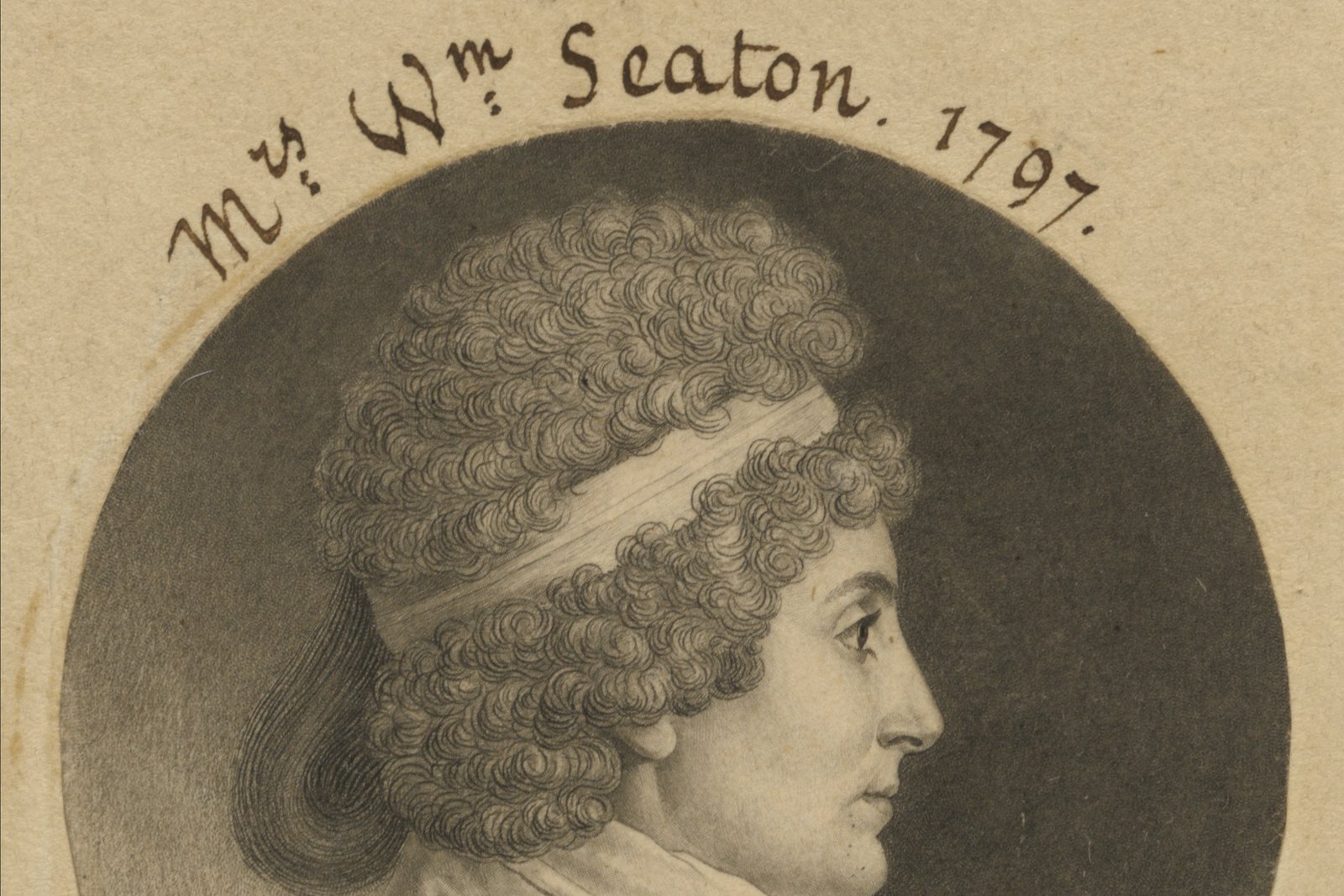
Charles Balthazar Julien Févret de Saint-Mémin, engraving, 1797, National Portrait Gallery, Smithsonian Institution — public domain.
A quarantine in Livorno
In 1803, Elizabeth Seton boarded a ship to Italy with her husband, William, and their eldest daughter, hoping the warmer climate might slow the tuberculosis that was killing him. Instead, Italian port authorities — wary of yellow fever aboard American ships — held the family in a stone quarantine facility for weeks before allowing them ashore. William died shortly after they were finally released, in Pisa, leaving Elizabeth a widow at twenty-nine with five children waiting for her back in New York and a fraction of the financial security she'd once had.
A conversion that cost her nearly everything
It was in Italy, staying with the Filicchi family who had hosted the Setons, that Elizabeth first encountered Catholic devotional life up close — something almost entirely foreign to a woman raised in New York's Episcopalian elite. She was struck in particular by the Catholic belief in the real presence of Christ in the Eucharist, a teaching she found herself unable to stop thinking about even after she returned to New York. She returned home unsettled by what she'd seen, and in 1805, after months of wrestling with the decision, she formally entered the Catholic Church. The cost was immediate and severe. Early 19th-century American Protestant culture regarded Catholicism with open suspicion, sometimes outright hostility, and Elizabeth's conversion alienated much of her social circle and strained relationships within her own family, leaving her to raise five children largely without the support network she'd once relied on. Some relatives stopped speaking to her outright; friends who had known her for years quietly withdrew.
Emmitsburg, and the beginning of Catholic schooling in America
Financial necessity and a genuine call to religious life led Elizabeth to Emmitsburg, Maryland, in 1809, at the invitation of a priest, Father William Dubourg, who saw in her both the practical skill and the spiritual depth to lead a religious community. There she founded the Sisters of Charity of Saint Joseph — the first congregation of religious sisters established in the United States, modeled loosely on the Daughters of Charity founded in France by Saint Vincent de Paul more than a century and a half earlier. Alongside it, she opened Saint Joseph's Academy and Free School, educating both paying students and children whose families couldn't afford tuition. That decision to serve poor children alongside wealthier ones is generally credited as the founding moment of the American Catholic parochial school system, a network that would eventually educate millions of children across the country.
The rule of life Elizabeth wrote for her sisters balanced strict religious discipline with a mission that was resolutely practical — teaching, nursing the sick, and caring for orphans, rather than the cloistered, contemplative life that many religious orders of the era still followed. That combination, service to the poor paired with active work in the world, became a template that dozens of later American religious communities would follow.
Grief that never stopped alongside the work
Elizabeth's life after Emmitsburg was not simply a steady rise. She buried two of her own daughters, Anna Maria and Rebecca, both to illness, while continuing to expand her community's schools and charitable works. Anna Maria's death in particular devastated her — she had joined her mother's community as a young novice before dying of tuberculosis, the same disease that had taken her father years before in Pisa. Elizabeth herself was never in strong health; she too showed signs of the family's susceptibility to tuberculosis in her final years, working through her decline much as she had worked through every earlier loss. She died in 1821 at just forty-six, having spent barely two decades as a Catholic and just over a decade running the community she founded — a strikingly short span for the scale of what she built.
Canonization and legacy
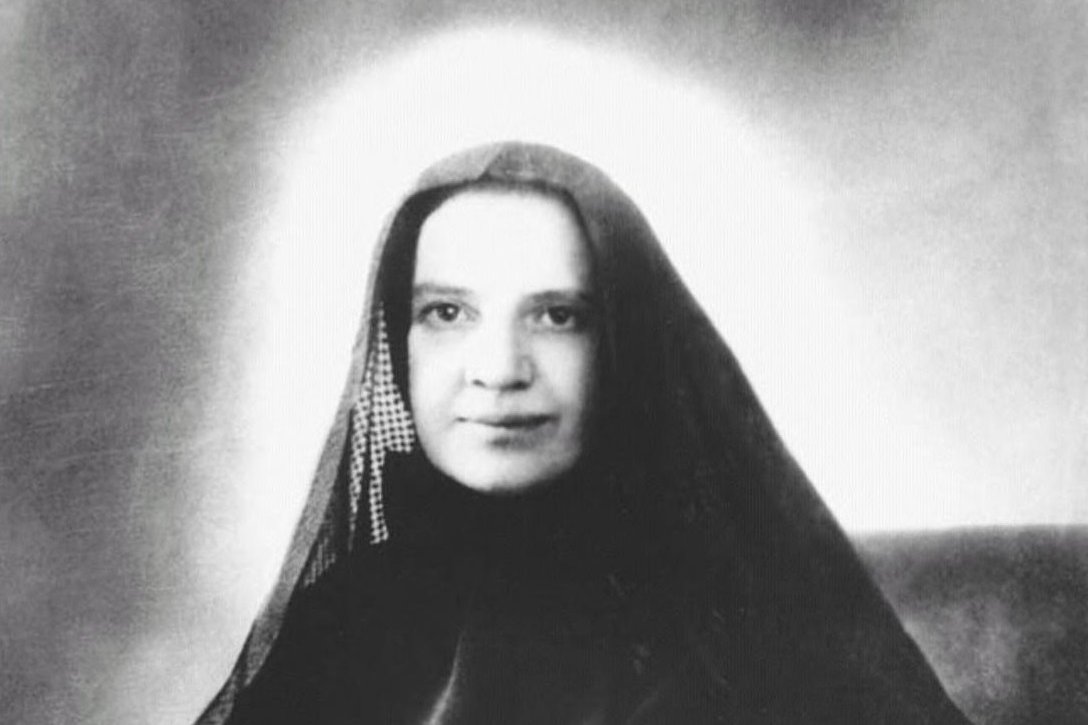
Pope Paul VI canonized Elizabeth Ann Seton on September 14, 1975, making her the first person born in what became the United States to be declared a saint. Her feast day is celebrated on January 4. The Sisters of Charity she founded eventually split into several related congregations across the country, all tracing their origin back to the school in Emmitsburg, and the site itself is preserved today as a National Historic Landmark, with a basilica built near her original schoolhouse. She's widely regarded, in American Catholic devotion, as a patroness of Catholic education and of widows — two roles drawn directly, and unmistakably, from her own life. Her story is often paired in American Catholic memory with that of Saint Frances Xavier Cabrini, another founder of schools and charitable institutions who became, decades later, the first American citizen to be canonized.
Trivia
Why was Elizabeth Seton's conversion to Catholicism so costly for her socially?
What did Elizabeth Seton found in Emmitsburg, Maryland?
When was Elizabeth Ann Seton canonized, and why is that date significant?
What happened to Elizabeth Seton's own children?
What is Elizabeth Ann Seton the patroness of?
You May Also Like
Related Reading