Saint Frances Xavier Cabrini

A rejection that changed the direction of her life
Maria Francesca Cabrini was born in 1850 in Sant'Angelo Lodigiano, a small town in Lombardy, northern Italy, the youngest of thirteen children in a farming family, though only four of her siblings survived to adulthood — a childhood mortality rate that was grimly ordinary for rural Italy at the time. She was born two months premature and remained physically frail throughout her life, a fact that would matter directly to her early ambitions: as a young woman, she applied twice to established missionary religious orders and was turned away both times on the grounds of poor health, being told plainly that she wasn't strong enough for the demands of missionary life. Rather than abandon the ambition, she built her own religious community instead.
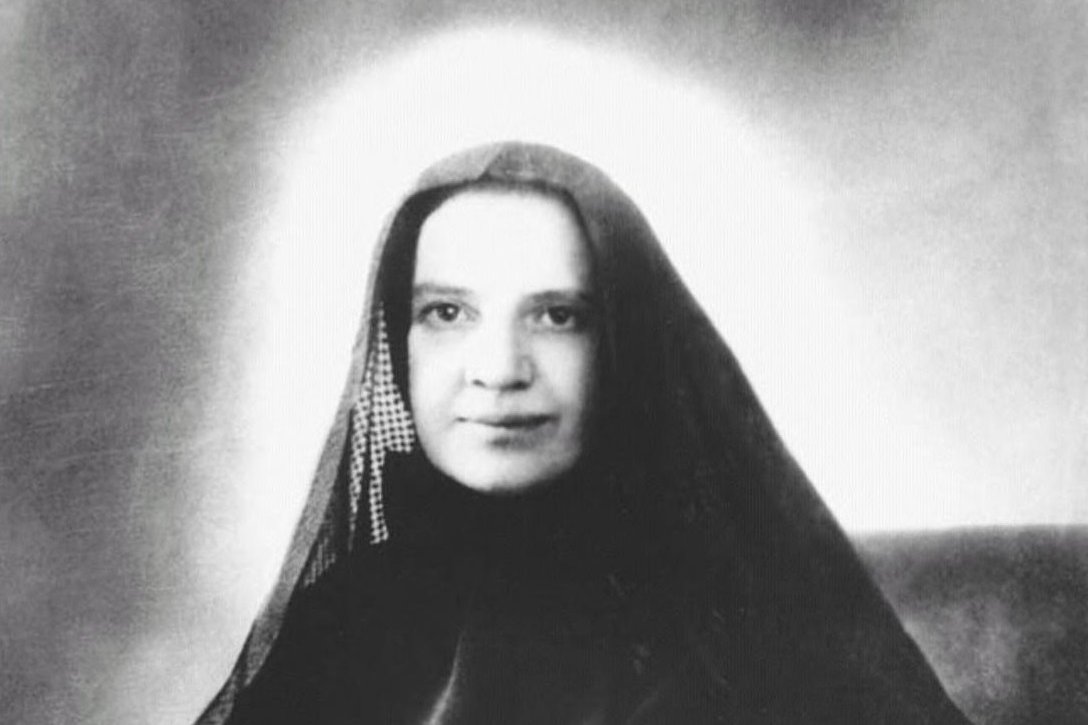
Photographer unknown, circa 1900 — public domain.
Frances Cabrini founded the Missionary Sisters of the Sacred Heart of Jesus in Italy in 1880, with her sights set firmly on missionary work in China. She traveled to Rome to petition Pope Leo XIII directly for permission to establish missions there. According to the tradition surrounding this meeting, the pope redirected her entirely: not east to Asia, but west, to serve the enormous wave of Italian immigrants then arriving in the United States, many of them landing in poverty and facing open discrimination. It wasn't the mission she had planned for, but she accepted it and sailed for New York in 1889.
Arriving to a city that hadn't prepared for her
What Cabrini found in New York was worse than what she'd been told to expect. The housing and financial support that had reportedly been arranged for her and her sisters fell through almost immediately, and the archdiocese's welcome was, at best, uncertain. Rather than turn back, she rebuilt from the ground up, eventually founding Columbus Hospital to serve Italian immigrants who were frequently mistreated, ignored, or simply turned away by existing institutions — a population she understood intimately, since she was an immigrant herself, working almost entirely among her fellow countrymen and women in their own language.
An improbable scale of institution-building
Over the following decades, Cabrini's congregation grew at a pace that's still striking to read about. By her death in 1917, she and the Missionary Sisters of the Sacred Heart had founded 67 institutions — hospitals, schools, and orphanages — spread across the United States as well as parts of Central and South America and Europe. She became a naturalized United States citizen in 1909, and much of her later life was spent traveling constantly between these institutions, overseeing a network she had built almost entirely from nothing in less than thirty years.
Her method was consistent across nearly every new city: arrive with little more than a handful of sisters and whatever funds she could raise, identify the most urgent unmet need among the local Italian immigrant community — schooling for children left unsupervised while parents worked, medical care for the sick who were turned away elsewhere, housing for orphans — and build an institution to meet it, often starting in borrowed or rented buildings before eventually constructing something permanent. She founded institutions not only in New York but in Chicago, New Orleans, Seattle, Denver, and beyond, along with foundations in Nicaragua, Argentina, Brazil, France, England, and Spain, adapting the same basic model to each new immigrant community's specific circumstances.
Fear of water, and a life spent crossing it
One detail that appears consistently across accounts of Cabrini's life is a lasting fear of water, traced by tradition to a near-drowning in childhood. Whatever the precise origin of that fear, it didn't stop her from crossing the Atlantic Ocean 29 times over the course of her missionary career, moving between Italy and the Americas to found, visit, and sustain her growing network of institutions — a level of travel that would have been demanding for anyone in the era of ocean liners, let alone someone working against a lifelong fear of the sea itself.
Canonization and patronage of immigrants
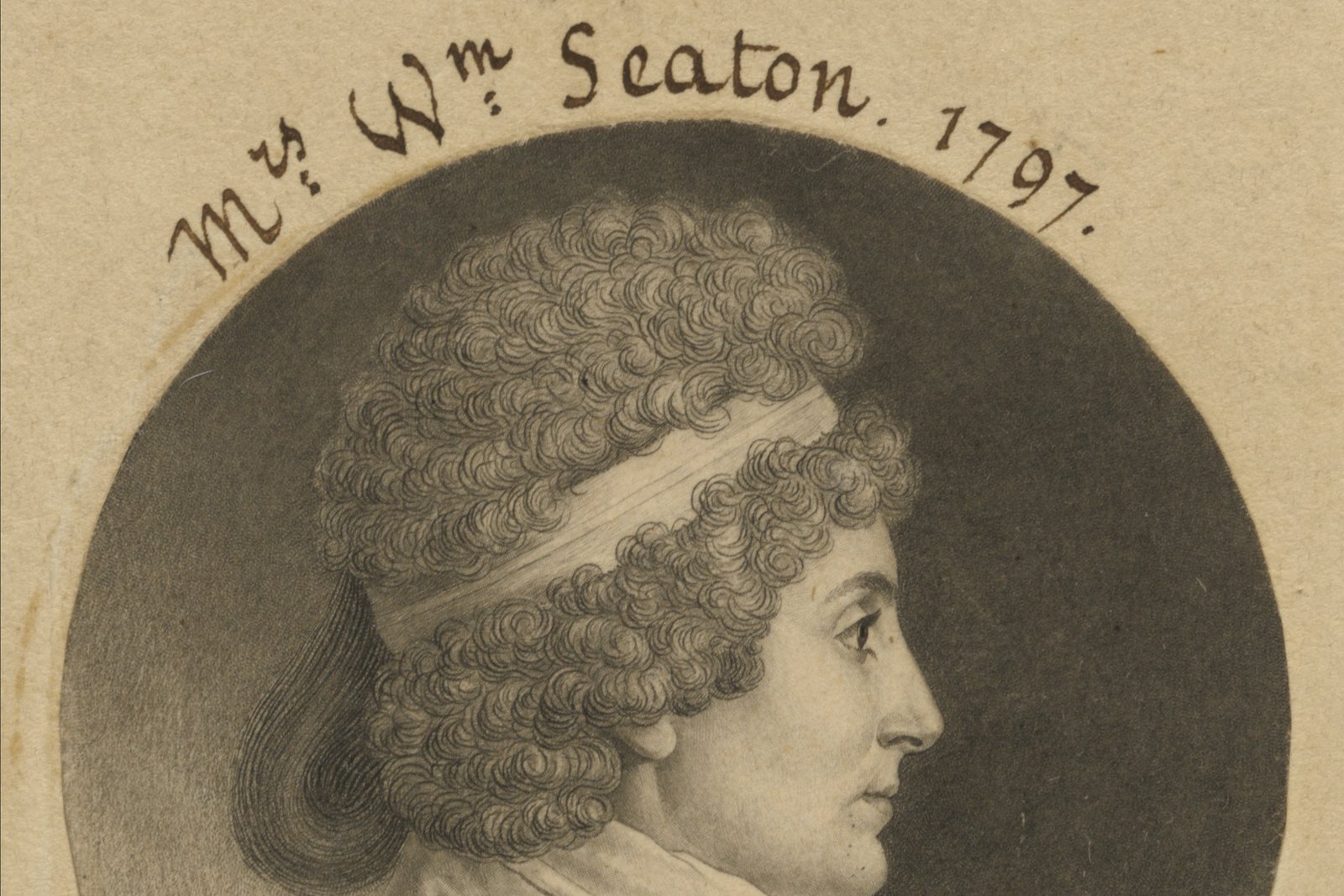
Frances Xavier Cabrini died in Chicago in 1917. Pope Pius XII canonized her in 1946, making her the first United States citizen to be declared a saint, and in 1950 he formally named her patroness of immigrants — a title that follows directly and unmistakably from a life spent almost entirely in service to displaced Italian communities navigating a new and often unwelcoming country. Her feast day is celebrated on November 13, and a national shrine dedicated to her stands in New York City, not far from where her earliest American work began. She's often mentioned alongside Saint Elizabeth Ann Seton as one of the two towering foundresses of American Catholic institution-building — Seton beginning the country's parochial school system decades earlier, Cabrini extending that same instinct for practical, hands-on institution-building to the millions of immigrants arriving in America's cities at the turn of the 20th century.
Trivia
Why did Frances Cabrini go to the United States instead of the missions in Asia she originally wanted?
What did Frances Cabrini found in New York, and what challenges did she face there?
How many institutions did Cabrini's Missionary Sisters of the Sacred Heart eventually establish?
When was Frances Xavier Cabrini canonized, and what title did that give her?
Did Frances Cabrini overcome a personal fear in order to do this work?
You May Also Like
Related Reading