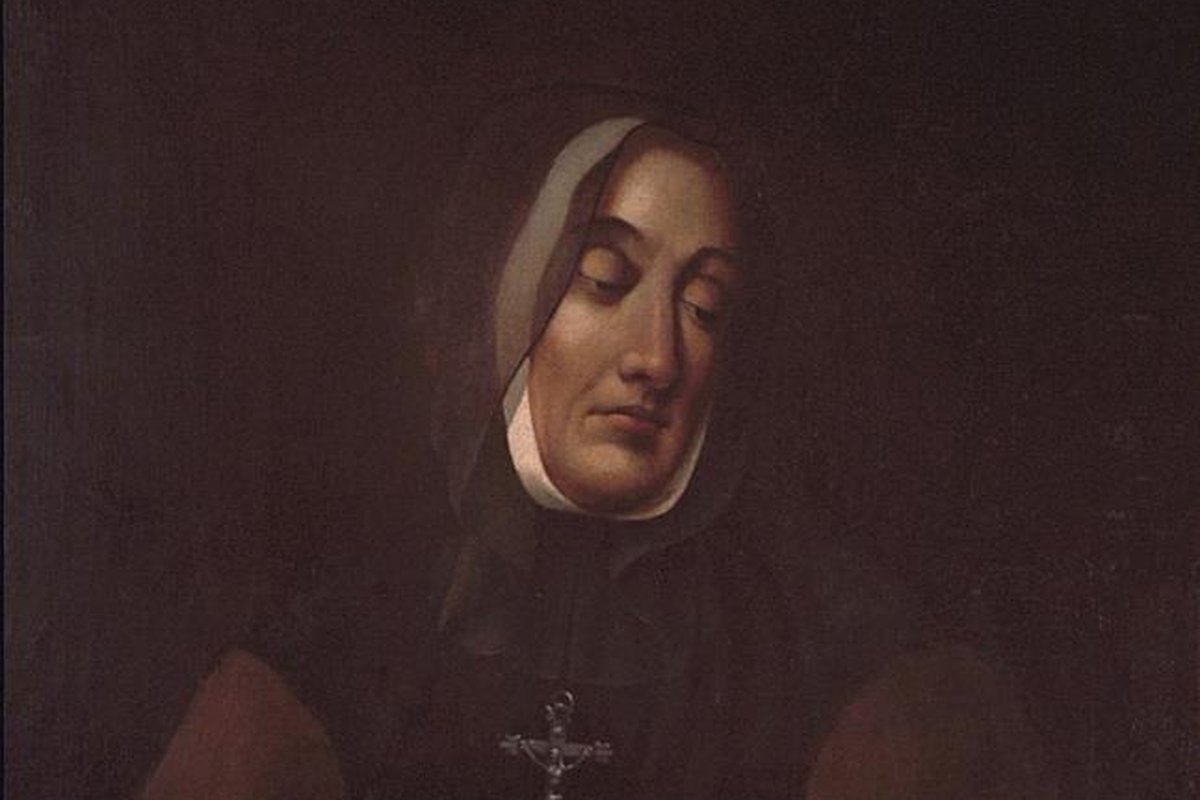
Saint Jane Frances de Chantal, Religious

A marriage cut short
Jeanne-Françoise Frémyot was born in Dijon in 1572 into a prominent French legal family, her father serving as president of the regional parlement. At twenty, she married Christophe de Rabutin, Baron de Chantal, and the marriage that followed was, by most accounts, a genuinely happy one, producing six children, two of whom died in infancy. She managed the family estates with evident competence and became known locally for her charitable work among the poor of the surrounding countryside, a habit of practical generosity that would remain characteristic of her for the rest of her life.
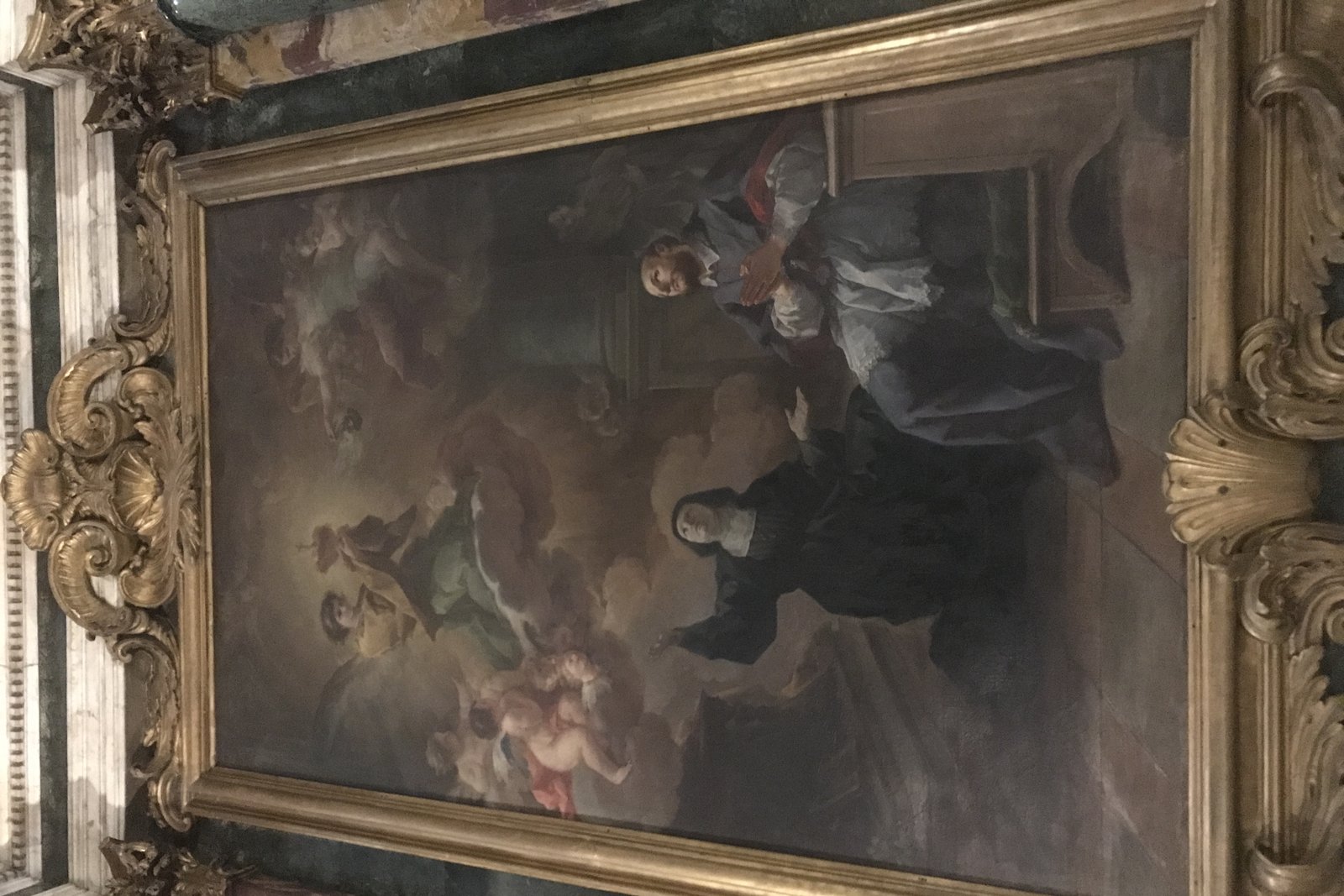
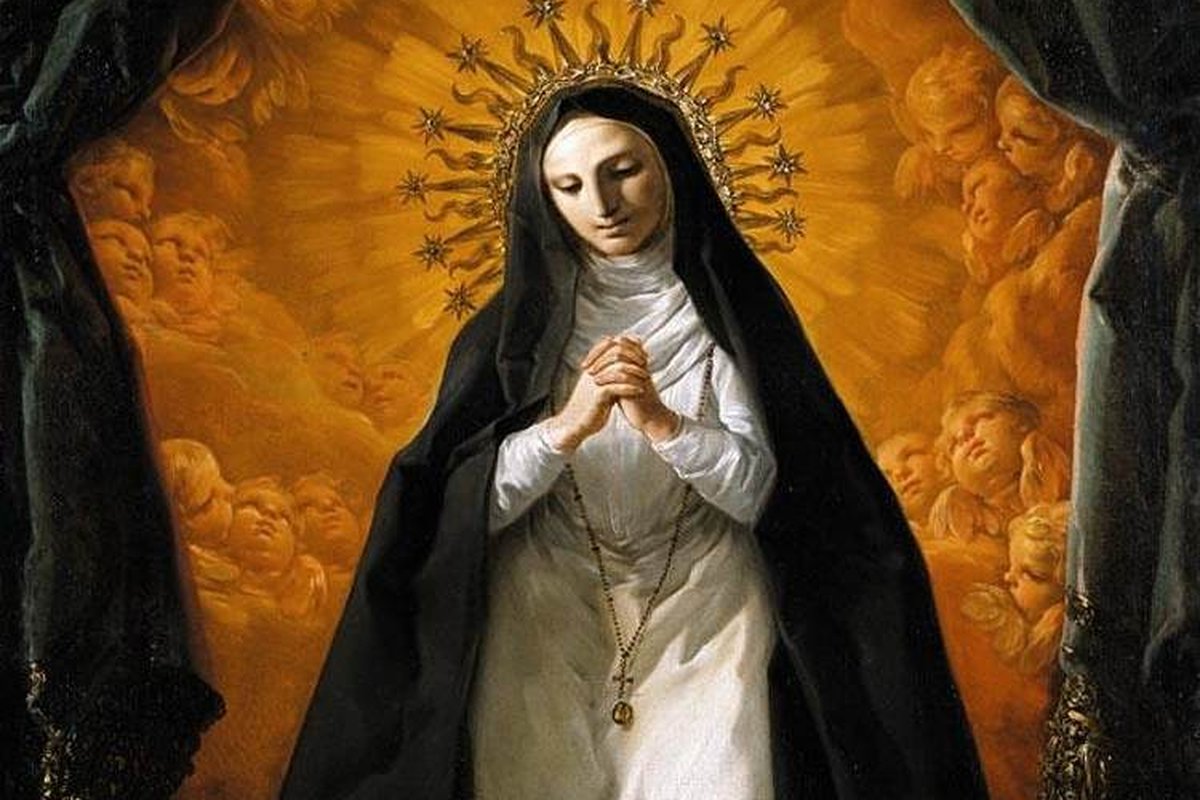
Corrado Giacquinto, altarpiece of Saint Jane Frances de Chantal and Saint Francis de Sales, 18th century, Santa Barbara, Madrid — public domain.
That stability ended abruptly in 1601, when her husband was fatally wounded in a hunting accident, shot by a friend who had mistaken him for game. He lingered painfully for several days before dying, and Jane, only twenty-eight, was left a widow with four surviving children and, for a period afterward, a household increasingly dominated by a difficult father-in-law who pressured her to manage his own affairs under harsh conditions. She endured several years in that arrangement, continuing her charitable habits and her private devotion, before circumstances brought her into contact with the man who would redirect the rest of her life.
A sermon, a vision, and a spiritual partnership
In 1604, Jane traveled to Dijon during Lent and heard a visiting bishop preach a series of sermons there. That bishop was Francis de Sales, already becoming known for his gentle, accessible approach to holiness and his success winning converts back to Catholicism in the Chablais region near Geneva. Jane later recorded that she recognized him from an earlier interior vision she believed she had received of the man who would become her spiritual guide, and she sought him out, asking him to take on the direction of her spiritual life.
Francis agreed, cautiously at first, and the two began a correspondence and spiritual partnership that would last until his death in 1622. Their relationship, extensively documented in surviving letters, was one of mutual respect and genuine friendship as much as formal spiritual direction, and it shaped both of their subsequent careers considerably. Francis's own written works, including his influential Introduction to the Devout Life, developed partly out of guidance he had first offered Jane and other laypeople seeking a path to holiness that did not require leaving ordinary life behind entirely.
Leaving her children to found an order
By 1610, Francis and Jane had settled on a plan to found a new religious community together, one designed with a specific and, for its time, unusual purpose: to welcome women whose age, physical frailty, or family circumstances would have excluded them from the stricter, more physically demanding contemplative orders then available, such as the Carmelites. The new community, the Order of the Visitation of Holy Mary, took its name from the Gospel scene of Mary's visit to her cousin Elizabeth, emphasizing charitable service and a more moderate rule of contemplative life rather than the extreme austerity common elsewhere.
Leaving her family to found the order was not simple. Jane's fifteen-year-old son Celse-Bénigne, distraught at his mother's departure, is said to have lain across the threshold of the house to physically block her from leaving, and Jane, in tears but resolved, reportedly stepped over him rather than turn back. It is one of the most vivid and frequently retold episodes of her life, capturing both the genuine cost of her decision and the depth of conviction that carried her past it. Her youngest daughter, still a small child, accompanied her into the new community for a time before eventually being raised elsewhere, while her other children were settled with relatives.
A rule shaped by mercy
The Visitation order that Jane and Francis established together in Annecy in 1610 grew steadily over the following decades, spreading well beyond its original founding house into dozens of communities across France and eventually beyond. Jane served as its superior for most of the remainder of her life, overseeing the order's expansion, writing extensively on the spiritual life for her sisters, and continuing her correspondence with Francis until his death.
Her later years brought considerable personal suffering, including the deaths of several of her grandchildren and other family members, trials she bore, by the testimony of those close to her, with the same steady, practical faith that had marked her life from the beginning. She died in 1641, having lived to see the order she co-founded firmly established as a significant force in French religious life. Pope Clement XIII canonized her in 1767, and her feast is kept on August 12. Her granddaughter's daughter, Madame de Sévigné, would go on to become one of the most celebrated letter-writers in French literary history, an indirect but notable thread connecting Jane's family line to another form of enduring written legacy.
Trivia
Who was Saint Jane Frances de Chantal?
How did Jane Frances de Chantal meet Francis de Sales?
What was distinctive about the Visitation Order she co-founded?
What happened to Jane Frances de Chantal's family after she entered religious life?
When is the feast of Saint Jane Frances de Chantal?
You May Also Like
Related Reading