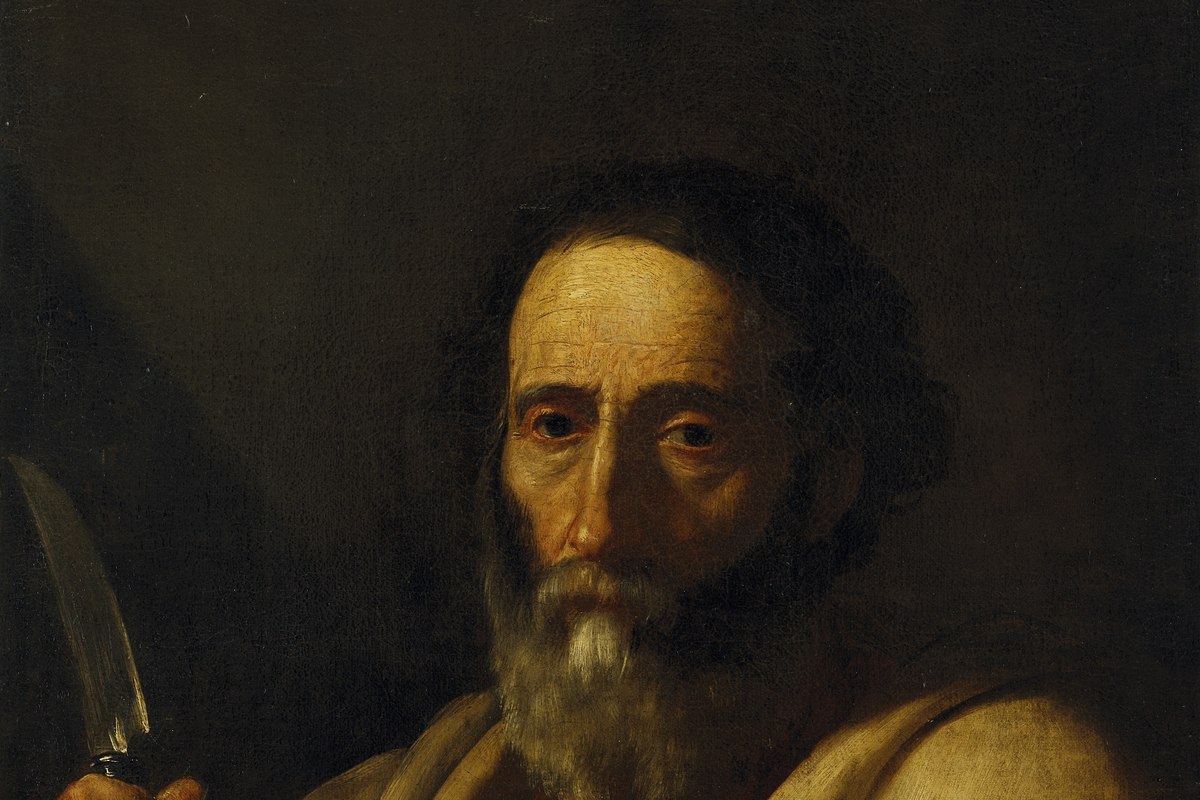
Saint Matthew, Apostle and Evangelist

A man everyone loved to despise
Tax collection in Roman-occupied Judea operated through a system that all but guaranteed public hatred for the men who performed it. Rome typically contracted out the collection of taxes to local agents, who paid the empire a set sum up front and then recouped their investment, plus profit, by collecting from the local population, an arrangement that created strong financial incentive to collect more than was strictly owed. Beyond the very real potential for extortion this system invited, tax collectors were viewed by their fellow Jews as collaborators with a foreign occupying power, working directly against the interests of their own people for personal gain, a combination of moral and religious offense that placed them, in the eyes of many contemporaries, in roughly the same social category as prostitutes and other groups considered ritually and morally compromised.

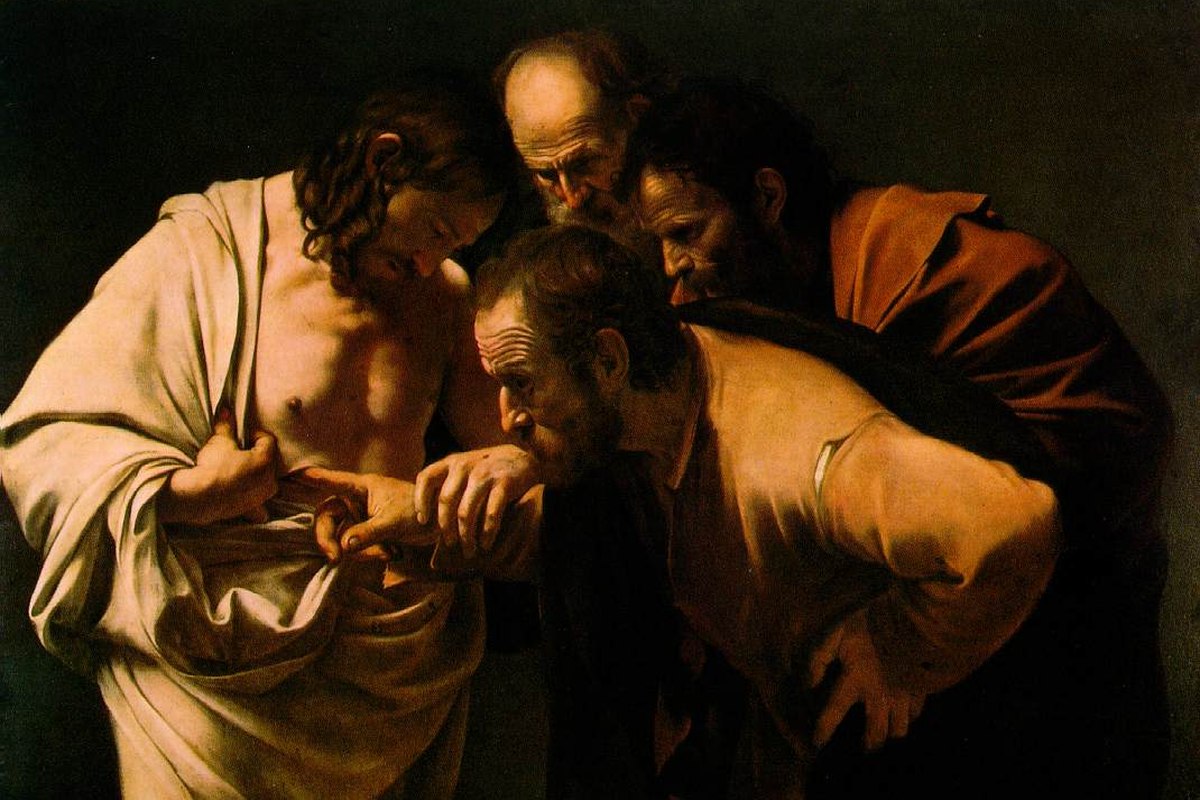
Caravaggio, The Inspiration of Saint Matthew, 1602 — public domain.
It is against that backdrop that the Gospel of Matthew records Jesus's calling of the apostle, passing by a tax office in Capernaum, a town on the Sea of Galilee that served as something of a base for much of his Galilean ministry, and seeing a man named Matthew, identified in the parallel accounts of Mark and Luke as Levi, sitting at his post. Jesus's call to him is recorded with striking economy: "Follow me," and Matthew, according to the text, rose and followed him immediately, leaving behind not merely a chair but an entire established livelihood and social position, however despised that position may have been.
A banquet that scandalized the righteous
What follows the call itself is almost as significant as the call. Matthew's Gospel records that Matthew held a large banquet at his own house, attended by numerous other tax collectors and people broadly described as sinners, individuals living outside the boundaries of respectable religious observance, along with Jesus and his other disciples. The gathering drew immediate criticism from the Pharisees, who asked why Jesus would eat with such company at all, a question rooted in serious concerns about ritual purity and appropriate religious association common to Jewish religious practice of the period.
Jesus's reply, recorded in similar form across all three Synoptic Gospels, reframed the entire episode: those who are well have no need of a physician, but those who are sick do, and he had come to call not the righteous but sinners. The episode, positioned immediately after Matthew's own call in the Gospel narrative, functions almost as a demonstration in miniature of exactly what Jesus's ministry was reaching toward, extending an invitation to precisely the people conventional religious respectability had written off as beyond reach, with the newly called tax collector himself serving as living proof of the principle.
The question of authorship
Church tradition attributing the first Gospel to the apostle Matthew dates back to at least the early second century, preserved in a statement by the bishop Papias of Hierapolis, recorded by the later historian Eusebius, describing Matthew as having compiled a collection of Jesus's sayings in the Hebrew, or possibly Aramaic, language. That early tradition became the standard explanation for the Gospel's authorship throughout most of Christian history, and it remains the traditional attribution honored liturgically and devotionally within the Church today.
Modern biblical scholarship, working with the tools of literary and historical criticism developed particularly since the nineteenth century, has generally arrived at a more complicated picture, proposing that the Gospel as it exists today likely drew on earlier written and oral sources, including substantial material shared with the Gospel of Mark, and reached its final Greek form through a process that may have involved more than a single individual author working in isolation. This scholarly complexity does not straightforwardly overturn the traditional attribution so much as complicate the question of exactly how direct or exclusive Matthew's personal authorship was, a question the Church has not required a single settled answer to as a matter of binding doctrine, treating the traditional ascription as a matter of received Church tradition rather than a strictly defined article of faith.
A Gospel written for a Jewish audience
Whatever the precise mechanics of its composition, the Gospel of Matthew displays a consistent and distinctive concern, more pronounced than in the other Gospels, with demonstrating that Jesus fulfills the promises and prophecies of the Hebrew Scriptures, repeatedly introducing events in Jesus's life with the formula that they took place "to fulfill what the Lord had spoken by the prophet." This concern strongly suggests a Gospel composed with a Jewish or Jewish-Christian audience specifically in mind, one already steeped in the Hebrew Scriptures and needing to be persuaded, on the Scriptures' own terms, that Jesus was indeed the promised Messiah.
Matthew's Gospel also preserves a substantial amount of material found nowhere else in the New Testament, most notably the extended teaching known as the Sermon on the Mount, which includes the Beatitudes and the Lord's Prayer in their most familiar form, material that has shaped Christian ethical and devotional life across the centuries as thoroughly as any other single passage of Scripture.
A life after the Gospels, largely unrecorded
Reliable historical information about Matthew's activity after the events recorded in the Gospels is genuinely scarce, and later traditions describing his missionary travels and eventual martyrdom vary considerably from source to source, with different accounts placing his later ministry and death in regions as far apart as Ethiopia and Persia, none of them resting on the kind of solid, early documentation available for some other apostles. What has endured with far greater consistency across the centuries is the striking, deliberately preserved detail of his calling itself, a former tax collector, one of the most socially despised professions available in his world, becoming an apostle and, by long tradition, an evangelist whose account of Jesus's life and teaching opens the entire New Testament. His feast is celebrated on September 21.
Trivia
Who was Saint Matthew before he became an apostle?
What does the Bible say about Jesus calling Matthew?
Did Matthew write the Gospel that bears his name?
What is distinctive about the Gospel of Matthew?
How did Matthew die, and when is his feast?
You May Also Like
Related Reading