Saint Nicholas of Tolentino

A childhood shaped by a promise
Nicholas was born around 1245 in Sant'Angelo in Pontano, a small town in the Marche region of central Italy, to parents who, according to family tradition, had struggled for years to conceive a child and had prayed at the shrine of Nicholas of Myra — the fourth-century bishop remembered today as the historical figure behind Santa Claus — for a son, promising to dedicate the child to religious life if their prayer was answered. When a son was finally born, they named him Nicholas in gratitude, and the family story held that a bright star had appeared over the town on the night of his birth, a sign they took as confirming both the answered prayer and the child's future vocation.
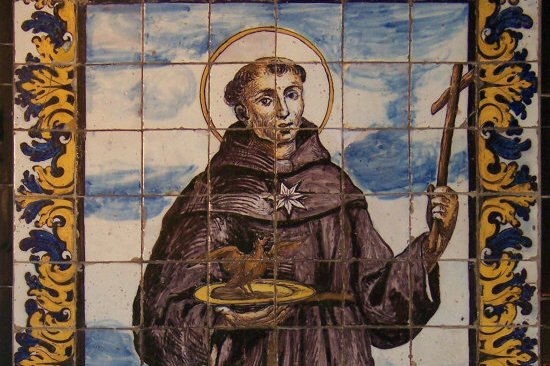
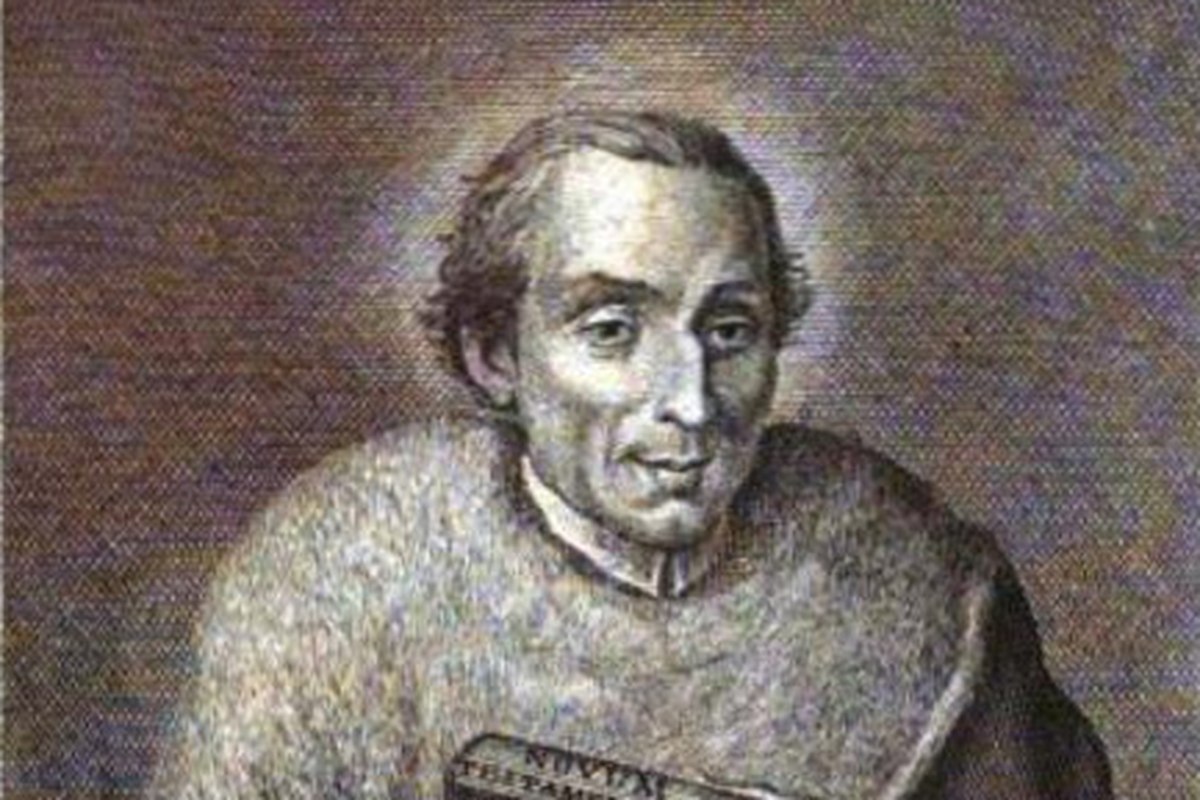
Saint Nicholas of Tolentino, traditional devotional painting, Wikimedia Commons — public domain.
Whatever weight one gives to the details of that family legend — and the Church, consistent with its normal practice, presents such birth-narrative traditions as pious memory rather than documented fact — what is well established is that Nicholas did pursue religious life from a young age, entering the Augustinian order, a community of friars following a rule traced back to Augustine of Hippo, and was ordained a priest around 1270. After some years serving in other Augustinian houses in the region, he was assigned in 1275 to the priory in the town of Tolentino, where he would remain for the rest of his life, giving him the name by which he has been known ever since.
Three decades of unglamorous, constant ministry
What distinguishes Nicholas's holiness from many other medieval saints is how little of it involved dramatic public events. He did not found a new order, lead a missionary campaign into unconverted territory, or die a martyr's death. Instead, for roughly thirty years, he did the steady, largely unremarkable daily work of parish and priory ministry in one mid-sized Italian town: preaching regularly to large crowds who were drawn by his directness and evident sincerity, spending long hours in the confessional, and making a point of personally visiting the sick and the dying throughout Tolentino, at a time when such visits often carried real risk of contagion during periodic outbreaks of disease.
Contemporary and near-contemporary accounts consistently describe a man of severe personal austerity — extended fasting, minimal sleep, plain food — paired, somewhat paradoxically, with a reputation for warmth and approachability that made ordinary townspeople feel comfortable bringing him their troubles. He was known to give away food and small amounts of money to the poor who came to the priory gate, often more than the community could easily spare, a pattern of personal generosity that echoes similar accounts told of other friars and priests remembered for a particular closeness to the poor of their own towns.
Praying for souls in purgatory
Among the specific devotional practices associated with Nicholas, his intense and reportedly constant prayer for the souls in purgatory — the state of final purification the Church teaches some souls undergo before entering heaven — stands out as especially central to how he was remembered by those who knew him. Accounts from his own community describe him spending long private hours in prayer specifically for the dead, a devotion so consistently associated with him that it became the basis for his enduring patronage of souls in purgatory, a title still commonly attached to his name in Catholic devotional literature today.
Toward the end of his own life, tradition holds that Nicholas experienced a series of visions related to purgatory, though as with the star at his birth, these accounts belong to devotional tradition built up after his death rather than to independently verifiable contemporary record. What can be said with more confidence is that his community and the wider region around Tolentino regarded him, well before any formal Church process began, as a man whose entire ministry had been oriented toward the spiritual welfare of others, living and dead alike.
Death, immediate popular devotion, and canonization
Nicholas died in Tolentino on September 10, 1305. The devotion that followed was immediate and, by contemporary accounts, startlingly intense — crowds reportedly began cutting pieces from his religious habit as relics within a short time of his death, and reports of miracles attributed to his intercession multiplied quickly enough that a formal canonization process opened only a few years afterward, though it would take well over a century to reach completion amid the broader institutional disruptions affecting the Church in that period.
Pope Eugene IV finally canonized Nicholas of Tolentino in 1446, making him the first member of the Augustinian order to receive formal canonization — a significant milestone for a religious family that had, by then, been producing serious theologians and dedicated pastoral ministers for well over a century without yet having one of its own members formally raised to the altars. His feast is kept on September 10, and devotion to him remains especially strong in Italy, where the basilica built over his tomb in Tolentino continues to draw pilgrims seeking his intercession, particularly on behalf of the dead.
Trivia
Who was Saint Nicholas of Tolentino?
Why is Nicholas of Tolentino often shown with a star?
What was Nicholas of Tolentino's daily ministry like?
What is Nicholas of Tolentino the patron saint of?
When was Nicholas of Tolentino canonized?
You May Also Like
Related Reading