Saint Richard of Chichester

A lawyer's training, put to pastoral use
Richard was born around 1197 near Droitwich, in Worcestershire, and studied at Oxford and later Paris and Bologna, training in the kind of formal legal and theological education that increasingly characterized the leading English churchmen of his generation. He returned to England and became chancellor of Oxford University before entering the service of Edmund of Abingdon, then Archbishop of Canterbury, as his personal chancellor — a close working relationship with a man who was himself later canonized, and one that shaped Richard's own priorities as he moved from a purely academic career toward direct pastoral and administrative Church service.
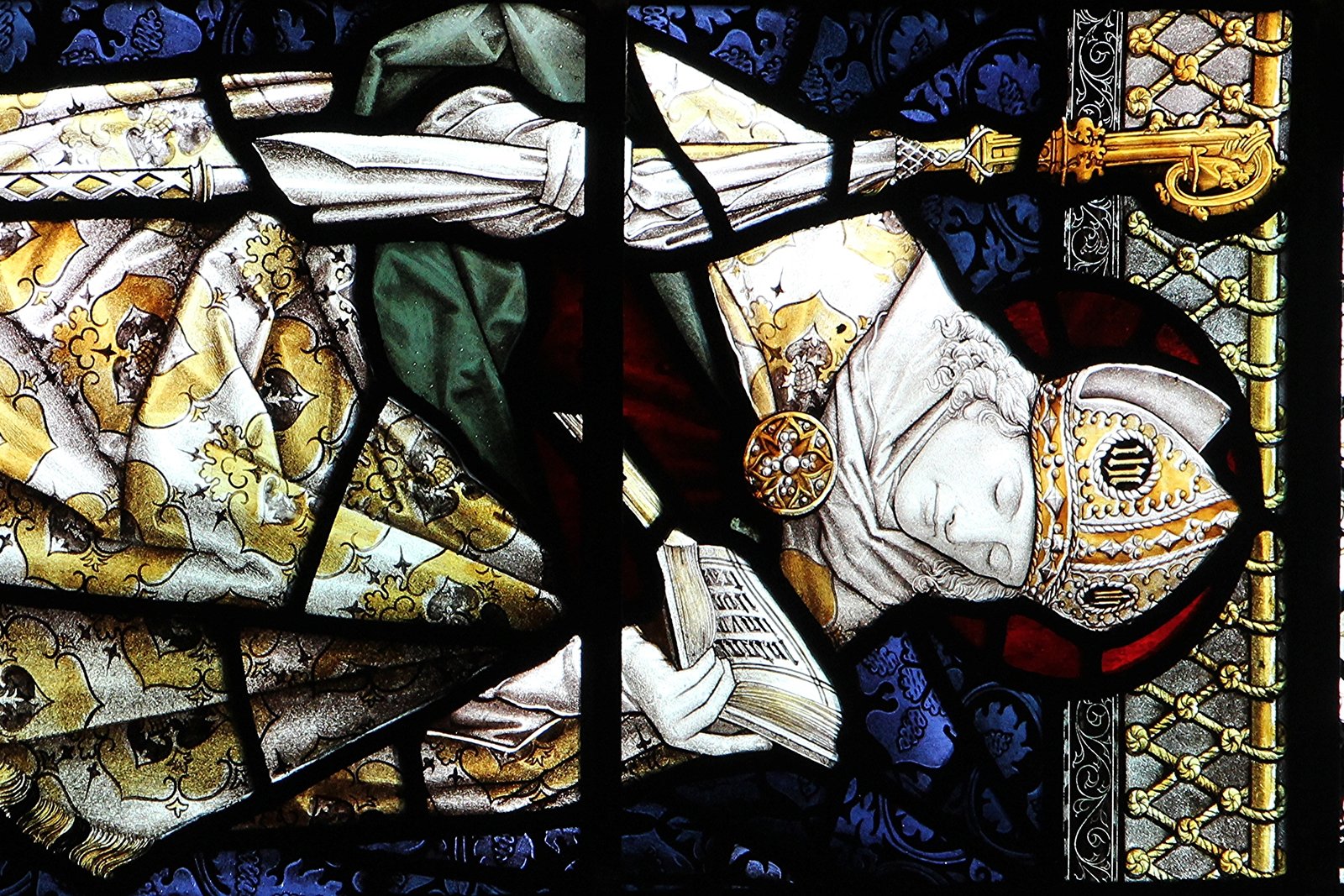
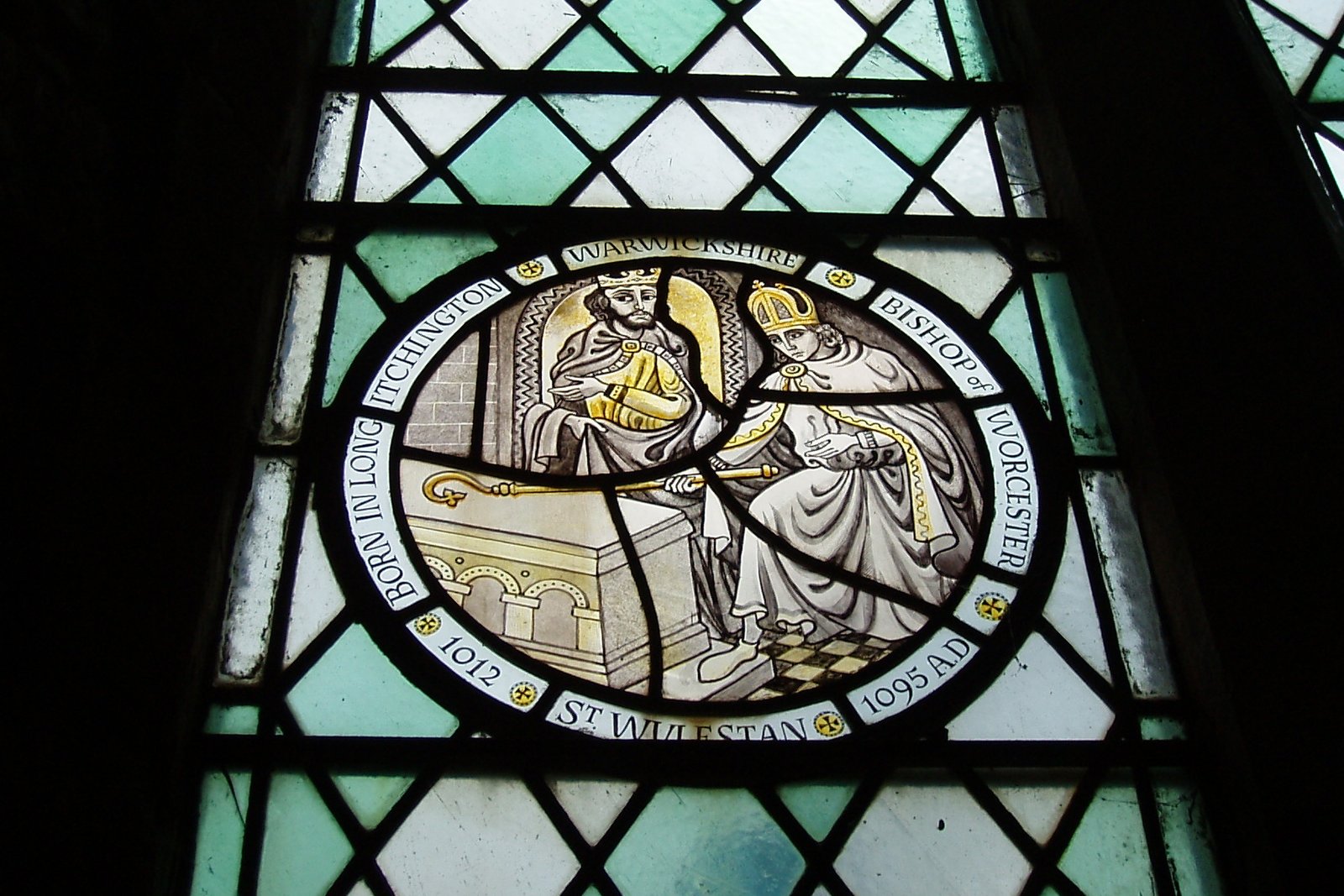
Stained glass window depicting Saint Richard of Chichester, St Saviour's Church, Eastbourne — used under CC BY 2.0, photograph by Fr James Bradley.
When Edmund died in exile in France in 1240, having left England amid his own conflicts with King Henry III over Church appointments, Richard remained loyal to his memory and continued in religious formation, eventually being ordained a priest and serving in parish ministry — a notably humble step for a man with his level of formal education and prior institutional standing, but one that reflected a genuine, sustained pastoral commitment rather than pure careerism.
A contested election
In 1244, the cathedral chapter of Chichester elected Richard as their new bishop, a canonically proper election under the Church's own procedures. King Henry III, however, had already backed a different candidate for the position and refused to accept Richard's election, withholding the temporal revenues, estates, and castle attached to the bishopric — practical control the king could exercise even though he lacked the legal authority to overturn a valid Church election outright. This left Richard formally bishop of Chichester but without most of the income and institutional support the position would normally carry, for roughly two years.
Richard appealed the dispute to Pope Innocent IV, who firmly upheld his election as valid and pressed the king to relent. Henry III eventually complied, under continued and mounting papal pressure, restoring the bishopric's revenues and estates to Richard around 1246. Richard is recorded as having lived with real personal simplicity during this difficult period of reduced income, a detail contemporaries noted approvingly and one consistent with the broader pattern of personal austerity that would characterize his episcopate even after his financial position was restored.
A reforming bishop
Once fully established as bishop, Richard governed Chichester with a strong emphasis on practical pastoral reform. He required parish priests within his diocese to be properly educated and genuinely resident in their parishes rather than absentee, insisted on dignified and correctly conducted celebration of the sacraments, and worked to raise general standards of clerical discipline and competence across his diocese — the kind of unglamorous, sustained administrative reform work that rarely produces dramatic stories but that contemporaries and later historians alike credit with real, lasting improvement in the pastoral care ordinary parishioners actually received. He was also remembered consistently for personal generosity to the poor, continuing a pattern of charitable giving that had begun even during his years of reduced episcopal income.
A model bishop for later Church reform
Richard's approach to episcopal governance — insisting on resident, educated clergy and dignified sacramental practice while personally living with real simplicity — was cited approvingly by later medieval and even post-Reformation writers discussing what a genuinely reforming bishop ought to look like, well beyond his own specific diocese and century. His willingness to endure years of reduced income rather than compromise on the principle of canonically free Church elections also made him a frequently invoked example in later disputes over the proper boundary between royal and ecclesiastical authority in England, a tension that would resurface repeatedly in English history long after Richard's own conflict with Henry III had been resolved.
A prayer that outlived its author's fame
Richard died in 1253 while at Dover, reportedly preaching in support of a crusade at the time of his death. The prayer most associated with his name — asking to see Christ "more clearly, love thee more dearly, and follow thee more nearly, day by day" — became, centuries later and largely disconnected from any awareness of Richard himself, one of the most widely known pieces of English devotional language in the modern world, thanks to its adaptation as the song "Day by Day" in the 1971 musical Godspell. The prayer's precise textual history is debated by scholars, and the version popularized by the musical differs somewhat from the traditional wording, but the underlying tradition connecting some version of this prayer to Richard is old and well established, predating its modern popular revival by many centuries.
Richard was canonized in 1262, less than a decade after his death, a relatively swift process reflecting the strength of his reputation both as a reforming pastoral bishop and as a man who had endured real hardship for the sake of a canonically proper Church election. His feast is kept on April 3, and his shrine at Chichester Cathedral became an important medieval pilgrimage site. He remains the patron most closely associated with the cathedral and diocese of Chichester, and, in some later traditions, with coachmen — a small, practical patronage far removed from the standoff with a king that defined the opening years of his episcopate.
Trivia
Who was Saint Richard of Chichester?
Why did King Henry III oppose Richard's appointment as bishop?
What is the prayer associated with Richard of Chichester?
What kind of bishop was Richard of Chichester?
When is Saint Richard of Chichester's feast day?
You May Also Like
Related Reading