Saint Veronica Giuliani

An intense child who resisted her own vocation
Veronica Giuliani was born Ursula Giuliani in 1660 in Mercatello sul Metauro, a small town in the Marche region of central Italy, the youngest of seven daughters of a merchant family. Her mother died when Ursula was still young, and by her own later account, she felt an early and persistent pull toward religious life, one she initially resisted, in part out of concern for her father, who wanted her to marry. She eventually won his reluctant permission and entered the Capuchin Poor Clares — a strictly enclosed branch of the Franciscan family tracing its spirituality back to Clare of Assisi — at the convent in Citta di Castello in Umbria in 1677, taking the religious name Veronica.
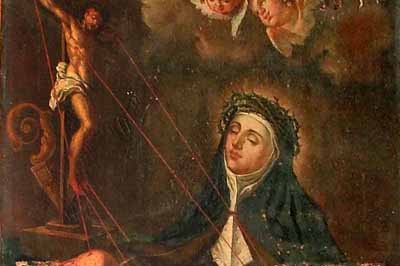
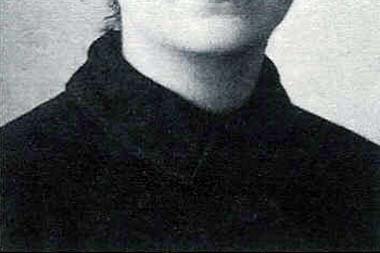
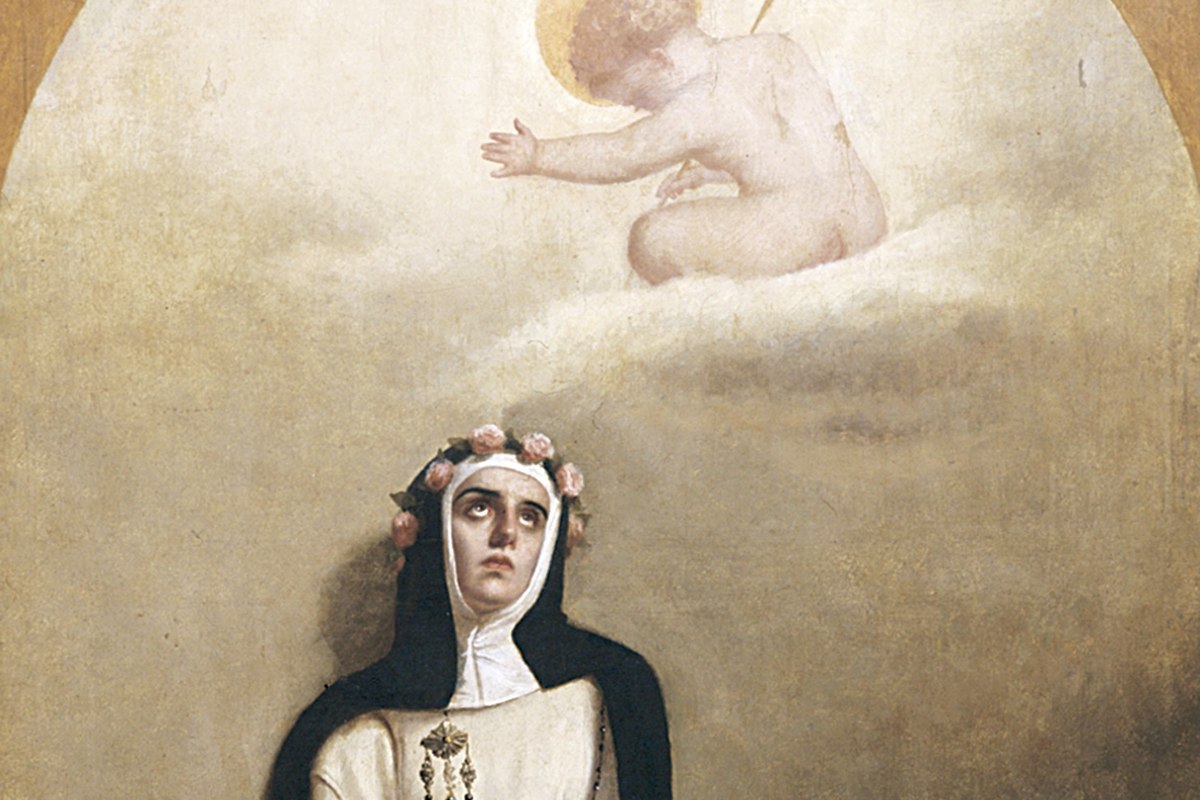
Saint Veronica Giuliani, 18th-century Italian devotional painting, Wikimedia Commons — public domain.
From early in her religious life, Veronica reported an unusually intense interior prayer experience — vivid visions, periods of profound spiritual consolation alternating with equally intense spiritual desolation, and physical symptoms her superiors found difficult to interpret. Rather than dismissing these reports outright or accepting them uncritically, her spiritual directors took the standard, cautious approach the Church has long applied to reported mystical phenomena: careful, sustained observation and documentation, precisely so any conclusions could rest on an extensive evidentiary record rather than on Veronica's word alone.
Thirty-four years of ordered diary-keeping
That documentation took an unusually thorough and lasting form. Veronica's confessors ordered her, under religious obedience, to keep a written record of her interior experiences — a practice not unheard of for mystics under Church scrutiny, but rarely sustained for as long or in as much detail as Veronica's diary eventually reached. She kept it faithfully for thirty-four years, from 1693 until shortly before her death in 1727, filling what scholars estimate at around twenty-two thousand handwritten pages describing her visions, spiritual struggles, ordinary convent life, and the physical and emotional experiences that accompanied her prayer.
The diary remains, to this day, one of the largest and most studied first-person accounts left behind by any canonized Christian mystic, giving historians and theologians an unusually detailed window into both the content of her reported mystical experiences and the day-to-day texture of enclosed religious life in a small Italian convent around the turn of the eighteenth century.
The stigmata and a formal medical investigation
In April 1697, Veronica reported experiencing the stigmata — wounds corresponding to those of Christ's crucifixion appearing on her own body, a phenomenon reported by a number of Catholic mystics across history, among the best known being Padre Pio in the twentieth century. Given the seriousness with which any such claim was treated, her bishop ordered a formal investigation, including physical examination of the wounds by physicians and repeated questioning by Church officials — an unusually rigorous, methodical process by the standards of the time, reflecting the Church's consistent insistence that extraordinary mystical claims be tested and scrutinized rather than simply accepted on faith.
The investigation continued intermittently for years and produced no conclusive natural medical explanation for the wounds, though — as with all reported stigmata — the Church has never required belief in any individual case as a matter of doctrine, treating such phenomena as private revelation that the faithful remain free to accept or set aside according to the evidence available to them.
Practical leadership alongside mystical experience
What is easy to overlook amid the drama of the stigmata and the enormous diary is that Veronica also proved to be a capable and trusted administrator within her own community. Despite — or perhaps in some ways because of — the scrutiny her mystical experiences attracted, her fellow sisters elected her novice mistress and later abbess of the Citta di Castello convent, positions requiring precisely the kind of grounded, practical judgment that skeptics of mystical experience often assume such visionaries lack. She held the office of abbess for the final years of her life, governing the convent's ordinary daily affairs while continuing to keep her diary and to experience the intense prayer life that had marked her religious vocation from the beginning.
Death and canonization
Veronica Giuliani died in Citta di Castello on July 9, 1727, after a lengthy final illness. Devotion to her grew steadily in the following decades, supported by the extensive documentary record her diary and the earlier ecclesiastical investigations had left behind — an unusually well-documented case, by the standards of canonization processes for mystics. Pope Gregory XVI canonized her in 1839, and her feast is kept on July 9, the anniversary of her death. Her body remains venerated in the Capuchin Poor Clare convent in Citta di Castello where she spent virtually her entire adult life.
Why her case remains a reference point for historians
Veronica Giuliani's canonization file is often cited by scholars of Christian mysticism precisely because so little of it depends on secondhand report. Most medieval and early modern mystics are known to us chiefly through biographies written by others, sometimes decades after the events they describe, filtered through the devotional expectations of whoever picked up the pen. Veronica's own diary, kept continuously under obedience for thirty-four years and cross-checked against her convent's independent records and the findings of the bishop's medical investigators, gives historians something closer to a contemporaneous, first-person account — imperfect and shaped by her own understanding of what she was experiencing, certainly, but not filtered through a later biographer's retelling.
That same body of material has also made her a frequent point of comparison for later reported cases of stigmata, including the twentieth-century case of Padre Pio, since both left behind unusually extensive documentation — Veronica through her diary, Padre Pio through decades of correspondence and eyewitness testimony from fellow friars — that scholars and Church investigators could examine directly rather than relying on distant secondhand report.
Trivia
Who was Saint Veronica Giuliani?
What is the stigmata, and did Veronica Giuliani receive it?
Why did Veronica Giuliani keep a diary of her mystical experiences?
What role did Veronica Giuliani hold within her religious community?
When was Veronica Giuliani canonized?
You May Also Like
Related Reading