Saint Joseph of Cupertino

A slow, sickly boy nobody expected much from
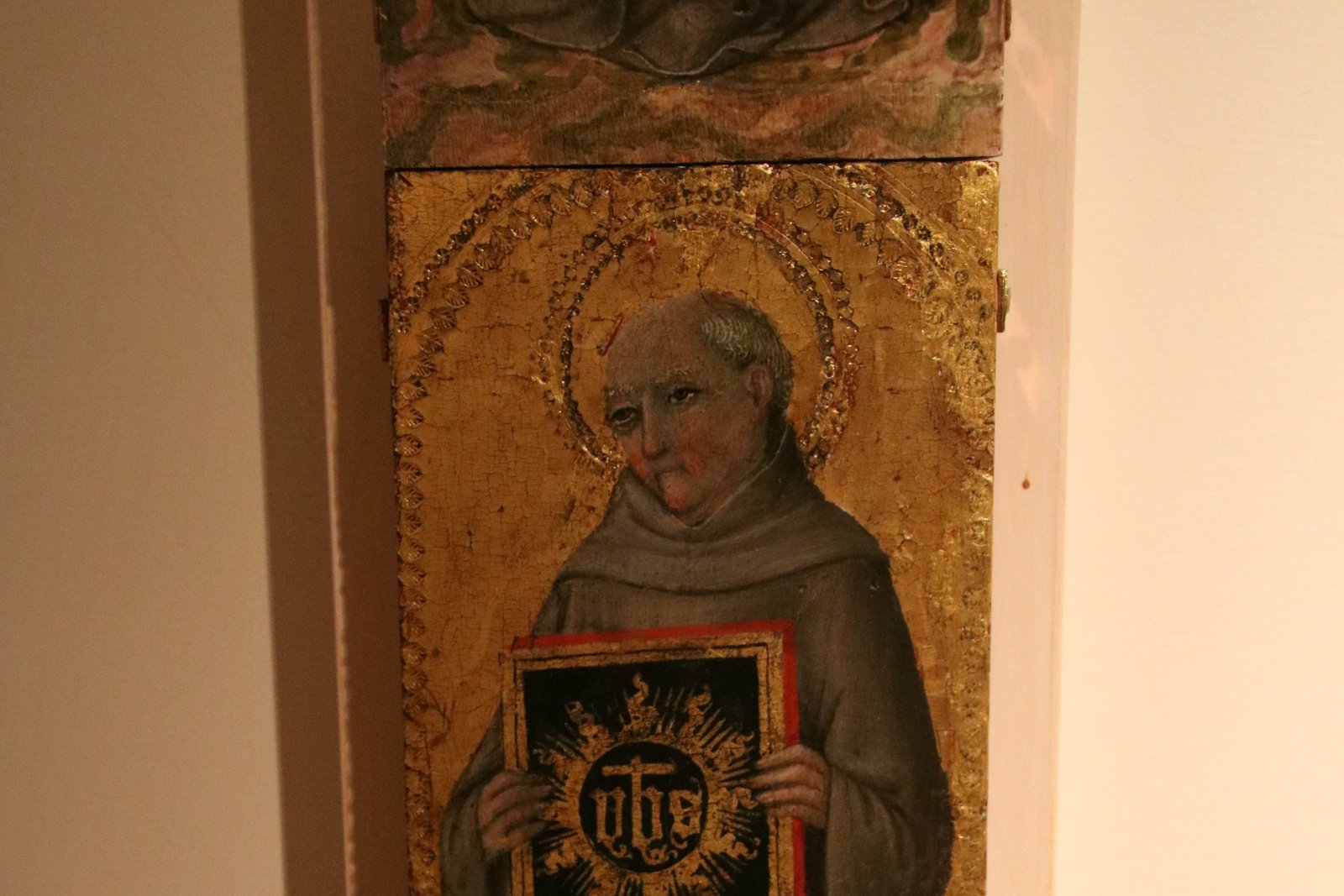
Giuseppe Desa was born in 1603 in Cupertino, a small town in the heel of Italy, in circumstances so poor that his mother reportedly gave birth to him in a stable behind the family house because their own home had been seized to pay his late father's debts. He was a sickly child prone to sudden fainting-like trances, and by his own account and that of those who knew him, painfully slow at learning — so absent-minded and easily distracted that neighbors nicknamed him "Bocca Aperta," open-mouth, for the way he'd wander around with his jaw hanging slack, lost in his own thoughts.
Placido Costanzi, grisaille study for A Miracle of Saint Joseph of Cupertino, c. 1750, The Metropolitan Museum of Art — public domain (CC0).
That combination — poor health, a reputation for simplemindedness, and a temper he struggled to control as a teenager — made him an unlikely candidate for religious life. The Conventual Franciscans initially turned him away, and so did the Capuchins, who dismissed him after eight months as unfit for the demands of the order. He finally found a place as a lay servant with the Conventual Franciscans at La Grottella, doing menial work in the stable and garden, and it was there, watching his humility and devotion over time, that the friars eventually admitted him as a full member of the order.
Ordination against the odds
Joseph's path to the priesthood is one of the more improbable stories attached to any saint. Candidates for ordination were examined on Scripture and theology, and by every account Joseph was a weak student who never mastered formal study. Tradition holds that at his final examination, the bishop, running out of time or patience with a long line of candidates, asked Joseph to expound on the one Gospel passage he happened to have prepared — and passed him on the strength of that single answer. Whether or not every detail of that story is precise, it captures something his contemporaries clearly believed about him: whatever gifts Joseph had, they weren't the gifts of a scholar. He was ordained a priest in 1628.
The ecstasies begin
Not long after ordination, Joseph began experiencing what his community described as ecstatic trances — moments during prayer, Mass, or simply hearing a religious word or phrase, when he would seem to lose all awareness of his surroundings, sometimes for hours. According to a large body of testimony gathered from fellow friars and visiting laypeople over more than three decades, these trances were frequently accompanied by what witnesses swore was levitation: Joseph rising off the ground, sometimes only inches, sometimes reportedly several feet, and remaining suspended until the ecstasy passed.
The reports grew so frequent, and drew such large and disruptive crowds hoping to witness a miracle, that his superiors found it impossible to manage. He was barred for years from celebrating Mass in public, from eating in the common refectory with the other friars, and even from taking part in the community's processions, because his presence alone seemed to trigger the phenomenon and the resulting chaos. Rather than treat this as vindication, the Franciscan order and later the Inquisition treated it as a problem requiring investigation and containment — Joseph was moved repeatedly between remote friaries, kept in near isolation for stretches of years, and questioned extensively. What emerges from the historical record isn't a saint eagerly performing miracles for an audience, but a bewildered, largely uneducated friar whose community spent decades trying to manage something they couldn't fully explain and didn't entirely trust either.
What the witnesses actually claimed
The detail that separates Joseph's case from vaguer legendary accounts is the sheer number and status of the people who put their names to sworn testimony. Fellow friars, visiting bishops, and members of the nobility all gave accounts during the decades-long canonization inquiry, describing him rising during Mass at the elevation of the host, floating toward a crucifix or an image of the Virgin Mary, and once, according to a widely repeated tradition, rising in front of the future Pope Urban VIII during a papal audience — though it's worth being direct that even well-attested pre-modern testimony of this kind can't be independently verified by the standards of modern investigation, and readers should understand these as historical claims documented by contemporaries rather than empirically demonstrable events.
Feast day and canonization
Joseph died on September 18, 1663, at Osimo, where he had spent his final years living once again in near seclusion. He was beatified in 1753 and canonized in 1767 by Pope Clement XIII. His feast day is celebrated on September 18, the date of his death.
Patron of pilots, air travelers, and struggling students
The patronage that has followed Joseph of Cupertino into the modern era grew organically out of his reputation, without needing much reinterpretation: a saint reported to rise off the ground became, once powered flight existed, an obvious patron for those who fly. Pilots, air travelers, and paratroopers have invoked him informally for generations, and the U.S. Air Force has cited him among its patrons. Students facing exams turn to him for a different but equally direct reason — his own well-documented struggles with formal learning, and the story of his ordination exam, make him one of the more relatable intercessors in the Catholic calendar for anyone convinced they're about to fail a test they haven't adequately prepared for.
Related reading
Joseph's story sits alongside other Franciscan mystics whose interior lives shaped how the order is remembered — readers drawn to his path from an unlikely, overlooked beginning to canonized sainthood may also want to read about Saint Francis of Assisi, the founder of the order Joseph belonged to, or Saint Padre Pio, another 20th-century Italian friar whose reported mystical experiences drew similar official scrutiny during his lifetime.
Trivia
Who was Saint Joseph of Cupertino?
Is it true that Saint Joseph of Cupertino actually levitated?
Why is Saint Joseph of Cupertino the patron saint of pilots and air travelers?
Why is Saint Joseph of Cupertino also a patron of students?
Did the Church ever investigate Joseph of Cupertino as a fraud?
You May Also Like
Related Reading