Saints Basil the Great and Gregory Nazianzen

One feast, two very different men
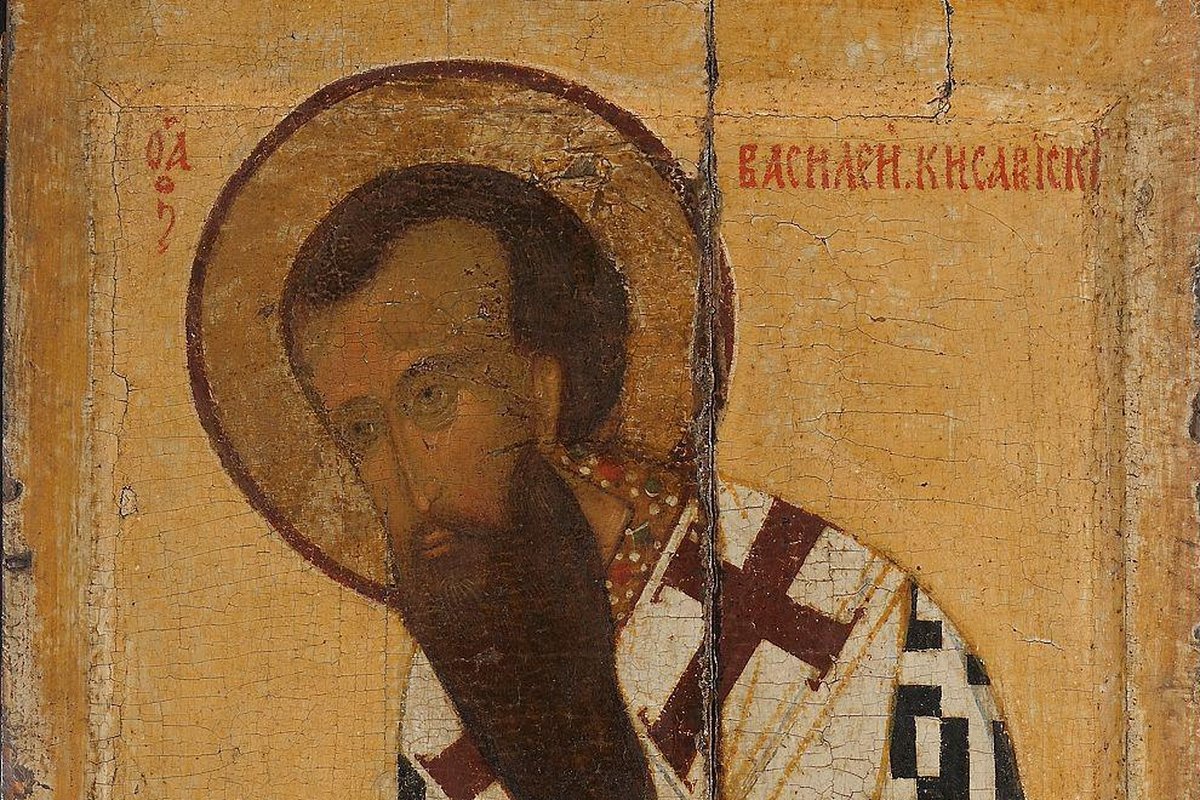
Basil of Caesarea and Gregory of Nazianzus share a single feast day on the Roman calendar, January 2, and that shared date is not simply a scheduling convenience. It's a deliberate statement about how the Church wants these two remembered — not as two solo theologians who happen to have adjoining biographies, but as a pair whose friendship and whose life's work were genuinely intertwined. For the fuller story of each man individually, Saint Basil the Great and Saint Gregory of Nazianzus cover their separate careers at length. This article stays with the question those two don't fully answer on their own: why commemorate them together at all, and what did their friendship actually mean for the Church they served?
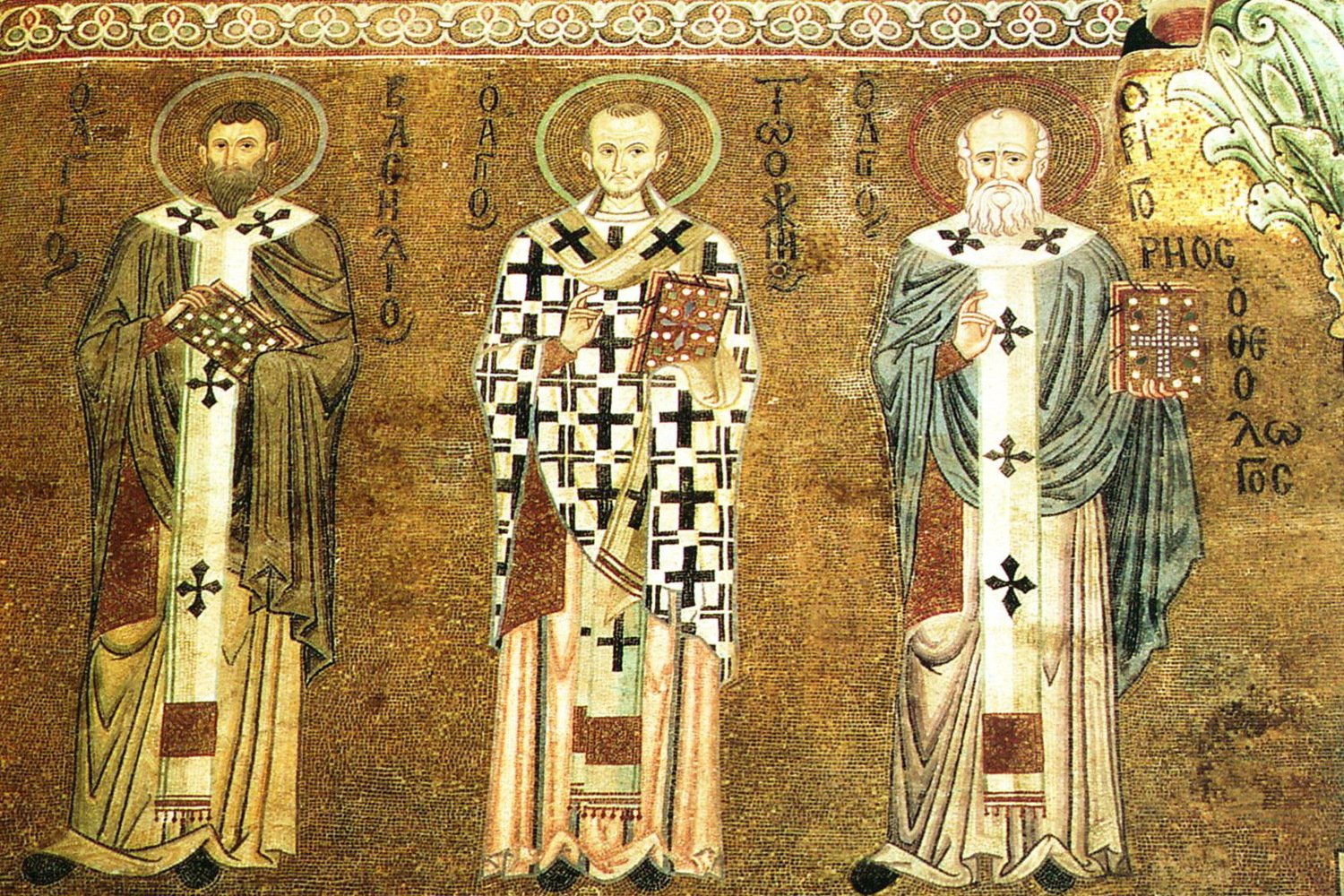
Mosaic of the Three Holy Hierarchs, including Saint Basil the Great and Saint Gregory Nazianzen, 12th century, Cathedral of Cefalù, Sicily — public domain.
A friendship formed in a classroom
The two men met as young students in Athens in the middle of the 4th century, drawn to the same city by its reputation as the ancient world's premier center for the study of rhetoric and philosophy. Gregory later wrote about those years with unusual warmth for a formal theological orator, describing a friendship so close that it seemed, in his words, as though the two of them shared a single soul housed in two bodies. They studied together, argued over texts together, and by Gregory's own account deliberately avoided the rougher student rivalries common in Athens at the time, choosing instead to know only two roads in the city: the one to church, and the one to their teachers' lecture halls.
That kind of language could easily be dismissed as rhetorical flourish — Gregory was, after all, a trained orator writing a formal eulogy — but the substance behind it held up for decades. Both men went on to embrace ascetic, monastic life for a period after their studies, corresponded regularly, and continued to think of each other as intellectual equals and spiritual companions even as their careers diverged sharply: Basil into the demanding, hands-on work of running a diocese and building charitable institutions, Gregory into a more reluctant, often uneasy relationship with formal church office that he seems never to have fully wanted.
The friction that came with high office
Their friendship was not, however, free of real strain, and the honest history matters more than a sanitized version would. When Basil became bishop of Caesarea and found himself in a jurisdictional struggle over the boundaries of his ecclesiastical province, he ordained Gregory as bishop of Sasima — by most accounts, a small, unappealing, contested outpost that Basil needed filled mainly to shore up his own position against a rival bishop. Gregory, who had never sought power for its own sake and disliked the political maneuvering of church administration, felt used rather than honored by the appointment, and he said so plainly in his later writing. He never actually took up residence in Sasima.
The rift this caused was real, and it never fully vanished from Gregory's later reflections on their relationship — but it also never destroyed the friendship outright. When Basil died in 379, it was Gregory who delivered one of the most moving funeral orations to survive from the early Church, Oration 43, praising Basil's virtues at length while also being unusually candid, for a eulogy, about the tensions that had passed between them. That honesty is itself part of why the two are remembered together with such affection: theirs wasn't an idealized friendship scrubbed of conflict, but a durable one that survived real conflict.
Two different gifts serving one cause
What made the pairing theologically significant, not just personally touching, was how their strengths complemented each other during one of the most contested doctrinal periods in Church history. The 4th century was consumed by controversy over Arianism, the teaching that denied the Son was fully equal in divinity to the Father, and by related disputes over the divinity of the Holy Spirit. Basil brought organizational force to the Nicene cause — as bishop of an important see, he built alliances, corrected wavering colleagues, and used his administrative authority to hold a fractured Eastern episcopate together around orthodox teaching.
Gregory brought something different: rhetorical and theological precision. His Five Theological Orations, delivered in Constantinople in 380, are still regarded as among the clearest surviving defenses of Nicene Trinitarian doctrine, earning him the rare title "the Theologian" in Eastern Christian tradition, a title otherwise reserved almost exclusively for John the Evangelist. Together with Basil's younger brother, Gregory of Nyssa, the three are remembered collectively as the Cappadocian Fathers — a label that captures how their combined work, administrative and rhetorical and philosophical together, accomplished more for Trinitarian doctrine than any one of them could likely have managed alone.
Doctors of the Church, remembered as a pair
Both men were later formally recognized as Doctors of the Church, Basil for his monastic rule and body of doctrinal writing, Gregory for his theological orations and poetry. Their combined feast on January 2 reflects a broader instinct in the Church's calendar: some saints are remembered more truthfully together than apart, because their significance was never purely individual to begin with. An earlier tradition, especially strong in the Byzantine Church, went even further and grouped Basil and Gregory with John Chrysostom as the Three Holy Hierarchs, celebrated jointly on January 30 in the East as models of Christian eloquence and pastoral wisdom.
Standing at the start of the calendar year, their shared feast offers something worth sitting with: a reminder that some of the Church's most important theological work was carried out not by isolated geniuses working alone, but by friends — sometimes strained, sometimes imperfect, but genuinely devoted to each other and to a shared cause larger than either of them.
Trivia
Why are Basil the Great and Gregory Nazianzen commemorated on the same day?
Where did Basil and Gregory Nazianzen first meet?
Did Basil and Gregory Nazianzen's friendship ever suffer a rift?
What do the Cappadocian Fathers refer to?
Why are both men called Doctors of the Church?
You May Also Like
Related Reading