Saints Nereus and Achilleus, Martyrs

Soldiers who chose baptism over rank
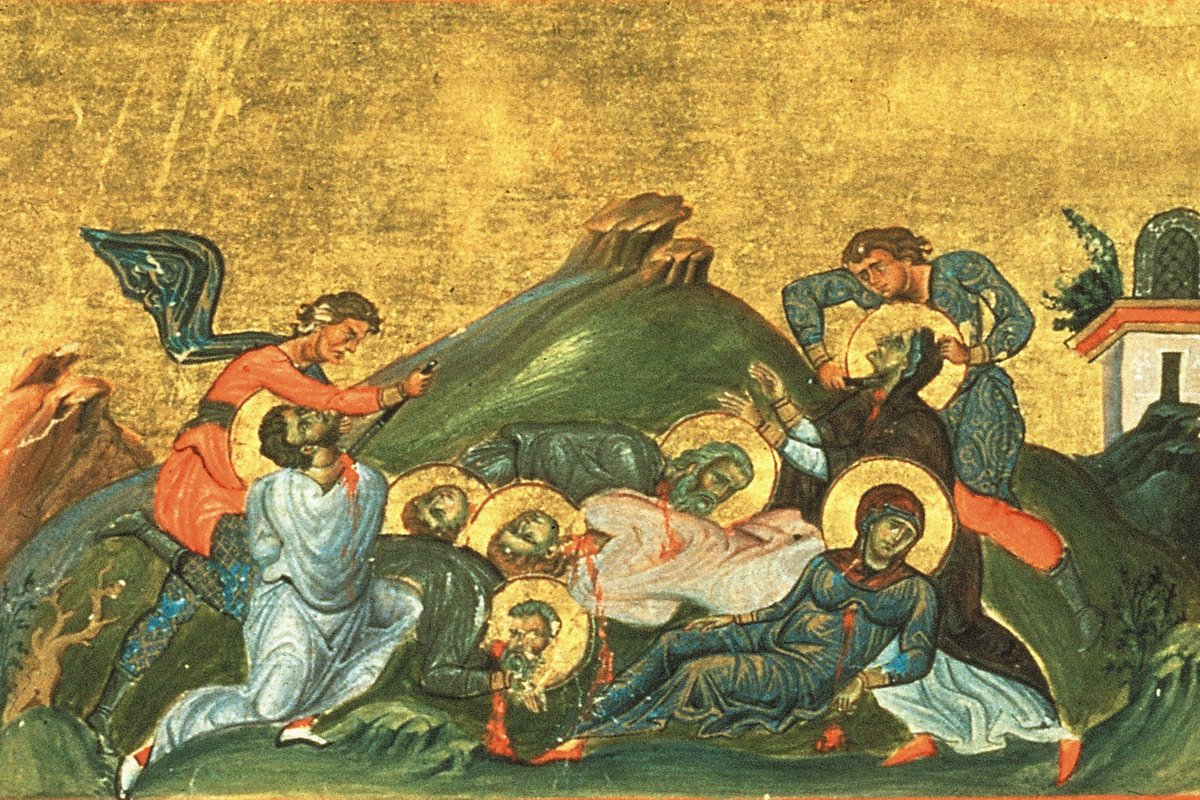
The story of Nereus and Achilleus, as it comes down through ancient Roman tradition, begins with two men serving in the Roman military, quite possibly attached to the imperial guard given the level of proximity to power their legend assumes. Sometime in the late third century, both were converted and baptized as Christians. What follows in the tradition is not a slow drift away from military life but an immediate, deliberate break: as soon as they understood the demands of their new faith, they refused to continue serving, laying down their arms rather than continue participating in duties that required them to honor the emperor with rites early Christians considered idolatrous.
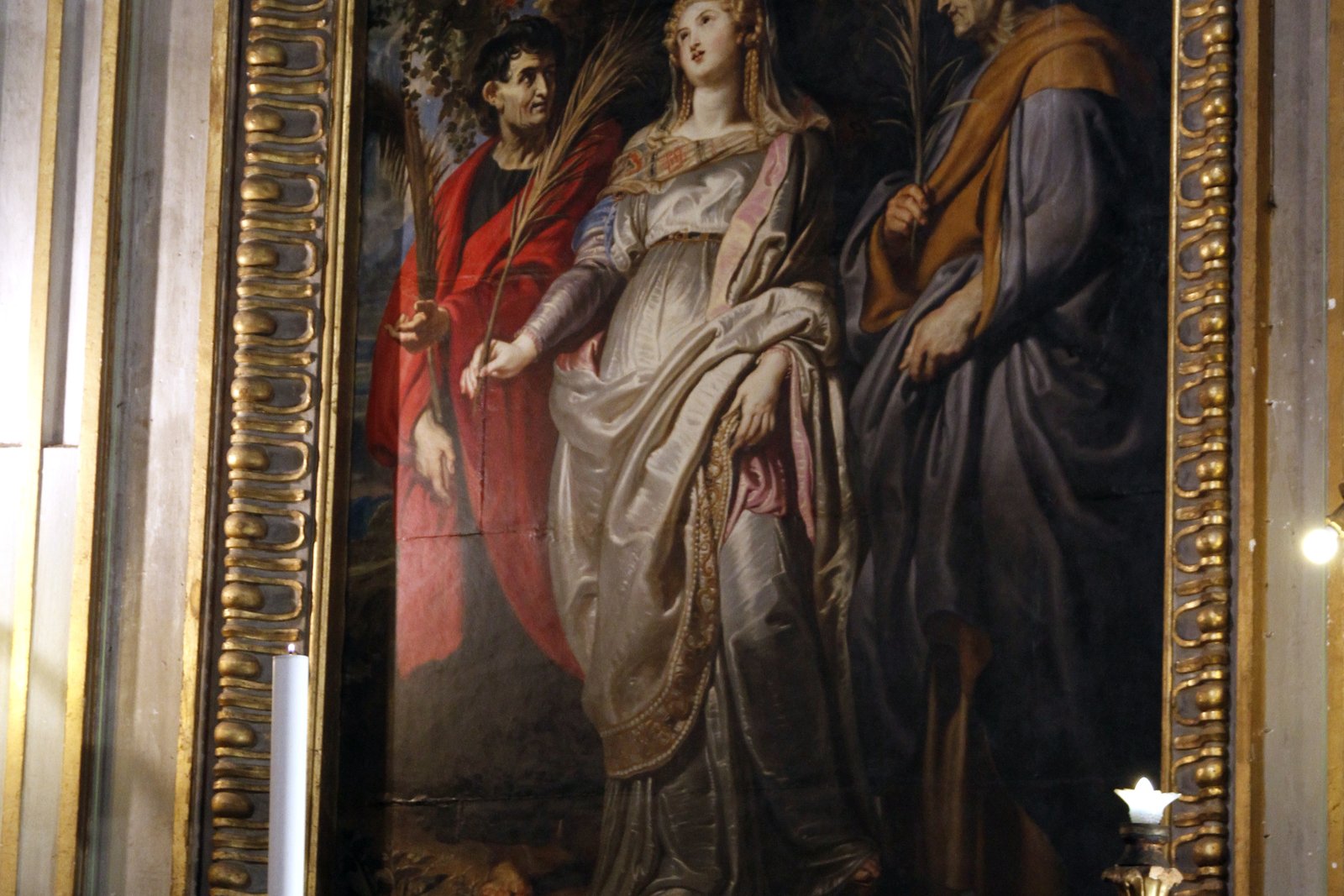
Peter Paul Rubens, Saints Flavia Domitilla, Nereus and Achilleus, 1608, main altar, Chiesa Nuova (Santa Maria in Vallicella), Rome. Photo: José Luiz Bernardes Ribeiro, CC BY-SA 4.0 (cropped).
This wasn't an eccentric scruple particular to these two men. Roman military service in this period was thoroughly bound up with the imperial cult — soldiers swore oaths invoking the emperor's divine authority and took part in sacrifices as a normal part of garrison life, since the army functioned as much as a religious institution honoring the state as a fighting force. For a growing number of Christian converts across the empire, continuing in that service after baptism became impossible to reconcile with the first commandment, and stories of soldier-converts refusing further service, sometimes called the "military martyrs," recur across several regions of the late Roman world in this period. Nereus and Achilleus belong to that broader pattern, even though the specific narrative details of their story, like those of many early martyrs, were elaborated well after their actual deaths, in a later hagiographical account, the traditional genre of saint's-life writing that often filled historical gaps with edifying, sometimes legendary detail.
What tradition claims, and what the evidence actually shows
It's worth being honest about where the documented history ends and pious narrative begins, exactly as the Church itself is careful to do with martyrs from this period. The later legendary account attached to Nereus and Achilleus connects them to the household of Flavia Domitilla, a Roman noblewoman of the imperial Flavian family said to have been exiled for her Christian faith, and casts the two soldiers as her attendants who accompanied her into exile and shared her fate. Domitilla herself is a genuinely attested figure from Roman history, whose family owned the land where the catacomb bearing her name was later dug, but the precise narrative linking her directly and personally to Nereus and Achilleus as household retainers is considered by most scholars to be a later literary embellishment rather than established historical fact.
What is solid is the archaeological and liturgical record. The two soldiers were buried in the Catacomb of Domitilla, one of the oldest and most extensive of Rome's underground Christian burial complexes, cut into volcanic tuff rock beginning as early as the late first century and expanded over succeeding generations as a shared cemetery for Roman Christians. Their names appear together consistently in the earliest surviving Roman liturgical calendars, and in the late fourth century Pope Damasus I, who took a particular personal interest in restoring and marking the tombs of Rome's early martyrs, composed a Latin verse inscription in their honor that was placed at their tomb — a rare case where we have a near-contemporary papal text specifically naming them, even if it doesn't supply the biographical detail later legend would add.
A basilica built to remember them
Devotion to the pair grew steadily enough that a basilica was constructed over their tomb in the catacomb complex, traditionally attributed to Pope Siricius in the late fourth century, making it one of the earliest churches in Rome built specifically to honor named martyrs at their actual burial site rather than simply commemorating them elsewhere. Fragments of Damasus's original inscription have survived and can still be seen at the site today, giving visitors a rare direct textual link to how the earliest Roman Christian community remembered these two men, only a few generations removed from their actual deaths.
A separate, smaller church in central Rome, the Basilica dei Santi Nereo e Achilleo, was later dedicated to them as well, and it remains an active titular church today, meaning it is formally assigned to a cardinal as part of the ancient Roman system linking cardinals to specific city churches — a structure that traces back to the earliest centuries of the Roman Church's organization, when priests were assigned to specific congregations across the city.
Why two soldiers, remembered together, still matter
Nereus and Achilleus are almost always commemorated as a pair, never separately, which is itself typical of how the early Church often remembered companions who died together or were closely associated in life — sharing a single feast day the way Saint Pancras, whose feast falls on the very same date, is remembered individually but alongside them in the Roman calendar's May 12 commemoration. Their story, stripped of its later legendary embellishments, preserves something the earliest Christian communities clearly wanted remembered: that following Christ could require giving up a respected, secure position in Roman society, not hypothetically but concretely, and that some men actually did it. Whatever specific details have been softened or added by centuries of retelling, the core of that witness — two soldiers who would not keep serving a system that demanded worship belonging only to God — was significant enough to a still-young Roman Church that it carved their names into stone and kept telling their story for seventeen hundred years afterward.
Trivia
Who were Saints Nereus and Achilleus?
Why did Nereus and Achilleus give up being soldiers after their baptism?
Where are Nereus and Achilleus buried?
What is the feast day of Saints Nereus and Achilleus?
You May Also Like
Related Reading