Saints Timothy and Titus — Why the Church Remembers Them Together

Two names, one kind of trust
Anyone reading through Paul's letters quickly notices a pattern: most of his companions appear once or twice, mentioned in passing as a greeting is sent or a task assigned, and then vanish from the record. Timothy and Titus are different. They recur constantly, across nearly every major letter Paul wrote, and always in the same capacity — as the men Paul sent when a situation needed more than a letter could deliver. For the full story of each man individually, see the articles on Saint Timothy and Saint Titus. This article is about why the Church has always thought of them as a pair.
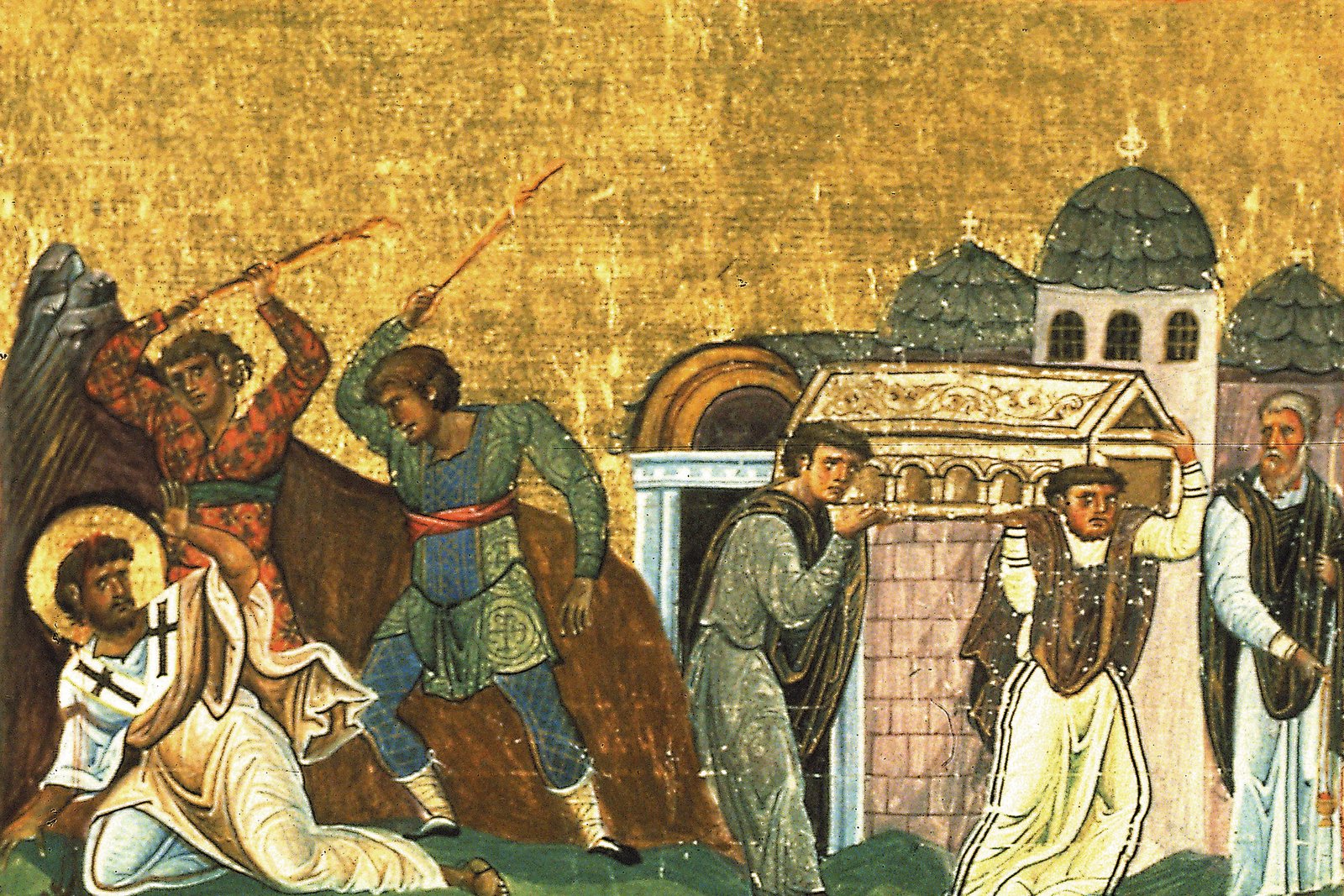
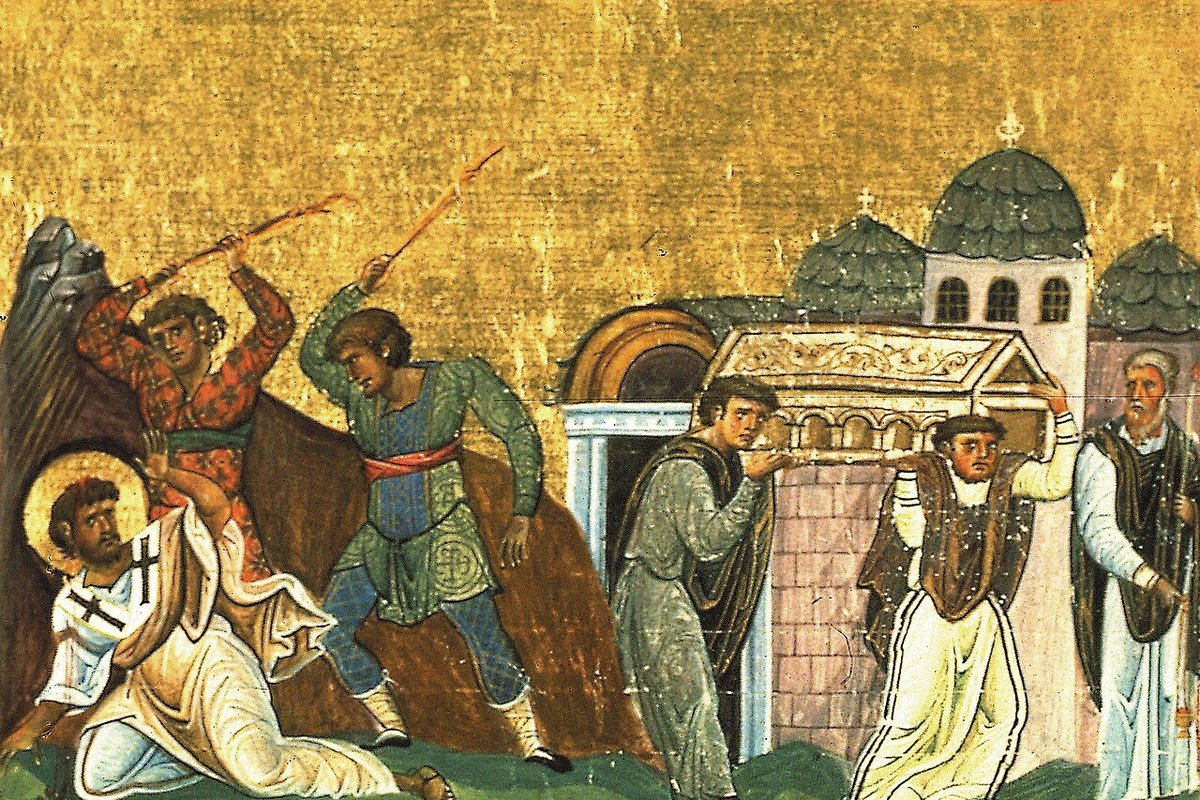
Martyrdom and burial of Saint Timothy, illumination from the Menologion of Basil II, c. 1000 AD, Vatican Apostolic Library — public domain.
The Catholic Church places their shared feast on January 26, immediately after the January 25 feast of the Conversion of Saint Paul — a deliberate sequencing that makes the point visually on the calendar itself. Paul's conversion changed one life; Timothy and Titus are presented as the immediate, living fruit of what that conversion set in motion. Neither man appears in the Gospels or knew Jesus during his earthly ministry. Both belong entirely to the second generation of the Church, the first wave of believers who inherited the faith directly from an apostle rather than from Christ himself, and both spent their lives proving that the movement Paul started could survive being handed off to someone else.
Two very different backgrounds, one shared assignment
Timothy and Titus came from noticeably different places. Timothy was from Lystra, in the interior of Asia Minor, born to a Jewish mother named Eunice and a Greek father; Paul had him circumcised before bringing him along specifically because Jewish communities in the region would have regarded him as one of their own and expected it (Acts 16:1-3). Titus, by contrast, was a Gentile through and through, with no Jewish ancestry at all — and Paul made a point of it. In Galatians, recounting a trip to Jerusalem to defend his mission to non-Jews, Paul writes that "not even Titus, who was with me, although he was a Greek, was compelled to be circumcised" (NABRE, Galatians 2:3), turning Titus into a living argument for the position Paul was fighting for: that Gentile converts did not need to adopt Jewish law to belong fully to the Church.
Different backgrounds, same job description. Both men were sent by Paul into churches that were struggling — not with persecution from outside, but with disorder from within. Timothy went to Ephesus to confront false teachers who had derailed the congregation there; Titus was left on Crete "For this reason I left you in Crete so that you might set right what remains to be done and appoint presbyters in every town, as I directed you," (NABRE, Titus 1:5), essentially building church governance from scratch on an island Paul describes, quoting a Cretan poet without much diplomacy, as populated by people who are "Cretans have always been liars, vicious beasts, and lazy gluttons." (NABRE, Titus 1:12) — a blunt assessment of just how difficult Titus's assignment was.
The peacemaker and the reformer
Titus's most memorable moment in the New Testament doesn't come from the letter addressed to him at all — it comes from 2 Corinthians, where Paul describes sending Titus into the middle of a painful rift between Paul and the Corinthian church. The relationship had soured badly enough that Paul, by his own admission, had written a stern letter "out of much affliction and anguish of heart... with many tears" (NABRE, 2 Corinthians 2:4), and then waited anxiously for word of how it had landed. When Titus finally returned with good news, Paul's relief spills across the page: "we were much more comforted by your comfort... for his spirit has been refreshed by all of you" (NABRE, 2 Corinthians 7:13). Titus, in other words, was the man Paul trusted to walk into a relationship on the edge of collapse and bring it back from the brink — a diplomat's assignment as much as a minister's.
Timothy's letters lean a different direction: less about reconciling a fractured relationship and more about establishing order and sound doctrine in a church being pulled apart by competing teachers. First Timothy reads almost like an operations manual — instructions on public prayer, on the qualifications required of overseers and deacons, on how the community should care for widows. Where Titus was sent to smooth things over, Timothy was sent to hold a line.
Companions, then patrons of the same kind of work
What ties both men together, beyond geography and chronology, is the kind of Christian they represent. Neither is remembered for a dramatic conversion story or a single defining miracle. Both are remembered for something quieter and, in a way, harder to sustain: showing up in unglamorous, often thankless assignments, staying faithful to them for years, and doing the patient, structural work of building institutions — training leaders, correcting error, mending relationships — that let a fledgling religious movement outlast its founder. That is precisely the kind of holiness the Church wanted to hold up when it joined their commemorations onto a single day rather than spreading them separately across the calendar.
Later tradition holds that both men died as bishops in the churches they had been sent to organize — Timothy in Ephesus, Titus on Crete — and while the details of their deaths come down through pious memory rather than eyewitness record, the trust Paul placed in each of them while alive is documented in his own words, preserved in letters still read in churches around the world every January.
Trivia
Why do Timothy and Titus share a single feast day?
What is the difference between Saint Timothy and Saint Titus?
What do the Pastoral Epistles say about church leadership?
Were Timothy and Titus bishops?
Did Timothy and Titus know each other?
Related Reading