Saint Titus — The Gentile Paul Refused to Circumcise

A Gentile brought to Jerusalem on purpose
Titus appears in Paul's letters as a Greek convert to Christianity, someone who had never lived under Jewish law and had no intention of starting now. When a dispute broke out in the early Church over whether Gentile converts needed to be circumcised — effectively, whether they had to become culturally Jewish to be fully Christian — Paul traveled to Jerusalem to settle the matter with the other apostles, and he brought Titus along deliberately.
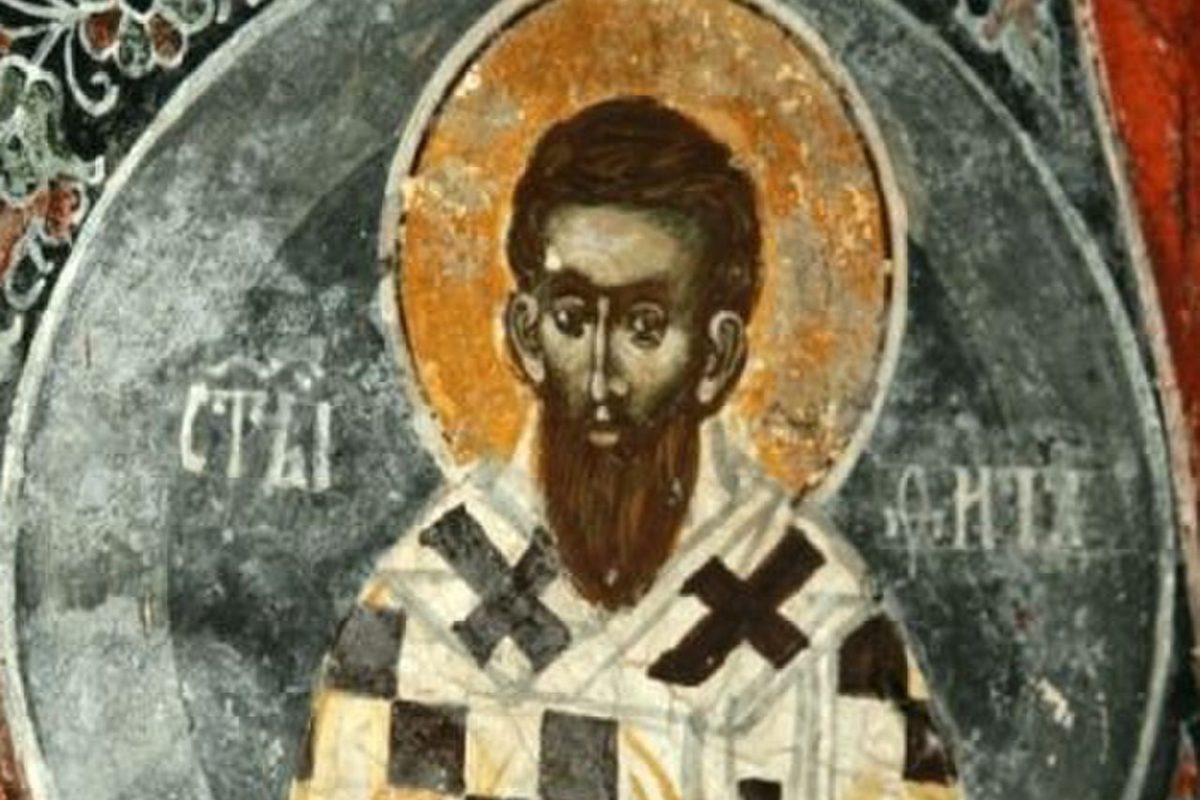
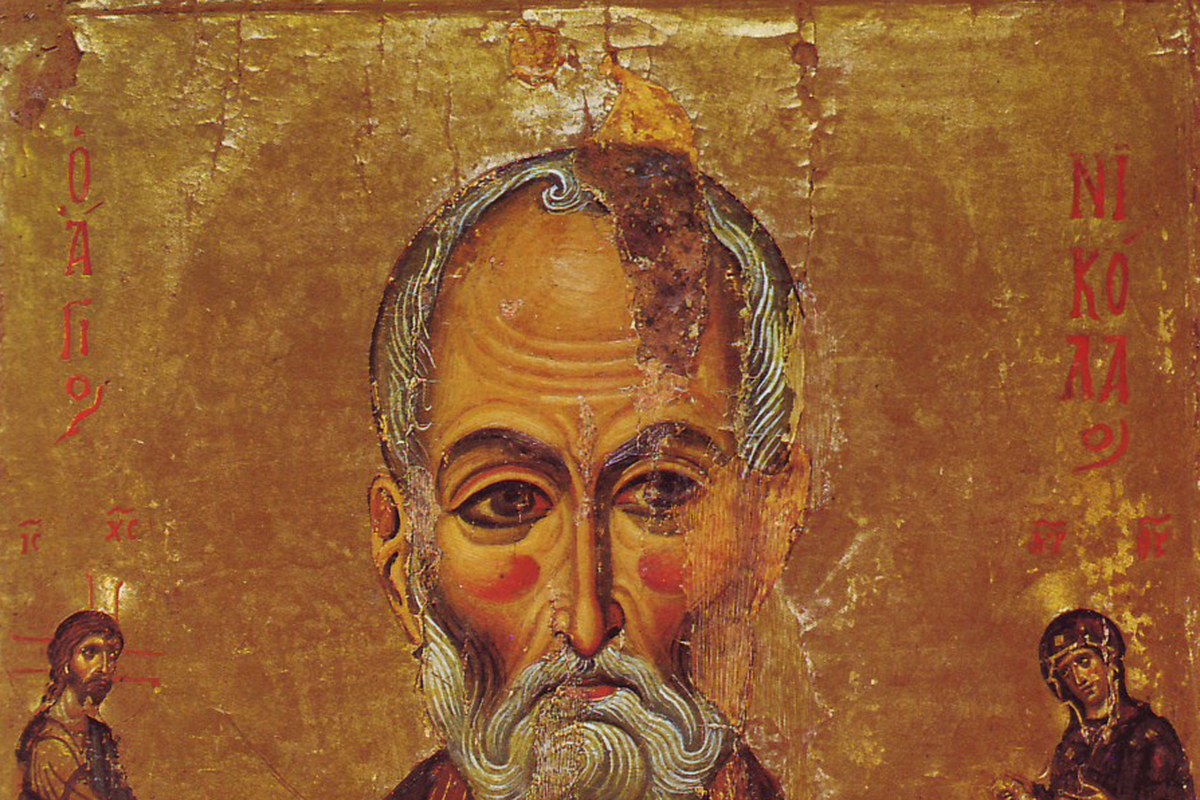
Unknown fresco painter, "Saint Titus," 14th century, Church of St Nicholas, Patriarchate of Peć, Kosovo — public domain.
Paul's own account of what followed is blunt. He describes bringing Titus "though he was a Greek," and states plainly that Titus "Moreover, not even Titus, who was with me, although he was a Greek, was compelled to be circumcised," (Galatians 2:3), despite pressure from what Paul calls "false brothers" who had infiltrated the discussion "to spy on our freedom" (Galatians 2:4). Titus wasn't a passive bystander in this dispute — his very body was the argument. By standing in front of the Jerusalem church uncircumcised and still fully accepted as a brother in Christ, he became living proof that Gentiles could belong to the Church without adopting the full requirements of Mosaic law, a resolution that shaped how Christianity would spread across the non-Jewish world.
What makes the episode remarkable is how little Scripture usually tells us about the people standing next to Paul. Most companions mentioned in his letters get a name and nothing more — a greeting, a task, a single sentence. Titus gets an argument built around his body. The Jerusalem meeting wasn't a theoretical debate about doctrine; it was a room full of people looking at an actual Gentile, uncircumcised, and asking whether he counted. Paul's decision to bring him at all was itself a provocation, and it worked: the council's eventual ruling, described later in Acts 15, confirmed that Gentile converts would not be bound by circumcision, clearing the path for the Gentile mission that would carry Christianity across the Roman world within a generation.
The man Paul trusted with hard assignments
Beyond that single dramatic episode, Titus shows up in Paul's letters as someone repeatedly sent into difficult, sensitive situations. When the church at Corinth was in open conflict with Paul, it was Titus who carried what Paul describes as a letter written "out of much affliction and anguish of heart... with many tears" (NABRE, 2 Corinthians 2:4), and Titus who returned with news of the Corinthians' genuine repentance — news that visibly relieved Paul, who writes that "God, who encourages the downcast, encouraged us by the arrival of Titus" (NABRE, 2 Corinthians 7:6). Paul goes on to describe how Titus's "heart goes out to you all the more, as he remembers the obedience of all of you" (NABRE, 2 Corinthians 7:15), describing him less like a subordinate messenger and more like a trusted partner in ministry: "As for Titus, he is my partner and co-worker for you" (NABRE, 2 Corinthians 8:23).
Corinth was arguably the most difficult congregation in Paul's entire mission field — a wealthy port city, proud of its rhetoric and status games, prone to splitting into factions around whichever teacher impressed it most. Paul had already tangled with the community over sexual misconduct, lawsuits between believers, and outright challenges to his own authority as an apostle. Sending Titus into that environment carrying a harsh corrective letter was a real risk: a lesser envoy could easily have made things worse, hardening the Corinthians' resentment rather than softening it. That Titus came back not with a fight but with news of tears and repentance says something about how he carried himself — firm enough to deliver hard truth, warm enough that people trusted him afterward.
Left behind to organize Crete
Paul's letter to Titus opens with the reason Titus was left on the island of Crete: "that you might set right what remains to be done and appoint presbyters in every town, as I directed you" (Titus 1:5). The letter goes on to lay out qualifications for church leaders, warnings about false teachers already active on the island, and practical instruction on sound conduct for different groups within the young Christian community — the same kind of pastoral concerns Paul addresses to Timothy in his own letters, part of why the two epistles are grouped together as the Pastoral Epistles.
Tradition holds that Titus went on to serve as the first bishop of Crete, overseeing the church there for the rest of his life and dying peacefully in old age — a quieter ending than many of the early Church's most prominent figures, and one that reflects the New Testament's own portrait of a steady, capable organizer rather than a dramatic public preacher.
An island Paul barely trusted
Crete in the first century had a reputation, and not a flattering one. Paul's letter to Titus quotes a local proverb, attributed to "one of their own prophets," describing Cretans bluntly as "Cretans have always been liars, vicious beasts, and lazy gluttons." (Titus 1:12) — and Paul adds, almost as an aside, "That testimony is true" (Titus 1:13, NABRE). It's a startling line to find in Scripture, and it explains why Paul thought the island needed someone as capable as Titus rather than a newer, less-tested worker. Appointing elders "in every town," as Paul instructs, meant building a functioning church leadership structure essentially from nothing, on an island where the surrounding culture gave Titus little to work with and every reason to expect resistance.
Iconography and how he is remembered
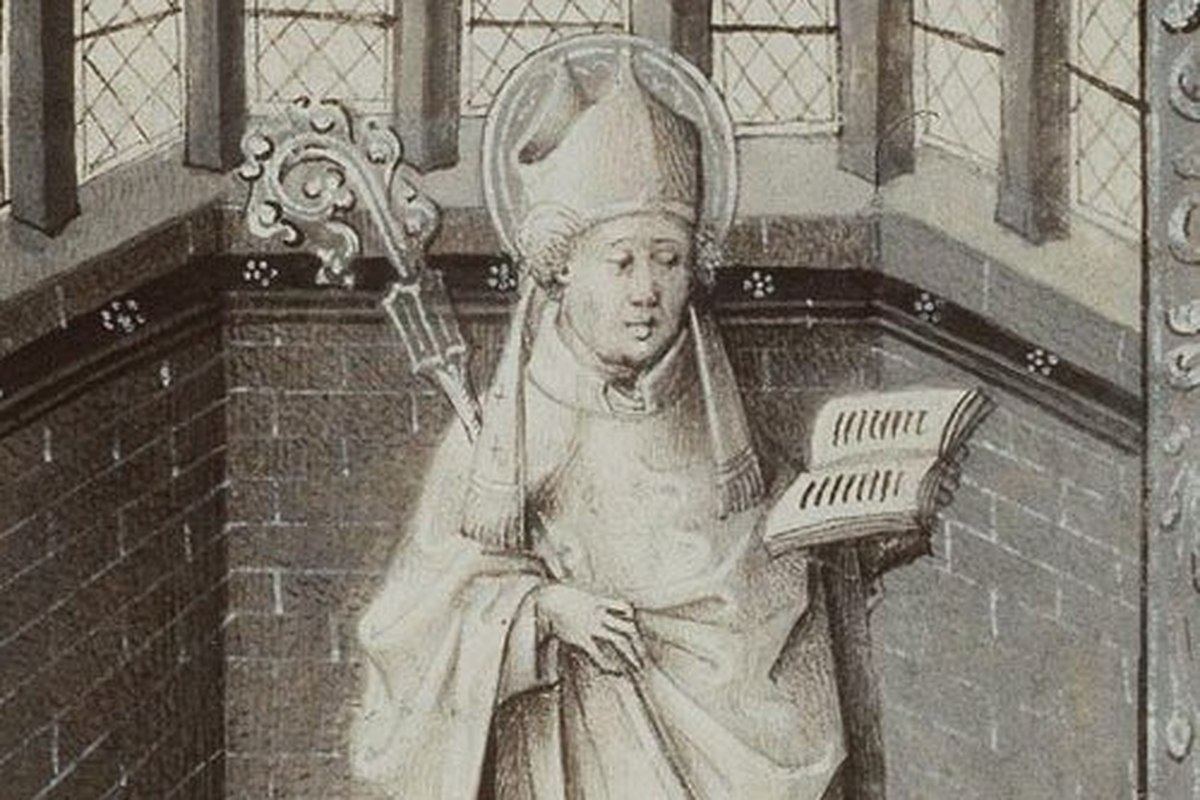
Because so little is recorded about Titus outside Paul's letters, artistic depictions of him are uncommon compared to the apostles or the great martyrs, and they tend to follow a simple pattern: shown as a bishop holding a book or scroll representing his epistle, sometimes paired with Timothy to mark their shared feast day. Crete itself kept venerating him for centuries; a cathedral in Heraklion, the island's capital, still bears his name today.
Remembered alongside Timothy
The Catholic Church honors Saint Titus on January 26, sharing his feast day with Saint Timothy — the other young disciple Paul trusted most with the hardest pastoral work of the early Church. Where Timothy's letters read like guidance for someone still finding his footing, Titus is consistently shown already capable, already trusted with the delicate diplomacy Paul couldn't always manage himself. Between the two of them, they represent the quieter, essential work behind Paul's mission: not preaching to crowds, but holding fragile young churches together.
Titus's letter also contains one of the New Testament's clearest short summaries of Christian ethical teaching, tucked into practical instructions for different groups within the Cretan church — older men, older women, younger men, servants — each given specific guidance on sound conduct (Titus 2:1-10), before Paul explains the reasoning behind it all: that God's grace "training us to reject godless ways and worldly desires and to live temperately, justly, and devoutly in this age" (Titus 2:11-12, NABRE) is meant to shape ordinary daily behavior, not just belief held privately. It's a reminder that for Paul, and for the disciple he trusted to teach it on Crete, doctrine and daily conduct were never treated as separate concerns.
Trivia
Who was Saint Titus in the New Testament?
Why did Paul refuse to have Titus circumcised?
What is the Epistle to Titus about?
Was Saint Titus the first bishop of Crete?
You May Also Like
Related Reading