Saint Timothy — Paul's Beloved Disciple

A recruit from Lystra
Timothy enters the story in Acts 16, in the small city of Lystra in what is now central Turkey, where "the brothers in Lystra and Iconium spoke highly of him" (NABRE, Acts 16:2). His mother, Eunice, was a Jewish believer; his father was Greek and, as far as the text tells us, not a follower of the faith. Paul later writes to Timothy about "your sincere faith that first lived in your grandmother Lois and in your mother Eunice and that I am confident lives also in you" (NABRE, 2 Timothy 1:5) — a rare glimpse of a New Testament figure's family life passed down through three named generations of women.
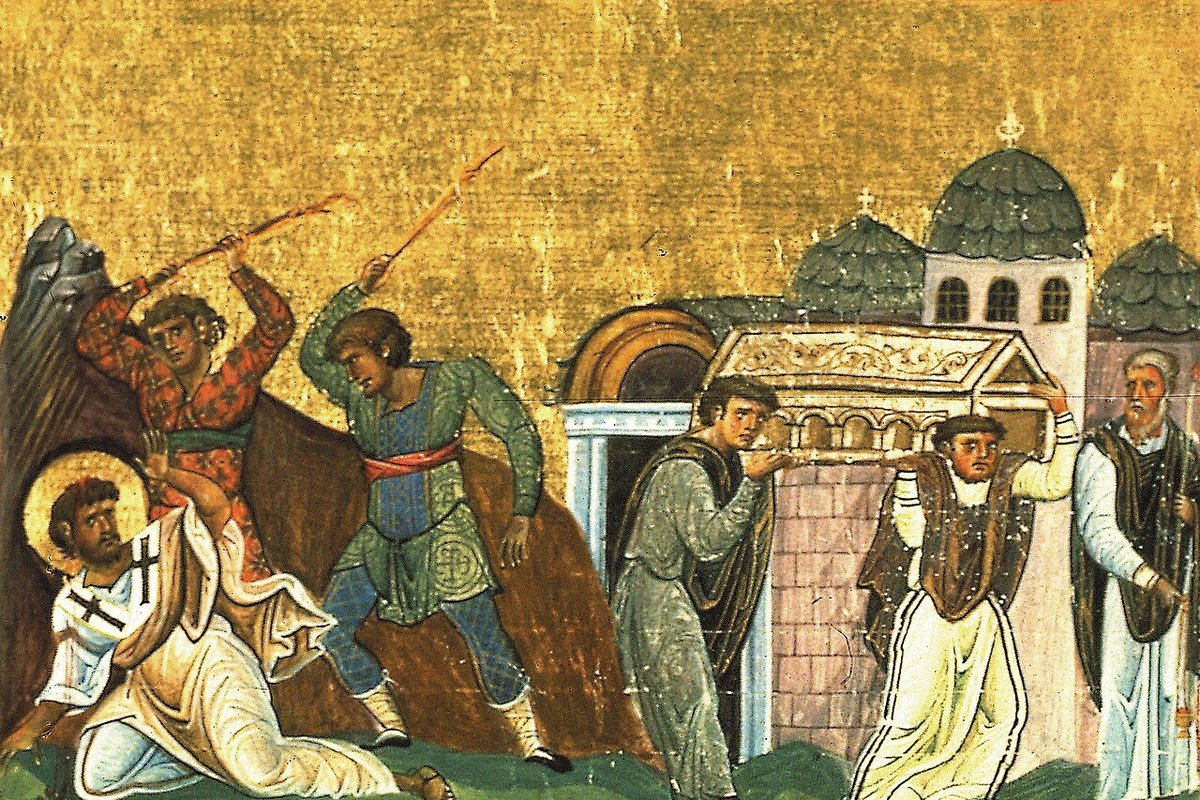
Byzantine miniaturist, "Saint Timothy," Menologion of Basil II, c. 985, Vatican Library — public domain.
Paul brought Timothy along as a traveling companion almost immediately, and from that point on Timothy shows up again and again across Paul's letters and journeys — helping found the churches at Corinth, Thessalonica, and Philippi, and repeatedly sent ahead as Paul's personal representative to congregations that needed guidance Paul couldn't deliver in person.
There's one detail from that early recruitment worth pausing on. Acts 16:3 records that Paul had Timothy circumcised before setting out, "because of the Jews who were in those parts, for they all knew that his father was Greek." It's a striking move given how forcefully Paul argued elsewhere, especially in Galatians, against requiring circumcision of Gentile converts. The likely explanation isn't a contradiction in Paul's theology but a practical one: Timothy, with a Jewish mother, would have been regarded by Jewish communities as Jewish himself and therefore obligated under the law, and an uncircumcised Timothy would have closed doors to the very synagogue audiences Paul wanted him to reach. It's a small window into how carefully Paul calibrated his approach depending on the audience in front of him.
"My true child in the faith"
What sets Timothy apart from Paul's other companions is the sheer warmth of how Paul writes about him. He opens 1 Timothy by calling him "my true child in faith" (NABRE, 1 Timothy 1:2), and in Philippians tells the church there, "I have no one comparable to him for genuine interest in whatever concerns you," adding of others around him that "they all seek their own interests, not those of Jesus Christ" (NABRE, Philippians 2:20-21) — a pointed compliment that says as much about Paul's frustration with others as his trust in Timothy.
That trust shows up most clearly in the two letters bearing Timothy's name, grouped by scholars with Titus as the "Pastoral Epistles" for their shared focus on church order and ministry. First Timothy reads like a manual for a young leader still finding his footing — instructions on worship, on qualifications for church leaders, on guarding "what has been entrusted to you" against false teaching (NABRE, 1 Timothy 6:20). It also addresses something very human: Paul seems aware that Timothy's youth and possibly his temperament made some in Ephesus reluctant to take him seriously, telling him plainly, "Let no one have contempt for your youth, but set an example for those who believe" (NABRE, 1 Timothy 4:12). Later in the same letter Paul even recommends Timothy "take a little wine" for his frequent stomach ailments (NABRE, 1 Timothy 5:23) — a passing, almost offhand line, but one of the few moments anywhere in the New Testament where a specific companion's physical health gets a direct mention.
Second Timothy is a different kind of letter entirely: written, according to tradition, as Paul awaited execution in Rome, it has the tone of a final letter from a mentor to the person he trusts most, urging Timothy "to stir into flame the gift of God that you have through the imposition of my hands" (NABRE, 2 Timothy 1:6). Paul asks him to come quickly, before winter, and to bring a cloak left behind in Troas along with "papyrus rolls, especially the parchments" (NABRE, 2 Timothy 4:13) — small, practical requests that make the letter feel less like scripture-in-the-making and more like an actual note from an old man facing death, worried about the cold and wanting to see a friend one more time.
Bishop of Ephesus
Church tradition remembers Timothy as the first bishop of the church at Ephesus, one of the most important Christian communities in the ancient world — a role that grew out of the assignment Paul gives him directly in his letters: "that you stay in Ephesus to instruct certain people not to teach false doctrines" (NABRE, 1 Timothy 1:3). The New Testament itself doesn't use the formal title "bishop" for Timothy, but the responsibility described matches closely what that office would come to mean in the following generations.
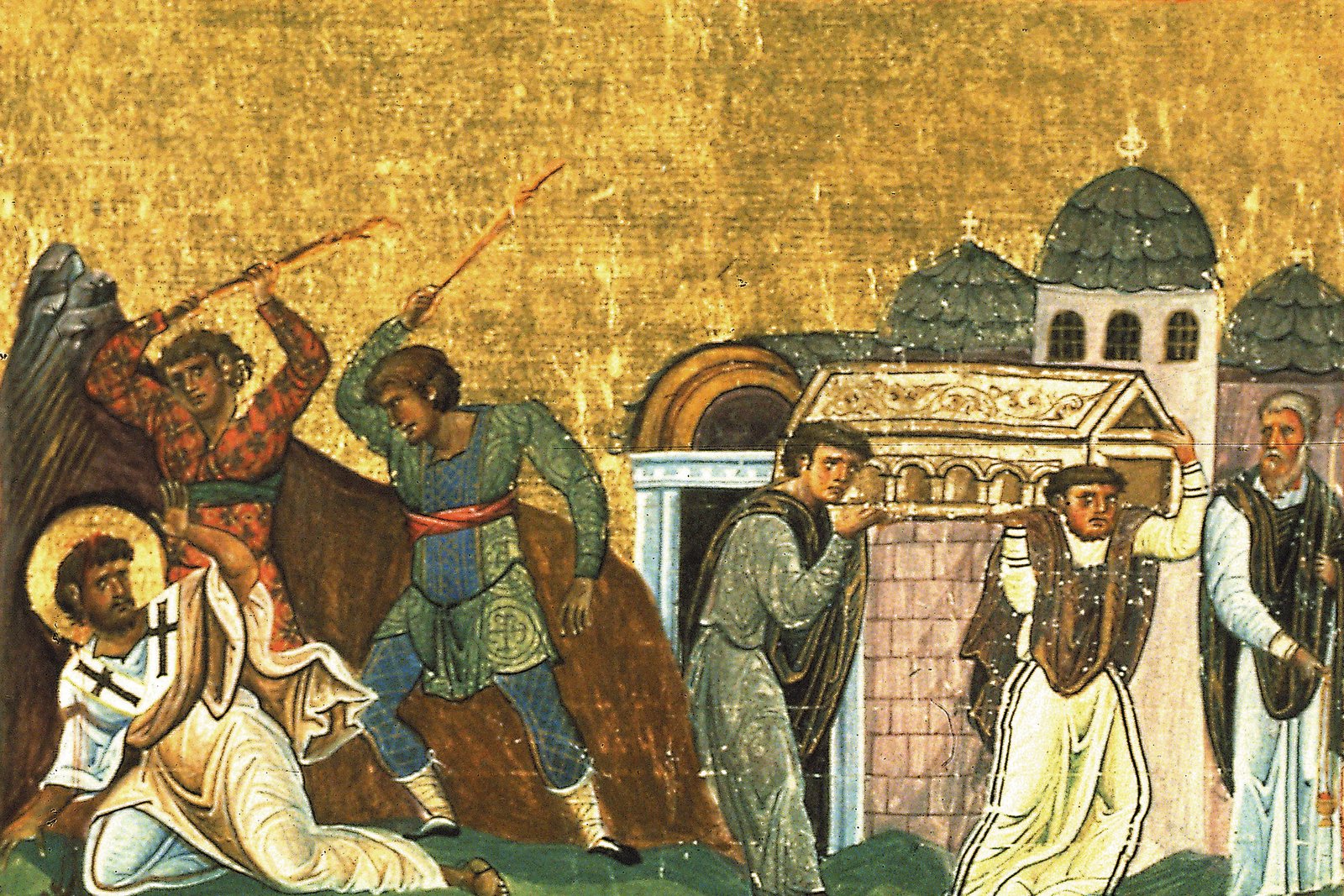
Tradition holds that Timothy's ministry in Ephesus ended in martyrdom: he is said to have confronted a pagan festival procession honoring the goddess Diana (Artemis), Ephesus's patron deity and the reason the city held one of the largest temples in the ancient world. According to that tradition, Timothy objected publicly to the idol worship on display, and the crowd, enraged at the interruption of their festival, turned on him and beat him with clubs; he reportedly died of his injuries a few days later, around the year 97. The details come down through later tradition rather than the New Testament itself, and should be read as pious memory rather than eyewitness history — but the Church has honored Timothy as a martyr-bishop for centuries regardless. His relics were said to have been transferred to Constantinople in the fourth century, placed in the Church of the Holy Apostles alongside those of Saint Andrew and Saint Luke.
Ephesus itself remained one of the great centers of early Christianity long after Timothy's death — it's the city addressed in Revelation's letter to "the angel of the church in Ephesus" (NABRE, Revelation 2:1), and later the site of an ecumenical council in 431. Anyone tracing the geography of the early Church will keep running into it, in much the way that Paul's own ministry keeps intersecting with the cities of Corinth and Philippi, the churches Timothy himself helped establish.
A feast shared with a fellow disciple
The Catholic Church celebrates Saint Timothy's feast on January 26, paired with Saint Titus — Paul's two closest protégés, both entrusted with young, unsteady churches, both remembered together on the calendar the way they so often worked together in life. Timothy's story isn't one of dramatic conversion or public miracle. It's the story of a young man who showed up, stayed faithful in unglamorous, difficult assignments for years, and earned the deepest trust of the greatest missionary of the early Church.
Trivia
Who was Saint Timothy in the New Testament?
Why did Paul write two letters to Timothy?
Was Saint Timothy the first bishop of Ephesus?
How and when did Saint Timothy die?
You May Also Like
Related Reading