Daniel in the Lions' Den

An old man with three kings already behind him
By the time this story takes place, Daniel wasn't a young newcomer to court politics — he'd already served under Nebuchadnezzar and Belshazzar of Babylon before Darius the Mede took power, decades of surviving palace intrigue, exile, and the rise and fall of an empire. That long history matters for understanding why the other officials felt so threatened by him: Daniel wasn't some outsider angling for influence he hadn't earned. He'd proven himself repeatedly across multiple reigns, which is exactly why Darius was reportedly planning to promote him over the entire kingdom (Daniel 6:3, NABRE) — and exactly why the men beneath him, facing the prospect of an old foreign exile outranking them all, went looking for any way to stop it.
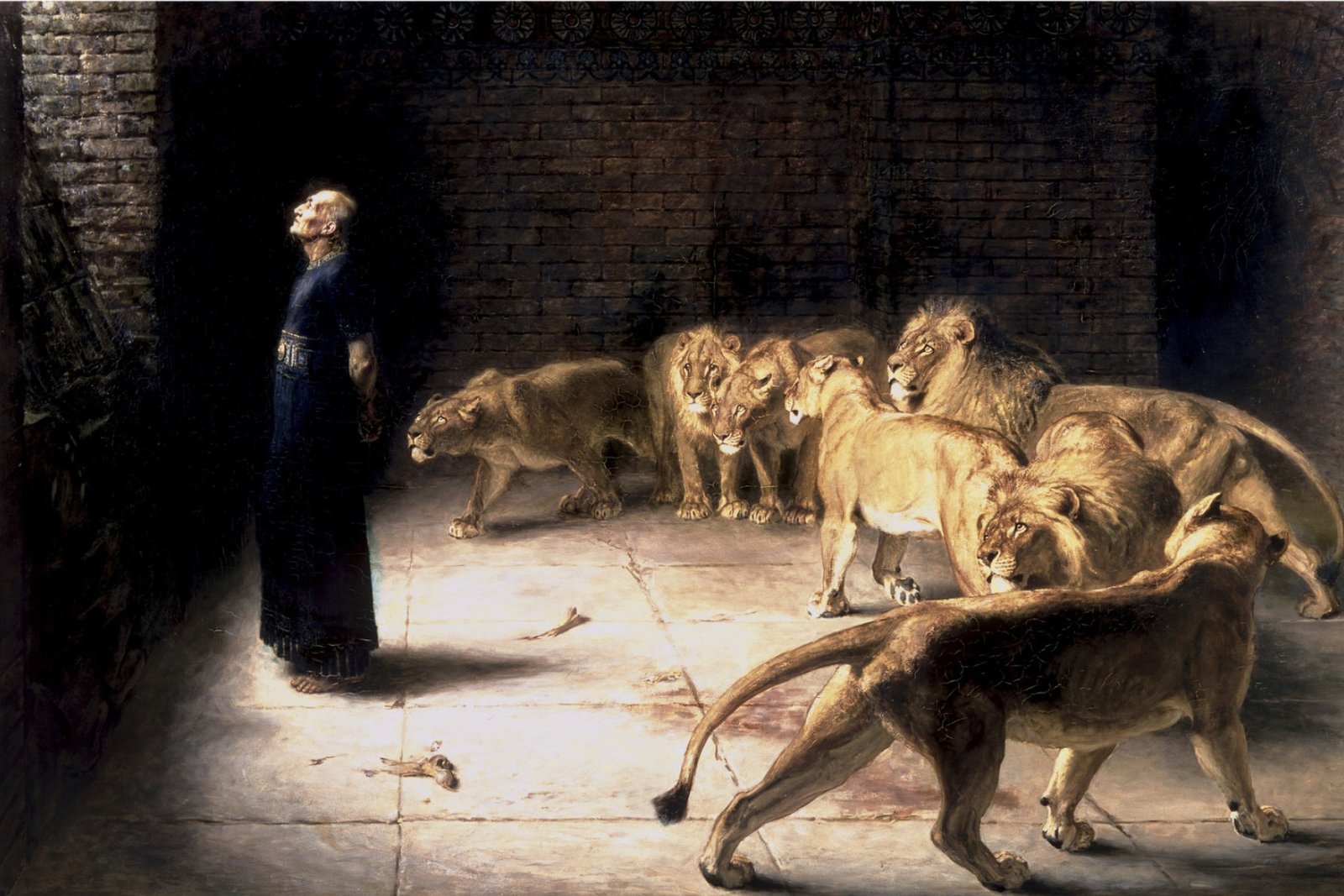
Briton Riviere, "Daniel's Answer to the King," 1890, Manchester Art Gallery. Public domain.
A trap built entirely out of a man's virtue
Most stories of persecution in Scripture involve someone being punished for a real offense, twisted out of proportion. Daniel's story is stranger than that. By the time King Darius reorganized his Babylonian empire into a system of provinces, Daniel — by then an old man who had served three kings and outlasted an exile — had risen so high in the new administration that Darius was reportedly considering putting him over the entire kingdom. The other officials went looking for something, anything, to use against him. They came up empty. Scripture puts it plainly: they could accuse him of no corruption "because he was trustworthy" (Daniel 6:5, NABRE). So instead of finding a crime, they manufactured one that only Daniel would commit.
A law with exactly one target
The scheme these officials cooked up was almost elegant in its cruelty. They convinced Darius to sign a thirty-day decree making it illegal to petition any god or person besides the king himself, with the penalty being a den of lions (Daniel 6:7-9, NABRE). It's easy to read past how narrow that law really was — it wasn't a general crackdown on religion, and Darius likely signed it thinking it was little more than a flattering loyalty pledge from his court. The officials knew exactly what it would catch: a devout Jewish exile who prayed three times a day, every day, without exception.
Windows still open toward Jerusalem
What Daniel does next is the hinge of the whole account, and it's easy to read too quickly. He doesn't pray in secret once the decree is signed. He doesn't wait out the thirty days quietly. He goes home "to kneel in prayer and give thanks to his God in the upper chamber three times a day, with the windows open toward Jerusalem," exactly as he had always done (Daniel 6:11, NABRE). The detail about the open windows matters — this isn't a man caught praying by accident. It's a man who refuses to let a law change a habit that predates the law by decades, and who apparently wanted it to be seen.
A king who tried everything except defying his own decree
The officials catch Daniel praying almost immediately and bring the news to Darius, who — to his credit — is not pleased. Scripture says the king "was deeply grieved at this news and he made up his mind to save Daniel; he worked till sunset to rescue him" (Daniel 6:15, NABRE). It's a detail that complicates the villain of the story: Darius isn't hunting Daniel down, he's boxed in by his own bureaucracy. Under Median and Persian law, a royal decree — even the king's own — could not be revoked once signed. By evening, Darius has run out of options, and Daniel is sealed into the den with a stone marked by the king's own signet ring.
A night without sleep, and a morning without accusation
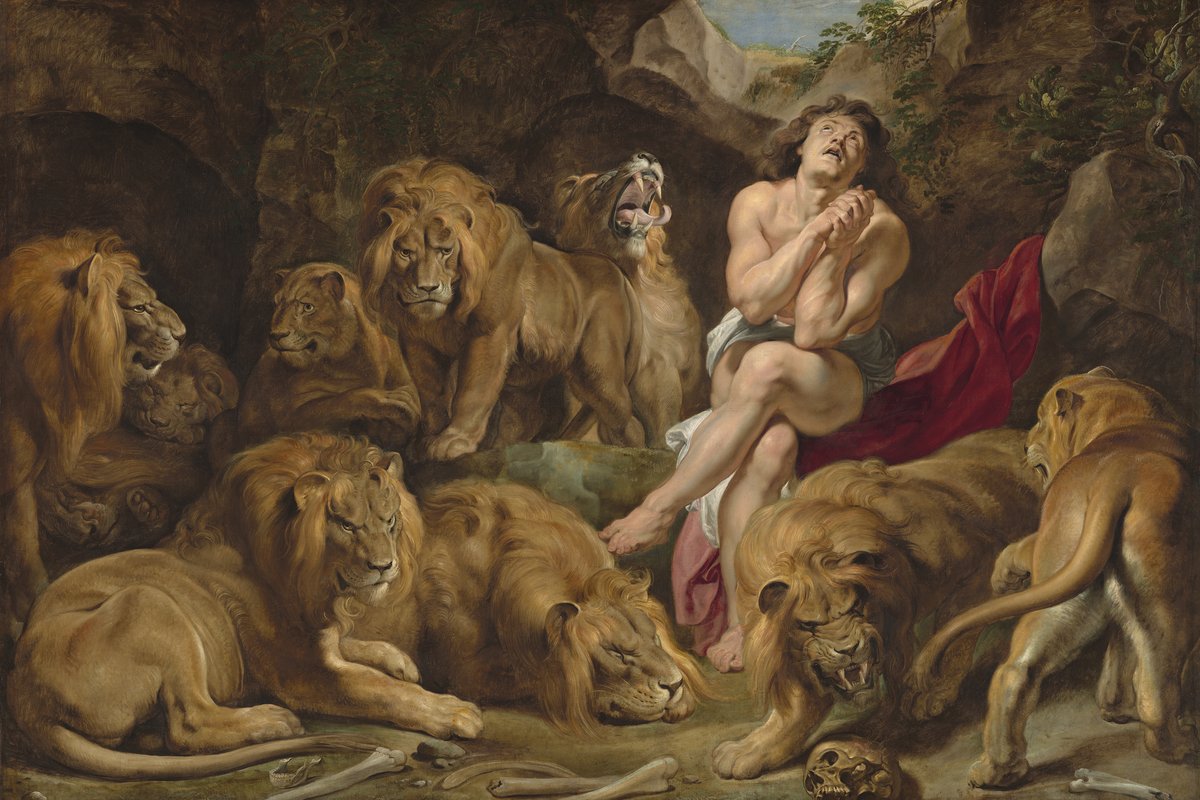
Darius spends the night fasting, refusing his usual entertainments, and at first light he runs — not walks — to the den, calling out with visible anguish: "Daniel, servant of the living God, has your God whom you serve so constantly been able to save you from the lions?" (Daniel 6:21, NABRE). Daniel's answer from inside the den is calm and specific: "My God sent his angel and closed the lions' mouths so that they have not hurt me. For I have been found innocent before him" (Daniel 6:23, NABRE). He frames the rescue not as luck or as the lions simply being uninterested, but as a direct act of divine protection tied to his own innocence — a claim Darius takes seriously enough to reverse course completely, ordering the accusers thrown into the same den in Daniel's place (Daniel 6:25, NABRE). Scripture doesn't soften what happens next: the lions, apparently perfectly capable predators after all, kill the accusers and their families "before they reached the bottom of the den" (Daniel 6:25, NABRE) — a stark reminder that the angel who closed the lions' mouths had acted specifically for Daniel's sake, not because the animals themselves had become harmless.
A decree that answers the one that started it all
Darius doesn't stop at punishing the accusers. He issues his own decree to every people and nation in his kingdom, ordering that everyone "reverenced and feared" the God of Daniel, describing him as "the living God, enduring forever, whose kingdom shall not be destroyed," and calling him "a savior and deliverer, working signs and wonders in heaven and on earth, who saved Daniel from the lions' power" (Daniel 6:27-28, NABRE). It's a striking mirror of the decree that trapped Daniel in the first place — one law forbidding prayer to any god but the king, followed by another commanding reverence for the very God that first law was designed to silence. Daniel, the text notes simply, "fared well" for the rest of Darius's reign and into the reign of Cyrus the Persian afterward (Daniel 6:29, NABRE), an old man who had now outlasted four kings without compromising the habit that had nearly killed him.
Trivia
Why couldn't Daniel's enemies find any real accusation against him?
What exactly did King Darius's decree forbid?
Did Daniel change his habits once the law was signed?
What did King Darius do once Daniel was accused?
How did Daniel explain his survival to the king the next morning?
Related Reading