The Seven Corporal Works of Mercy, Rooted in Matthew 25

A judgment scene with a surprising exam
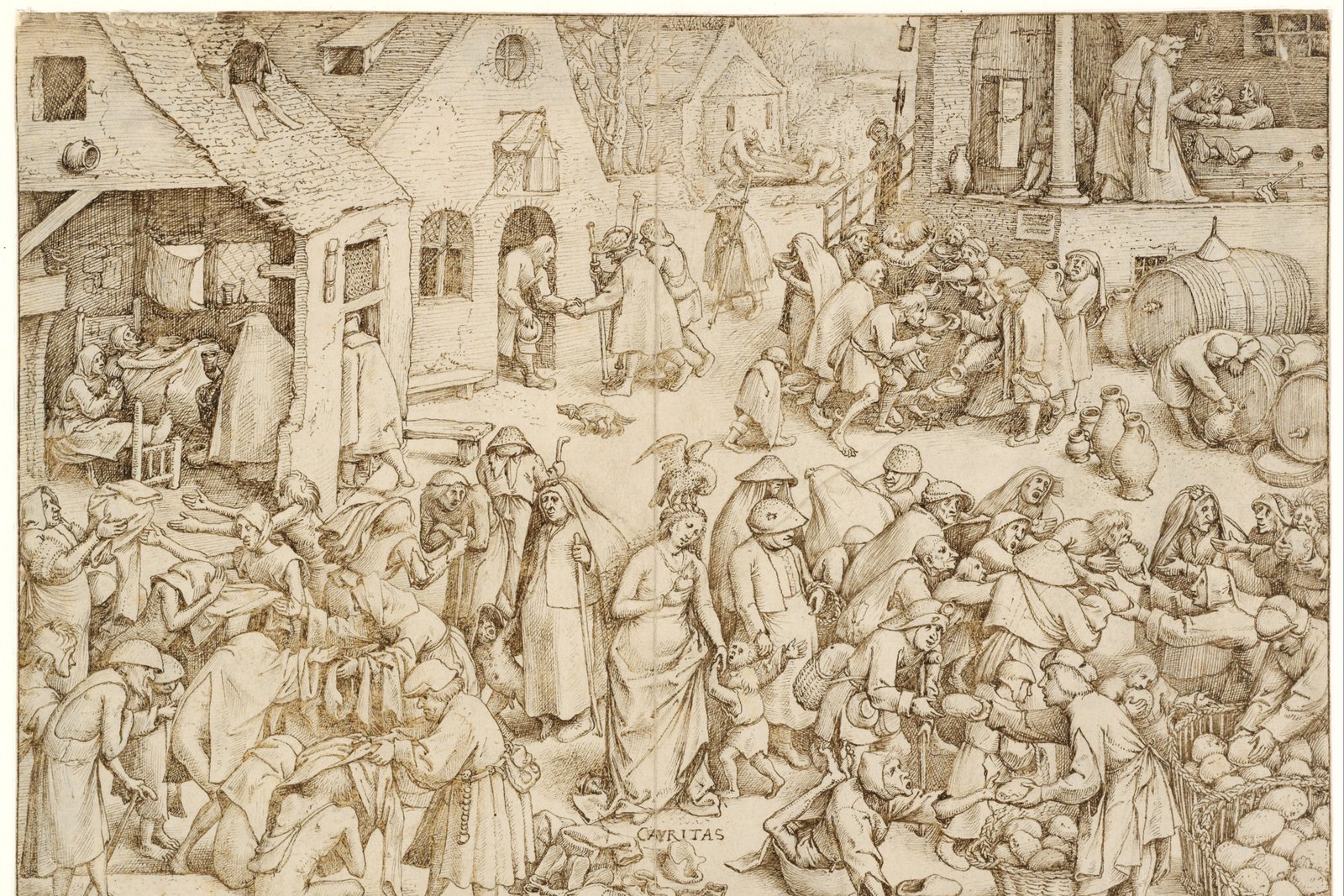
Near the end of the Sermon on the Mount's counterpart in Matthew's Gospel — his teaching on the end times, delivered on the Mount of Olives — Jesus tells a parable unlike any other in his ministry. A king, seated in glory with the nations gathered before him, divides the crowd "as a shepherd separates the sheep from the goats" (NABRE, Matthew 25:32), and the test he applies is entirely concrete: "For I was hungry and you gave me food, I was thirsty and you gave me drink, a stranger and you welcomed me, naked and you clothed me, ill and you cared for me, in prison and you visited me" (NABRE, Matthew 25:35-36). When the righteous ask when they ever did any of this for a king, he answers simply, "whatever you did for one of these least brothers of mine, you did for me" (NABRE, Matthew 25:40). Out of this one parable, the Church built a list of seven concrete duties known as the Corporal Works of Mercy — "corporal" because they address the needs of the body.
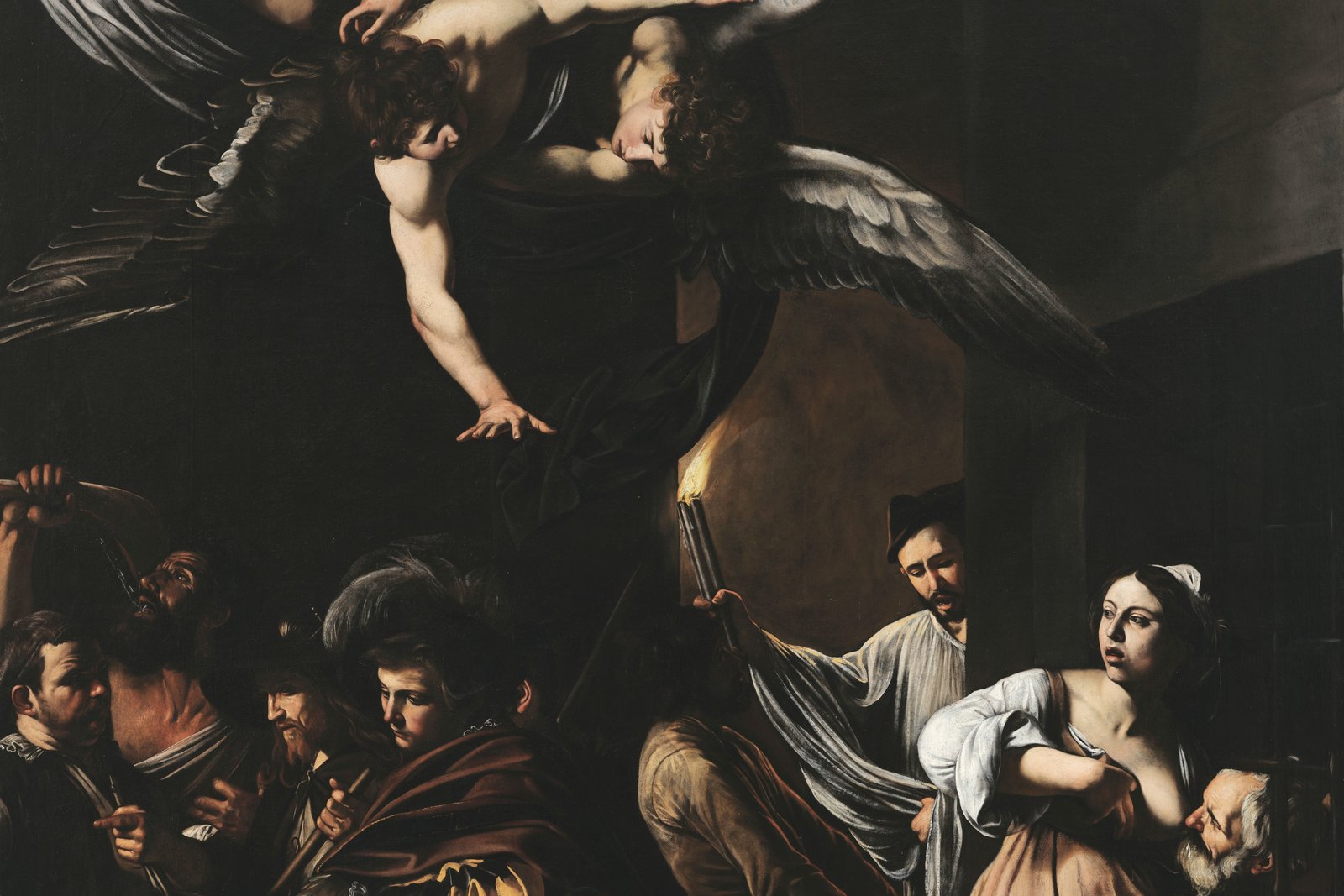
Caravaggio, The Seven Works of Mercy, 1606–1607 (public domain)
The parable's setting matters as much as its content. Jesus delivers it as part of his teaching on the end times, on the Mount of Olives, shortly before his own arrest and crucifixion — the last extended teaching Matthew records before the Passion narrative begins. Placed there, at the close of his public ministry, the parable reads less like one lesson among many and more like a summary statement: whatever else his listeners had heard him say over three years of preaching, this was the concrete test he wanted them to carry away.
The seven works
Feed the hungry. The first and most direct: "I was hungry and you gave me food" (NABRE, Matthew 25:35).
Give drink to the thirsty. Paired directly with the first in the Gospel text, this and the previous work together cover the most basic bodily needs.
Clothe the naked. Covering physical exposure and, by extension, restoring dignity to someone stripped of it.
Shelter the homeless. Drawn from Jesus's word about welcoming "a stranger," this work extends to refugees, the displaced, and anyone without a roof.
Visit the sick. Care for those whose bodies have failed them, whether through illness, injury, or age.
Visit the imprisoned. Perhaps the most countercultural of the seven — mercy shown to people society has often chosen to forget.
Bury the dead. The one work not found in Matthew 25 itself. It comes instead from the older biblical tradition of burying the dead as an act of piety and justice — most vividly in the Book of Tobit, where the title character risks his own life to give proper burial to fellow Israelites left exposed by a hostile king (Tobit 1:17-20). Early Christian tradition folded this act into the list drawn from the Gospel, rounding it out to seven.
Caravaggio's 1607 painting The Seven Works of Mercy, used as this article's hero image, is one of the most famous attempts to capture all seven acts in a single canvas, and it's worth understanding why that was such an unusual project. Rather than painting seven separate scenes, Caravaggio crammed all of them into one chaotic Naples street at night — a gravedigger carrying a corpse, a woman nursing an imprisoned man through prison bars (a detail drawn from the ancient Roman legend of Roman Charity), a traveler being welcomed at an inn, a beggar receiving a cloak. The painting was commissioned for a charitable confraternity in Naples that still occupies the same building today, and its persistence as a devotional image for over four centuries reflects just how central these seven acts have remained to Catholic practice long after Caravaggio's own turbulent life ended.
Not a suggestion, a standard
What makes this list different from an ordinary piece of moral advice is where Jesus places it — not in a private teaching to his closest followers, but in his own description of the criteria for final judgment. The Catechism treats the works of mercy, corporal and spiritual alike, as a "witness to fraternal charity" that is also "a work of justice pleasing to God" (CCC 2447), not an optional devotional add-on. Alongside the seven Corporal Works stand seven parallel Spiritual Works of Mercy — instructing the ignorant, counseling the doubtful, admonishing sinners, comforting the sorrowful, forgiving injuries, bearing wrongs patiently, and praying for the living and the dead — addressing the needs of the soul the way the corporal works address the needs of the body.
Saints who built their lives around these works
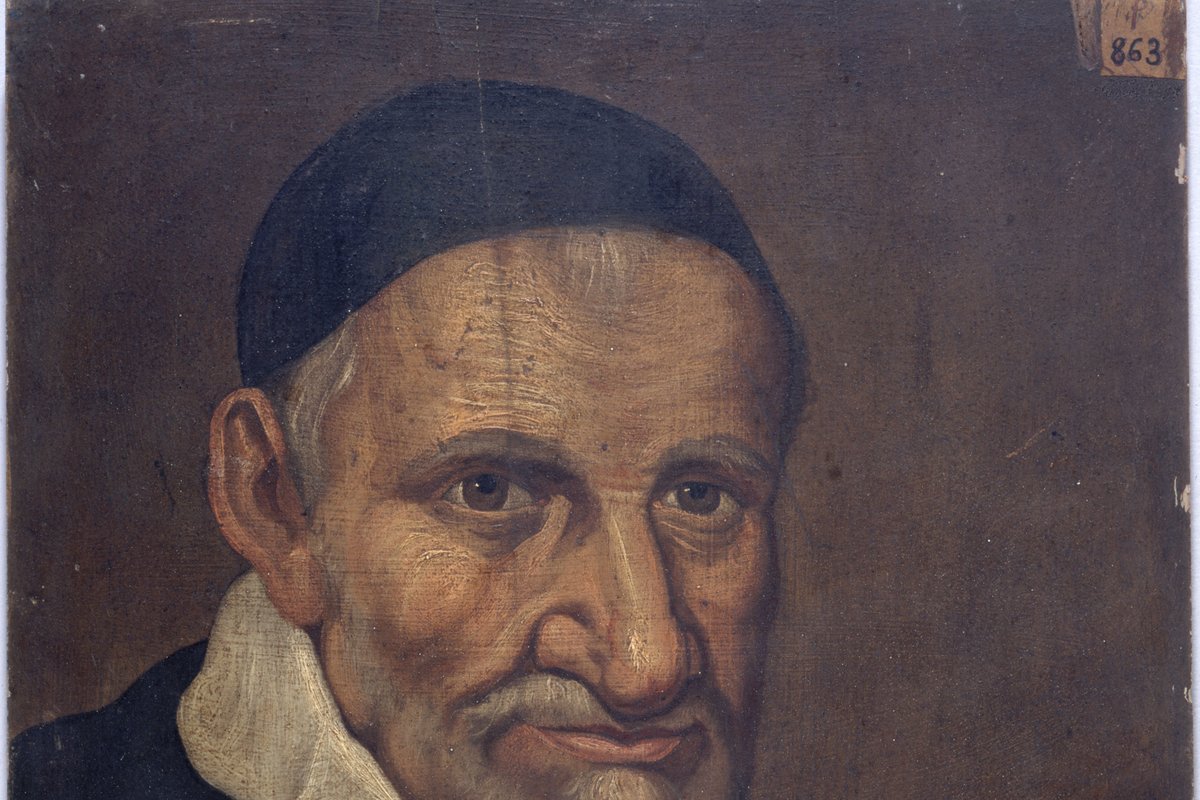
Church history is dense with figures whose entire vocation grew out of one or more of these seven acts taken with total seriousness. Saint Martin of Tours is remembered above all for a single gesture — cutting his own military cloak in half to clothe a freezing beggar at the gates of Amiens, a scene that has shaped Western art's image of charity ever since. Saint Vincent de Paul built entire religious congregations, the Vincentians and the Daughters of Charity, around organized, sustained care for the sick, the imprisoned, and the poor of 17th-century France. Saint Damien of Molokai took visiting and caring for the sick to its furthest extreme, living among people quarantined with leprosy on a Hawaiian island until he contracted the disease himself and died among the community he had chosen to serve. None of these saints treated the works of mercy as abstract ideals; each one picked a specific, concrete form of need and stayed with it for the rest of their lives.
Mercy with a face
What gives the Corporal Works of Mercy their staying power, across two thousand years of Christian practice, is how specific and unglamorous they are. No work here requires theological training or special office — only food, water, cloth, a spare room, a hospital visit, a trip to a prison, a decent burial. Jesus's own framing in Matthew 25 insists that these ordinary, physical acts of care are not separate from faith in him but are, in fact, one of the clearest ways that faith becomes visible at all. Readers interested in the wider teaching this parable belongs to may also want to read about the Beatitudes, the blessings Jesus pronounces at the opening of the Sermon on the Mount that describe the inner disposition these outward works of mercy are meant to express.
Trivia
What are the seven Corporal Works of Mercy?
Where in the Bible do the Corporal Works of Mercy come from?
What is the difference between the Corporal and Spiritual Works of Mercy?
Why is burying the dead included among the Corporal Works of Mercy if it isn't in Matthew 25?
Are the Corporal Works of Mercy optional for Catholics?
You May Also Like
Related Reading