The Anointing of the Sick Explained

A sacrament that got a new name for a reason
Names matter in the Church's sacramental life, and few renamings carry as much theological weight as this one. For centuries, this sacrament was commonly known as Extreme Unction — "extreme" here meaning "last" or "final," not severe — reflecting a long-standing pastoral custom of reserving it for the literal deathbed. The Second Vatican Council's 1963 constitution on the liturgy, Sacrosanctum Concilium, explicitly addressed this narrowing: "'Extreme Unction', which may also and more fittingly be called 'Anointing of the Sick', is not a sacrament for those only who are at the point of death" (Sacrosanctum Concilium, 73). That single sentence reoriented how the Church talks about, teaches, and administers a sacrament that had, in practice if not in official doctrine, drifted into being treated almost exclusively as a deathbed ritual.
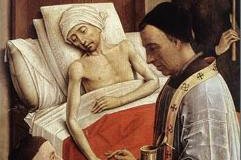
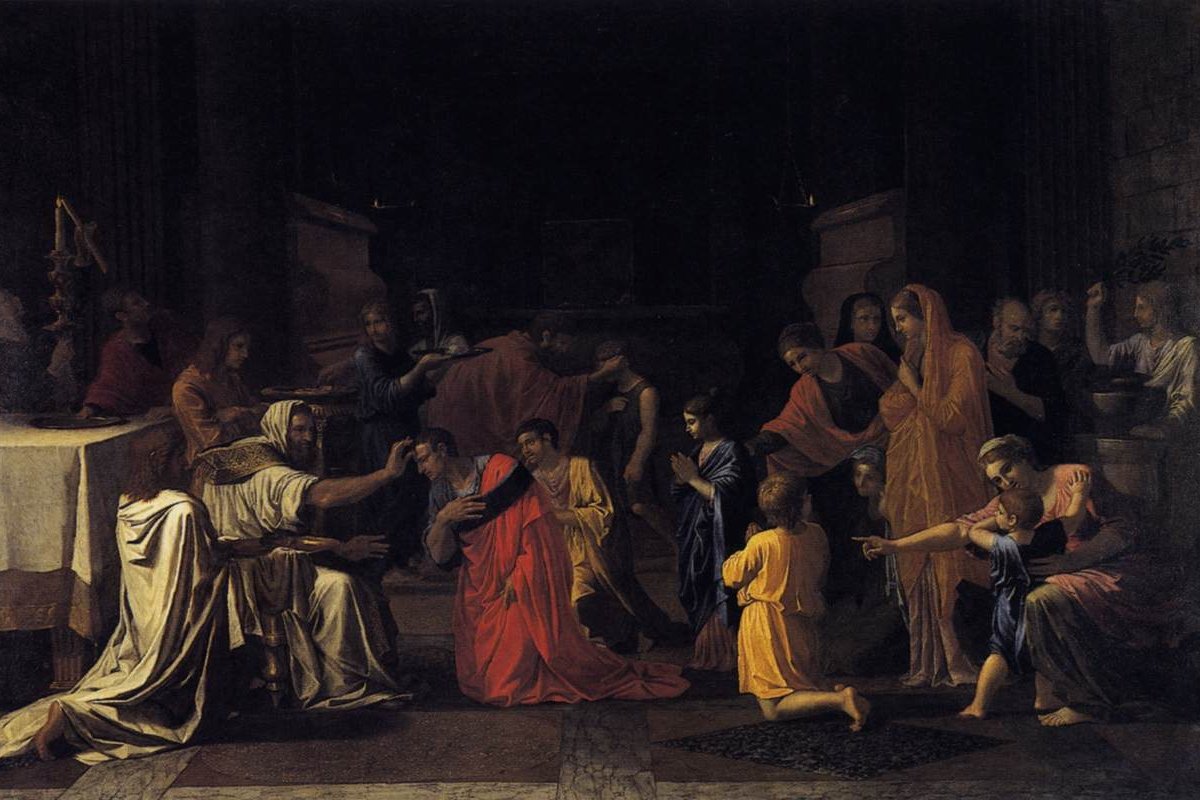
Image: Beuron Art School / Wikimedia Commons (Public domain)
Who the sacrament is actually for
Current Catholic teaching, following the Council's reframing, holds that the Anointing of the Sick is appropriate for any Catholic who has reached the use of reason and begins to be in danger of death from illness or old age — a considerably wider door than "actively dying." The Catechism specifically names serious illness, the frailty of advanced age even without a specific diagnosis, and upcoming surgery for a serious medical condition as fitting occasions for the sacrament (CCC 1514-1515). A person can receive it more than once across a lifetime — before a major surgery in their fifties, again during a serious illness decades later, and again if their health takes a further grave turn. None of that requires imminent death to be genuinely appropriate, which is precisely the shift the Council intended.
What actually happens during the rite
The rite itself is relatively brief and centers on two core actions: prayer and anointing. A priest, having been called to a hospital, home, or a parishioner's bedside, prays with the sick person and any family or caregivers present, often including a penitential rite (an opportunity for confession, if the person is able) and Scripture readings appropriate to illness and healing. He then lays hands silently on the person's head — an ancient biblical gesture of blessing and the invocation of the Holy Spirit — before anointing the forehead and hands with the Oil of the Sick in the form of a cross, saying: "Through this holy anointing may the Lord in his love and mercy help you with the grace of the Holy Spirit. May the Lord who frees you from sin save you and raise you up." The rite concludes with the Lord's Prayer and a blessing, and if death appears close and the person hasn't recently received Communion, Viaticum — Communion specifically understood as "food for the journey" — is often given as well.
What grace the Church teaches this sacrament confers
The Catechism describes several specific effects of the sacrament, and none of them promise physical healing as a guarantee, which is an important distinction from how the sacrament sometimes gets popularly imagined. It teaches the sacrament confers a particular grace of strengthening, peace, and courage to overcome the difficulties that come with serious illness or the frailty of old age; a renewed trust in God; and, if the sick person's soul still needs it, forgiveness of sins — making it, alongside Confession, one of the two sacraments the Church calls sacraments of healing (CCC 1520-1523, CCC 1421). Physical healing is treated as a real possibility, one Catholic tradition holds does sometimes occur, but it's presented as a possible fruit of the sacrament's underlying spiritual grace rather than the sacrament's guaranteed or primary purpose.
Only a priest or bishop can confer it
Unlike Baptism, which any person, even a non-Catholic, can validly perform in an emergency by pouring water and saying the Trinitarian formula, the Anointing of the Sick is reserved exclusively to bishops and priests (CCC 1516). This is one reason Catholic hospital and hospice chaplaincy has such long-standing institutional weight in Catholic health care, and why families are generally encouraged to call a priest promptly, rather than waiting until the last possible hour, once a loved one is seriously ill — the sacrament is meant to accompany the whole arc of a grave illness, not arrive only in its final minutes.
"Last Rites," precisely defined
The popular phrase "Last Rites" doesn't correspond to a single sacrament at all; it's a shorthand for a pastoral combination typically administered when death is close: Confession (if the person is able), the Anointing of the Sick, and Viaticum. Understanding the Anointing of the Sick on its own terms — a sacrament of strengthening for the seriously ill at any stage of a grave illness, not solely a component of a deathbed ritual — is part of what the Church has tried to teach more clearly since the Council's 1963 renaming, even as the older, more dramatic phrase persists in everyday Catholic speech.
Trivia
Is the Anointing of the Sick only for people who are dying?
What is the difference between the Anointing of the Sick and 'Last Rites'?
What oil is used for the Anointing of the Sick, and who blesses it?
Can a lay Catholic administer the Anointing of the Sick in an emergency?
What is Viaticum, and how does it relate to this sacrament?
Related Reading