Shrine of Sainte-Anne-de-Beaupré

A vow made in a storm
The founding story of Sainte-Anne-de-Beaupré is, like many pilgrimage-shrine legends, a story about people in danger making a promise. In 1658, a group of French sailors and settlers were navigating the St. Lawrence River near a stretch of coast about 35 kilometers northeast of Quebec City. A sudden storm threatened to capsize their vessel, and according to tradition, the men called on Saint Anne — the mother of the Virgin Mary, already a well-established object of devotion among French Catholics — and vowed that if she brought them safely to land, they would build a chapel in her honor at the place where they came ashore. They survived the crossing, and settlers in the area, honoring the vow, built a small wooden chapel that same year at Petit-Cap, the site that would become Beaupré.
Wilfredor, Basilique Sainte-Anne-de-Beaupré, Québec, Canada, 2022 — CC0 public domain.
The choice of Saint Anne wasn't accidental. Devotion to her had already crossed the Atlantic with French colonists, many of whom came from Brittany, a region with its own long-standing Saint Anne shrine at Sainte-Anne-d'Auray. New France's settlers effectively transplanted a devotion they already carried with them, giving it new roots on the banks of the St. Lawrence.
From wooden chapel to stone basilica
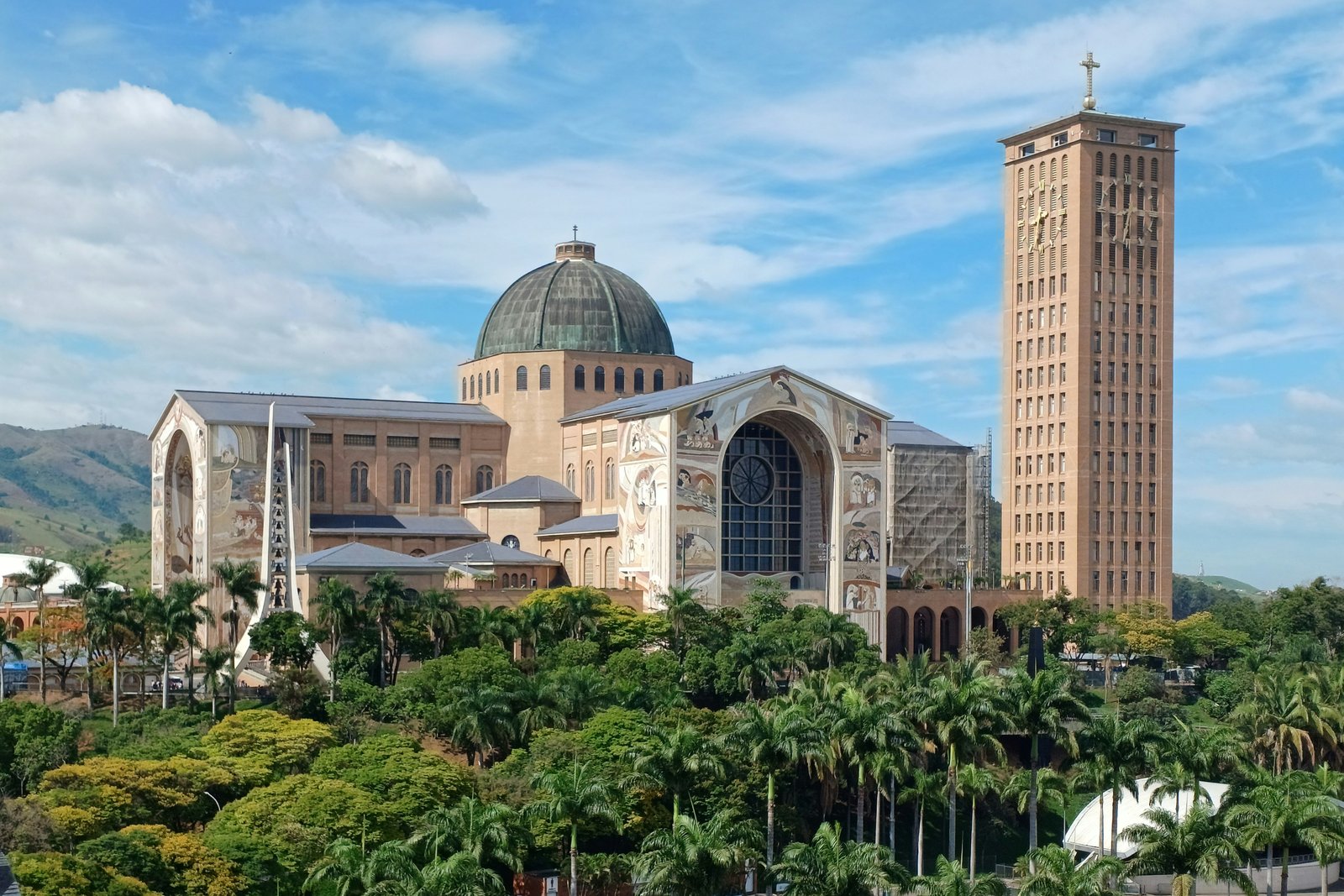
The first chapel didn't last. Flooding and structural problems forced the community to rebuild on higher, more stable ground within a few decades, and a stone church replaced the original wooden structure by the 1670s. That building itself would be replaced and enlarged multiple times over the following two centuries as the number of pilgrims outgrew each successive structure — a pattern many major shrines follow, and one visible too at Our Lady of Aparecida's basilica in Brazil, where growing crowds likewise forced repeated rebuilding on an ever-larger scale.
The current basilica dates to the 20th century. A previous large stone church on the site was destroyed by fire in 1922, and the community responded by building the present Romanesque Revival basilica, completed in stages through the 1920s and 1930s and formally consecrated in 1976. Its twin spires and heavy stone construction were deliberately designed to evoke the great pilgrimage basilicas of Europe, signaling that this Quebec shrine belonged in the same tradition as long-established sites overseas.
The relic and the reports of healing
Central to the shrine's identity is a relic: a fragment identified as part of Saint Anne's wrist bone, presented to the church in 1670 by François de Laval, the first Catholic bishop of Quebec. Its presence gave the site a physical, venerable connection to the saint it honored, at a time when relics were central to how Catholic pilgrimage worked — a pilgrim traveled not just to a place associated with a saint's memory, but to a place holding something understood to be part of the saint.
From very early in the shrine's history, visitors reported physical healings after praying there — the recovery of sight, the ability to walk again, relief from chronic illness. The tradition has never been formally investigated and certified by the Church in the structured way some Marian apparition sites have been; there is no equivalent here to the medical bureau that examines healing claims at Lourdes. But the informal record has been kept in an unusually visible way: pilgrims who credit their recovery to Saint Anne's intercession have, for generations, left behind the crutches, canes, and leg braces they say they no longer needed. Walls near the basilica's entrance are still hung with these objects today, a cumulative, three-and-a-half-century record of claimed cures that visitors can see for themselves rather than simply read about.
A living pilgrimage tradition
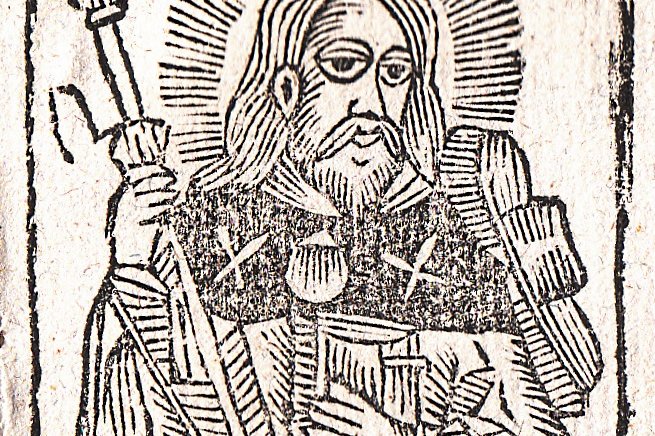
Sainte-Anne-de-Beaupré remains the most-visited pilgrimage shrine in Canada, drawing roughly half a million to a million visitors in a typical year, a mix of organized diocesan pilgrimages, bus tours, and individual travelers. The shrine's calendar builds toward Saint Anne's feast day on July 26, when a novena of Masses, processions, and special devotions culminates in one of the largest single gatherings at the site each year — a rhythm not unlike the way Santiago de Compostela builds its own calendar around the feast of Saint James.
Redemptorist priests have staffed the shrine since the late 19th century, maintaining a continuous schedule of confession, Mass, and pilgrim ministry that has kept the site functioning as an active parish and religious community, not merely a historical monument. The complex today includes the basilica itself, a Way of the Cross built into the surrounding hillside, a scala santa (holy stairs) chapel modeled on the one in Rome, and a museum documenting the shrine's history — enough to occupy a full day of pilgrimage for visitors who come from across Canada, the northeastern United States, and beyond.
What makes Sainte-Anne-de-Beaupré distinctive among North American shrines is how directly its origin story ties back to an ordinary human crisis rather than a heavenly apparition. There was no vision reported at Beaupré, no voice from the sky — just frightened sailors, a promise made under duress, and settlers who kept their word after the danger passed. That modesty of origin hasn't stopped the shrine from becoming one of the continent's great centers of Catholic pilgrimage, walls of crutches and all.
Trivia
Why was the shrine of Sainte-Anne-de-Beaupré founded?
Is Sainte-Anne-de-Beaupré known as a site of healing?
How many pilgrims visit the shrine each year?
What relic does the basilica claim to hold?
When is the feast of Saint Anne celebrated at the shrine?
Related Reading