The Sacred Heart of Jesus in Art

A devotion that had to be painted from scratch
Most subjects in Christian sacred art — the crucifixion, the Annunciation, the saints and their attributes — had centuries of visual precedent for artists to draw on by the time they picked up a brush. The Sacred Heart of Jesus is a striking exception. There was no established iconography for a human heart displayed on Christ's chest, wrapped in thorns and crowned with flame, until the devotion itself was still brand new — which means the image's entire visual vocabulary had to be invented essentially from scratch, in real time, as the devotion spread. For a deeper look at the visions and history behind the devotion itself, see The Sacred Heart of Jesus; this article focuses specifically on how painters translated that devotion into a recognizable visual tradition.
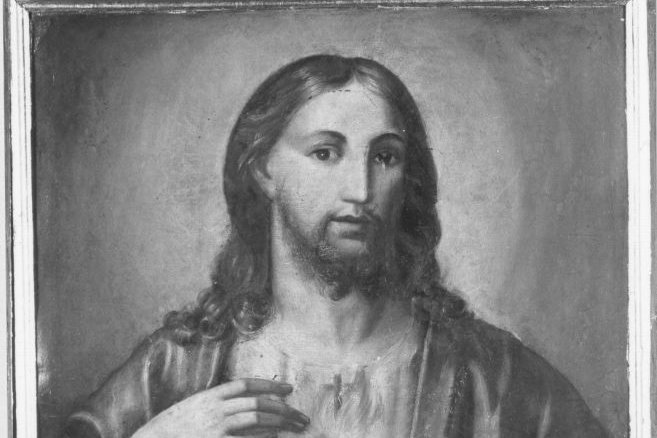
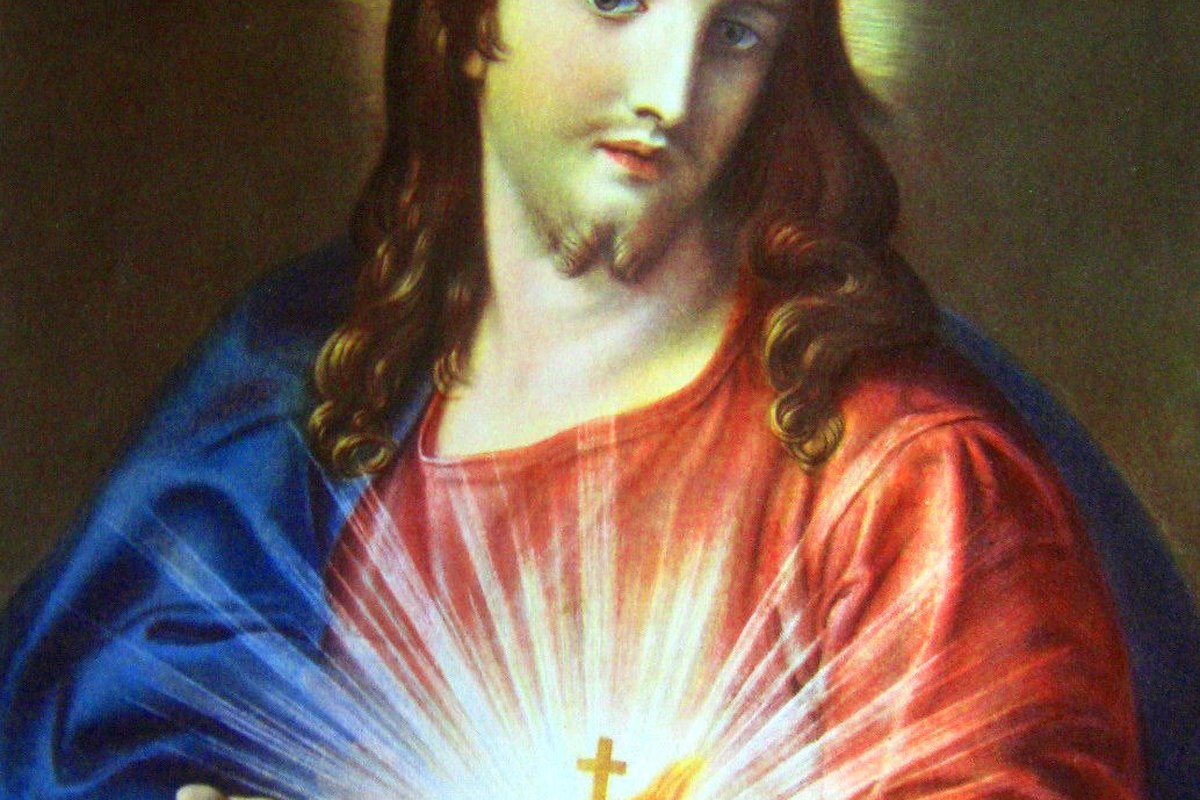
Unknown German painter, 19th century, "Herz Jesu" (Sacred Heart of Jesus), Bavarian State Painting Collections — public domain.
From private vision to public image
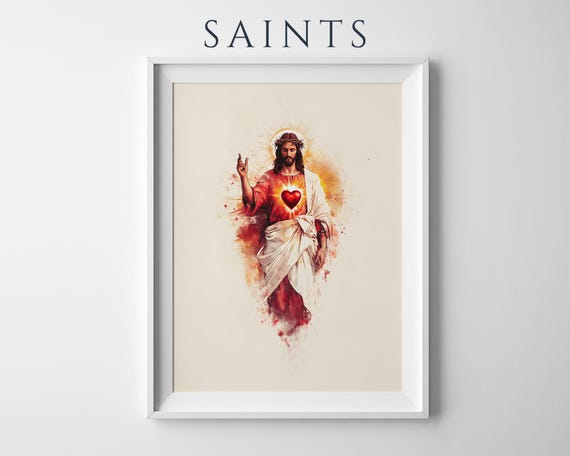
The devotion's origin point is a series of apparitions reported by Saint Margaret Mary Alacoque, a French Visitation nun, between December 1673 and June 1675. She described Christ appearing to her and revealing his heart directly — visible outside his chest, burning, and encircled by a crown of thorns — asking that devotion to it be spread throughout the Church. It took time for artists to catch up: the earliest devotional images were simple and somewhat tentative, often just a heart alone, crowned with thorns and topped with a small cross or flame, printed on holy cards and used in private devotion long before it appeared in large-scale church art. By the eighteenth century, painters had settled on the composition still recognizable today — a half-length figure of Christ, one or both hands gesturing toward a luminous heart visible at the center of his chest, his expression calm and inviting rather than suffering. The anonymous nineteenth-century German painting shown above, held today in the Bavarian State Painting Collections, is a representative example of how thoroughly the formula had standardized by that point: robe drawn back, hand raised toward the viewer, heart glowing at the composition's exact center.
Reading the details
Every element in a Sacred Heart image carries specific meaning, and artists rarely varied the basic formula once it stabilized. The flames rising from the top of the heart represent Christ's burning, self-giving love for humanity — a love the devotion frames as inexhaustible and largely unreciprocated. The crown of thorns wrapped around the heart represents human sin and ingratitude, the wound that love receives in return. A small cross, often shown planted directly above the heart or growing out of the flame, ties the whole image back to the crucifixion itself, and by extension to the wider tradition of cross symbolism in Christian art. Some versions add a visible wound on the heart's surface, a direct visual reference to the lance-wound Christ received at the crucifixion, when, John's Gospel records, "one soldier thrust his lance into his side, and immediately blood and water flowed out" (John 19:34, NABRE) — a detail later Christian tradition read as the historical seed from which devotion to the Sacred Heart eventually grew, seventeen centuries afterward.
A parallel devotion, a parallel image
Once the Sacred Heart of Jesus became established, a companion image developed alongside it: the Immaculate Heart of Mary, Mary's heart shown pierced by a sword rather than encircled by thorns, referencing Simeon's prophecy that a sword would pierce her own soul. Artists frequently paired the two images side by side from the eighteenth century onward, Christ's heart on one side and Mary's on the other, visually linking the Son's redemptive suffering with his mother's compassionate participation in it. The pairing became especially common in printed devotional art intended for the home, which is part of why both images remain so recognizable in Catholic households today, centuries after the visions that inspired them.
From church walls into ordinary homes
Unlike many devotional images that stayed largely confined to church interiors, the Sacred Heart made an unusually successful jump into private homes over the nineteenth and twentieth centuries, helped along by the "Enthronement of the Sacred Heart" movement, which encouraged Catholic families to formally dedicate their households to Christ under this image and display a print or statue of it in a place of honor, often in the main living space rather than a bedroom or private chapel. That domestic tradition is a large part of why the Sacred Heart remains one of the most commonly reproduced devotional images for home display today, printed on everything from holy cards to large framed prints, carrying the same visual formula worked out by anonymous painters more than two centuries ago into ordinary living rooms.
Why the image endures
Part of what has kept the Sacred Heart image so durable, across more than three centuries of changing artistic styles, is how directly it does its job: there's no legend to learn, no attribute to decode, no obscure reference that requires special knowledge. A heart, visibly burning with love and visibly wounded by indifference, is legible to almost anyone on first sight. That directness — plus the way the image folds together the physical wound of the crucifixion, the emotional intimacy of a personal vision, and centuries of accumulated devotion into one compact picture — is exactly why painters kept returning to it long after its first tentative appearances on seventeenth-century holy cards, and why it remains one of the most requested devotional images in Catholic homes today.
Trivia
When did the Sacred Heart become a standard subject in Catholic art?
What do the flames and thorns around the heart represent?
Why is the heart usually shown on the outside of Christ's chest?
Is the Sacred Heart image connected to the wound from the crucifixion?
Related Reading