Saint Anne, Mother of the Virgin Mary

A grandmother the Bible never names
Every Gospel account of Mary begins with Mary herself already an adult, addressed by the angel Gabriel with no mention of who raised her or where she came from. That silence left an obvious gap for the early Christian imagination to fill, and it did — not through Scripture, but through a text called the Protoevangelium of James, an apocryphal writing (meaning a text outside the biblical canon recognized by the Church) usually dated to the mid-to-late 2nd century. It tells the story of an elderly, long-childless couple, Joachim and Anne, who finally conceive a daughter after years of prayer and grief over their inability to have children — and that daughter is Mary.
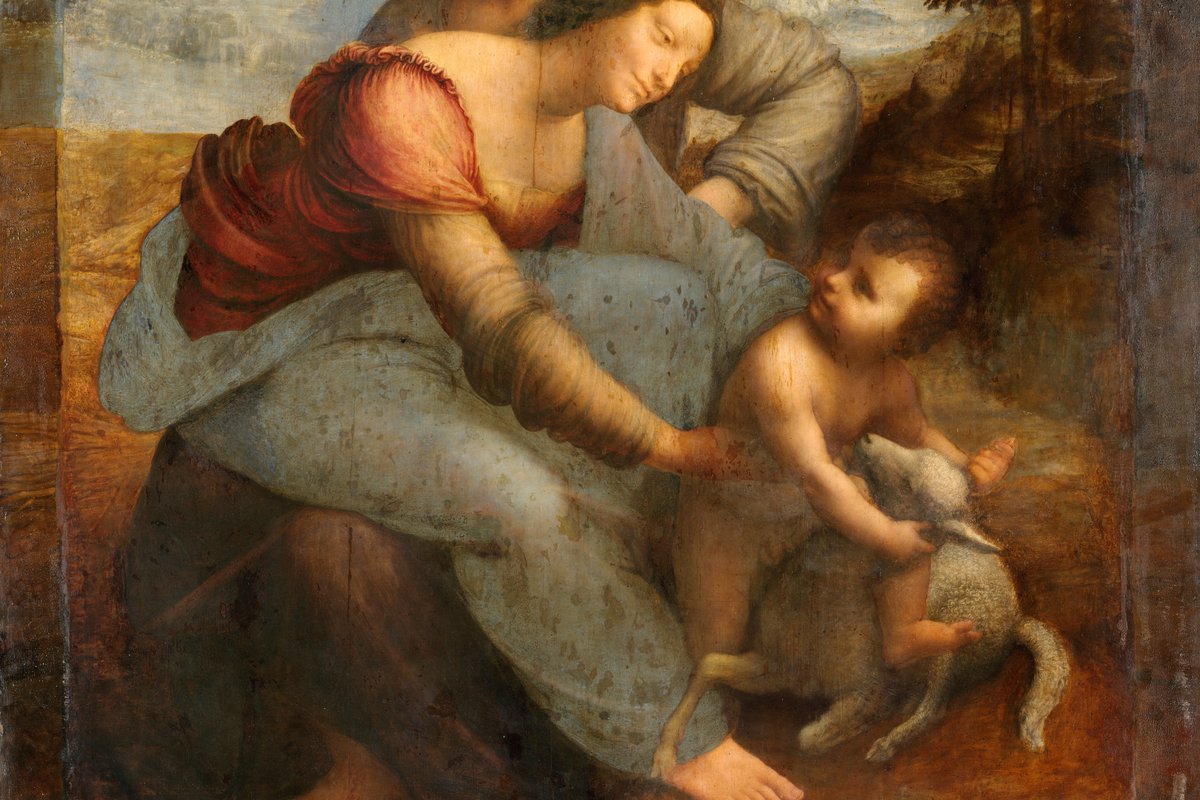
Leonardo da Vinci, "The Virgin and Child with Saint Anne," c. 1503, Louvre Museum — public domain.
It's worth being direct about what this means: nothing about Anne — not her name, not the infertility narrative, not the details of her household — comes from the New Testament. It comes from a devotional text written more than a century after Mary's own lifetime, one the Church has never included in the biblical canon. What the Church has done instead is receive the broad shape of that tradition — that Mary had a mother, honored since ancient times under the name Anne — as pious tradition worth celebrating liturgically, while treating its specific narrative details as legend rather than doctrine.
Why the tradition took hold anyway
Despite its non-biblical origin, devotion to Anne spread early and widely. Churches dedicated to her appear in the Eastern Church by the 6th century, and her cult reached the West by the 8th century, growing enormously by the late medieval period — the great Gothic church of Sainte-Anne-d'Auray in Brittany and the Basilica of Saint Anne de Beaupré in Quebec both became major pilgrimage sites built around her intercession. Much of that appeal is simple and human: a grandmother figure gives the Holy Family a fuller, warmer shape, and generations of Christian mothers and grandmothers have found in Anne's traditional story — an older woman who waited years in hope of a child — a companion for their own long waits and prayers.
Artists leaned into the same instinct. Anne appears constantly in Western religious art teaching a young Mary to read, or holding both Mary and the infant Jesus together in a three-generation composition art historians call Anna Selbdritt — "Anne, herself the third." Leonardo da Vinci's The Virgin and Child with Saint Anne, in the Louvre, is the best known example, showing three generations bound together in a single tender arrangement.
Distinguishing devotion from doctrine
None of this makes Anne's traditional story false in the way a documented historical fact can be false — apocryphal doesn't mean fabricated with intent to deceive, it simply means the text falls outside the New Testament canon the Church recognizes as inspired Scripture. Catholic teaching is careful on this point: the Church honors Anne, includes her on the liturgical calendar with Joachim on July 26, and has approved centuries of devotion to her — but it stops short of declaring the Protoevangelium's specific details as revealed truth. What the Church affirms with doctrinal weight is Mary's own identity as Mother of God; the identity of Mary's parents remains a matter of long-standing tradition, not defined dogma.
That distinction matters, and it's worth carrying into how the rest of Anne's story gets told: Joachim, her husband, comes from exactly the same source and deserves the same honest framing.
Anne in the Church's wider memory
Devotion to Anne also found institutional expression well beyond individual churches and pilgrimage shrines. Religious congregations, confraternities, and lay sodalities dedicated to her spread across medieval and early modern Europe, and her cult carried across the Atlantic with French and other European settlers, giving rise to major New World shrines such as the Basilica of Sainte-Anne-de-Beaupré near Quebec City, still one of North America's most visited pilgrimage sites. Along the way, Anne also picked up an unusual secondary patronage: sailors and miners, among other trades associated with the vulnerable and unseen, invoke her protection — a patronage tradition without a single clear origin story, but one that has held for centuries regardless.
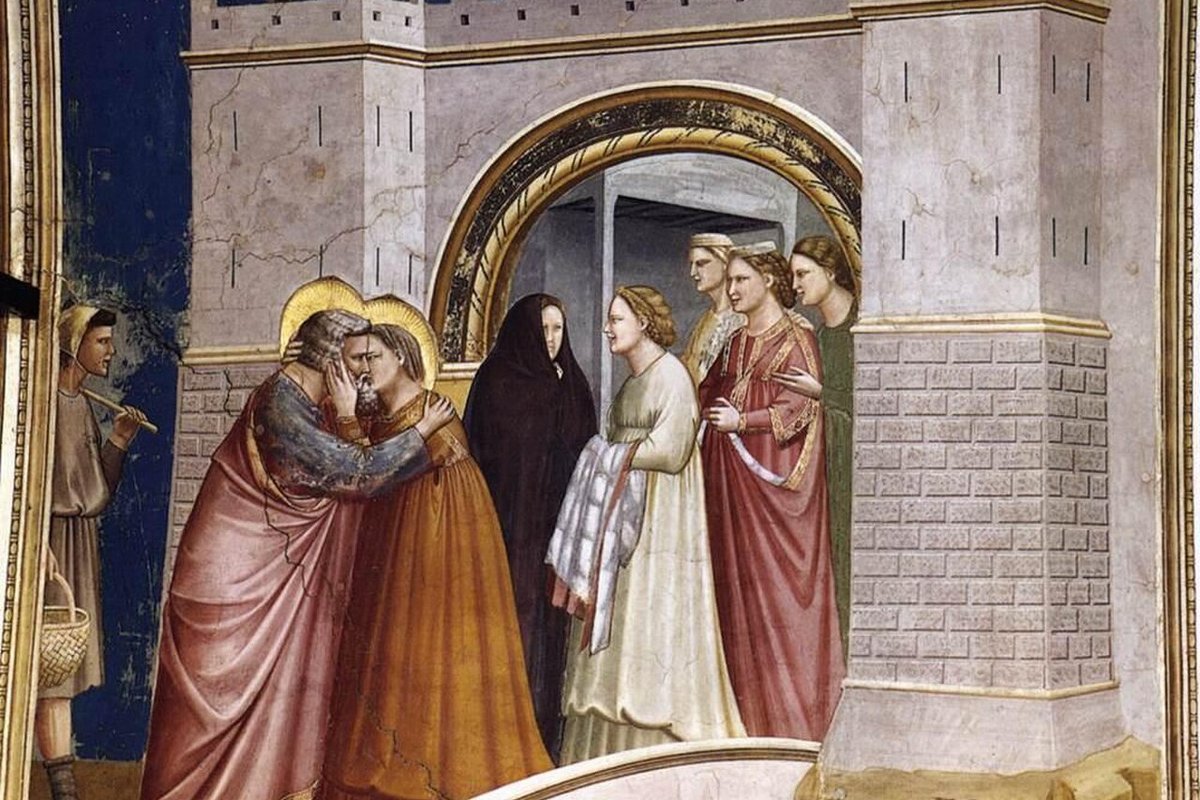
The Eastern Christian tradition tells the Anne story with its own emphasis, one worth knowing alongside the Western version. Byzantine and Orthodox churches commemorate the "Conception of the Most Holy Theotokos by Saint Anne" as its own feast on December 9, treating the moment less as a biographical detail and more as the quiet beginning of the whole story of salvation — the first thread in a chain that leads to Mary, and through her to Christ. Icons of Anne in Eastern churches typically show her nursing the infant Mary or standing beside Joachim in a scene of embrace, a composition meant to convey joy after long barrenness rather than to document an actual witnessed event. The parallel between Anne's story and the Old Testament accounts of Hannah, Sarah, and Elizabeth — all women who conceived after years of prayer and disappointment — is not an accident of storytelling; the Protoevangelium's author was drawing deliberately on those familiar biblical patterns to frame Mary's own birth as part of the same long story of God answering hope deferred.
A patron shaped by an ordinary hope
What made Anne beloved wasn't complicated theology — it was the plainest of human longings, the hope for a child after years of disappointment, resolved in a way that let her raise the woman who would raise Jesus. That's the thread running through every church built in her name and every grandmother who has asked for her prayers since: not a doctrine to defend, but a companion for an ordinary, deeply felt hope.
Trivia
Is Saint Anne named anywhere in the Bible?
Where does the name 'Anne' come from, then?
Does the Catholic Church teach anything official about Saint Anne?
What is Saint Anne the patron saint of?
When is Saint Anne's feast day?
You May Also Like
Related Reading