Saint Edward the Confessor

An exile's long wait for the throne
Edward was born around 1003, the son of King Æthelred the Unready and his Norman wife Emma, at a moment when England was under sustained attack from Danish invasions that would soon cost his family the throne. When the Danish king Cnut conquered England in 1016, Edward's family fled into exile; he spent roughly the next twenty-five years growing up in Normandy, absorbing Norman customs, language, and connections that would shape him for the rest of his life and, eventually, help set the stage for 1066. It was an unusually long exile for a king-in-waiting, and by the time circumstances brought him back to England, he was already middle-aged and thoroughly Norman in outlook, ruling a kingdom that was still mostly Anglo-Saxon and Danish in its politics and loyalties.
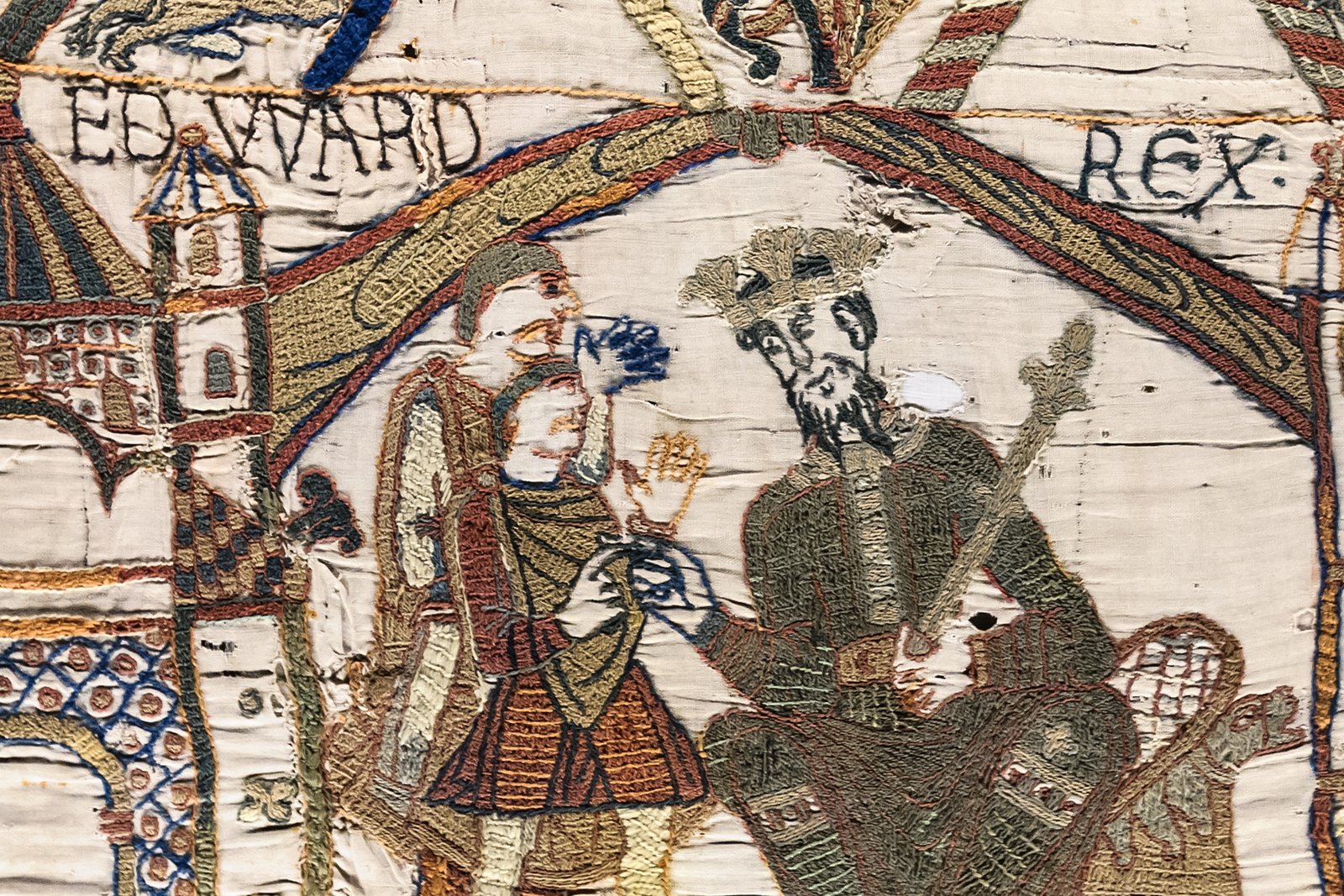
The Bayeux Tapestry, opening scene, EDWARD REX, 11th century — public domain (photograph by Myrabella).
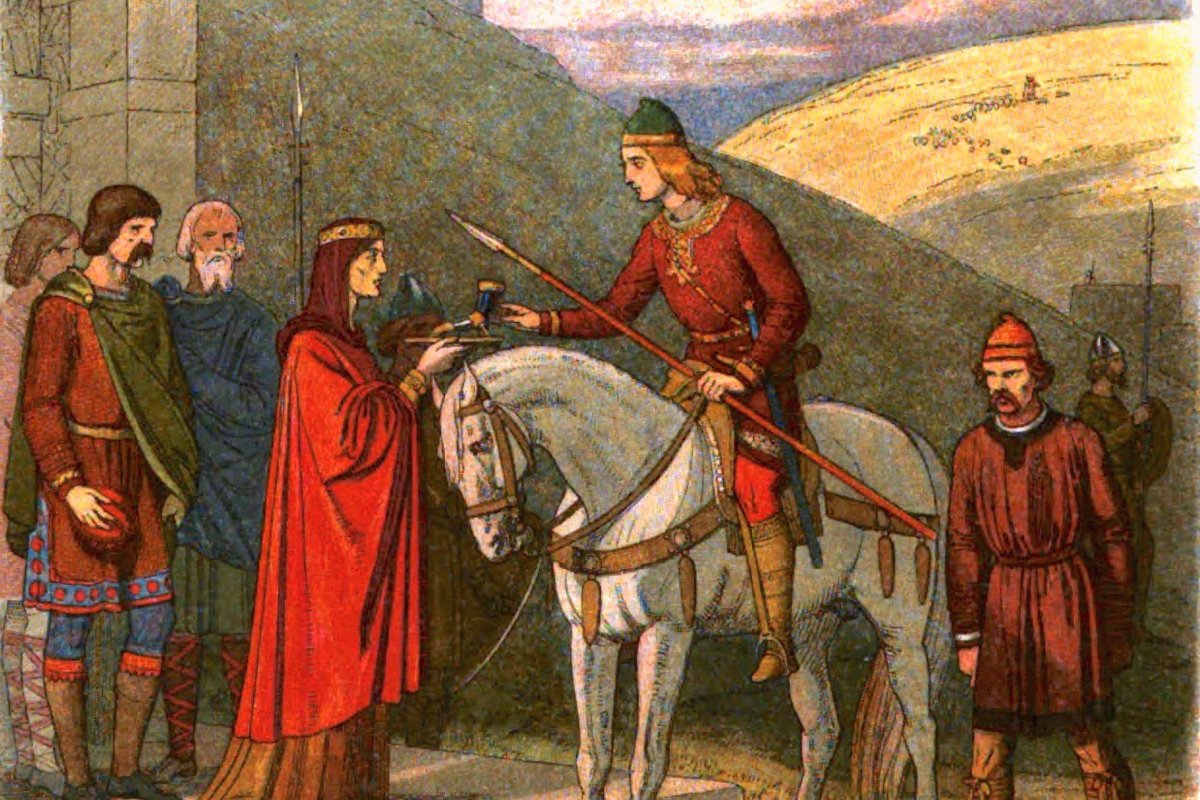
Edward returned to England and was crowned king in 1042, following the deaths of Cnut's sons, restoring the House of Wessex to the throne after nearly three decades of Danish rule. His reign, which lasted until his death in 1066, was dominated by the tension between his own Norman sympathies — he brought Norman advisors and clergy into positions of influence — and the power of the great Anglo-Saxon earls, especially the Godwin family, whose daughter Edith he married. That marriage produced no children, a fact that would matter more than almost anything else Edward did as king, since it left the English succession genuinely unresolved by the time of his death.
A reputation for piety, built mostly after his death
Edward's later reputation for saintliness rests heavily on sources written after his death, particularly the Vita Ædwardi Regis, a biography commissioned by his widow Edith that was revised over time to emphasize his holiness more heavily as his cult developed. Contemporary politics were considerably messier than the pious later image suggests — Edward's reign involved real power struggles with the Godwin family, including a period when he exiled Earl Godwin and his sons before being forced to accept their return, hardly the record of a king floating serenely above earthly conflict. That doesn't mean the piety was invented from nothing; Edward was consistently remembered, even in earlier and more sober accounts, as personally devout, generous to the Church, and unusually merciful toward his enemies by the standards of eleventh-century politics. But the fuller image of Edward as a gentle, otherworldly king reflects a cult that grew substantially in the century after his death, not a contemporary consensus.
Westminster Abbey, built and buried in the same month
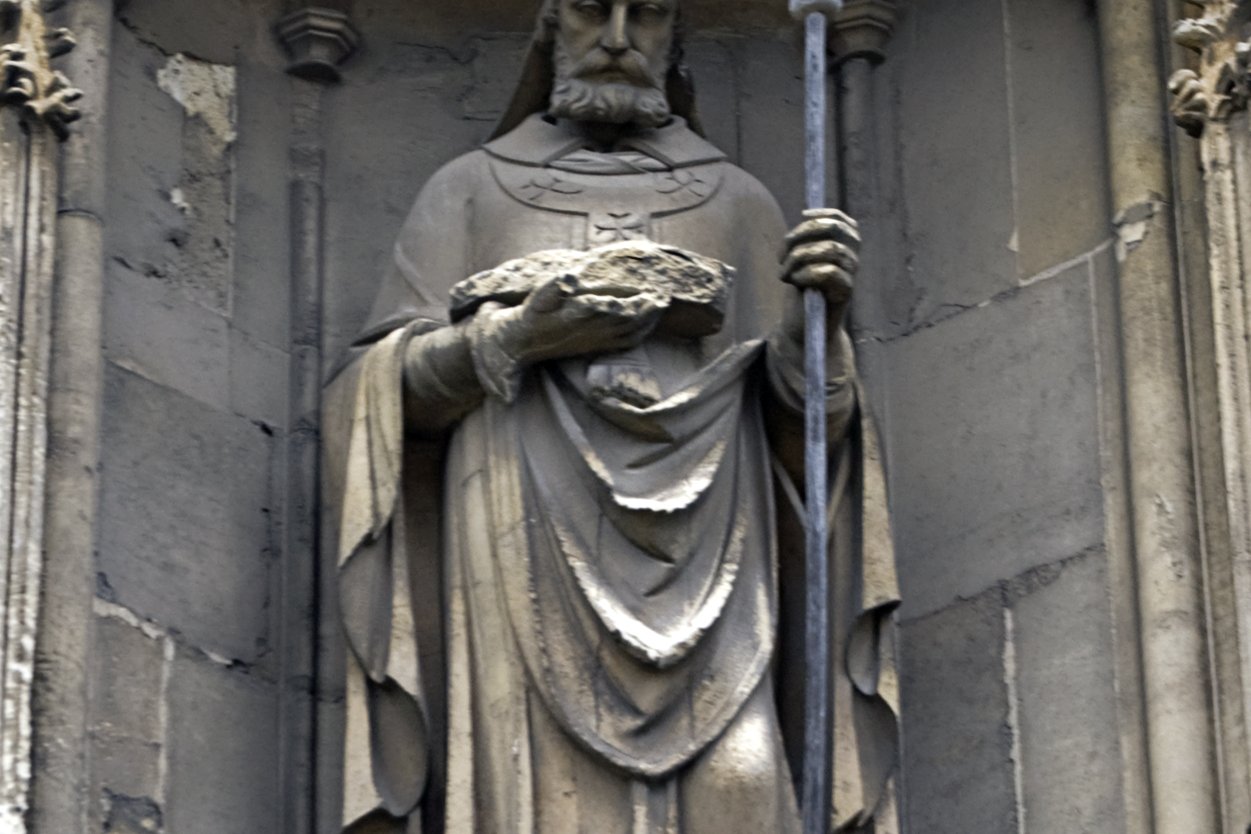
The single project that defines Edward's reign, and the one most directly connected to his sainthood, was his rebuilding of the abbey church at Westminster, just outside the walls of London. He undertook it as a grand Romanesque building on a scale new to England, intending it from the start as his own burial place — a break from the older royal tradition of burial at Winchester — and pouring substantial resources into it during the final years of his reign. Construction moved fast enough that the new church was consecrated on December 28, 1065.
Edward did not live to enjoy it. He died just eight days later, on January 5, 1066, and was buried in the church he had just finished building, beginning Westminster Abbey's long association with English royal burial and, from William the Conqueror onward that same year, English coronation. The abbey standing today has been rebuilt again since Edward's time, mostly in the Gothic style under Henry III in the thirteenth century, but it remains, in continuous use and purpose, the direct descendant of the church Edward completed just before his death.
A childless death and a conquest
Edward's death without an heir set off one of the most consequential succession crises in English history. The English council, the Witan, chose Harold Godwinson — Edith's brother and the most powerful noble in the kingdom — as the new king, and he was crowned almost immediately. But William, Duke of Normandy, a distant relative of Edward's through his Norman mother, claimed that Edward had earlier promised him the throne, and possibly that Harold himself had sworn to support that claim during an earlier visit to Normandy. William used this claim to justify an invasion, defeating and killing Harold at the Battle of Hastings in October 1066 and beginning Norman rule over England — a rule that reshaped English language, law, and landholding for centuries afterward, all traceable back to the unresolved question Edward's childless reign had left behind.
Canonization and a lasting feast
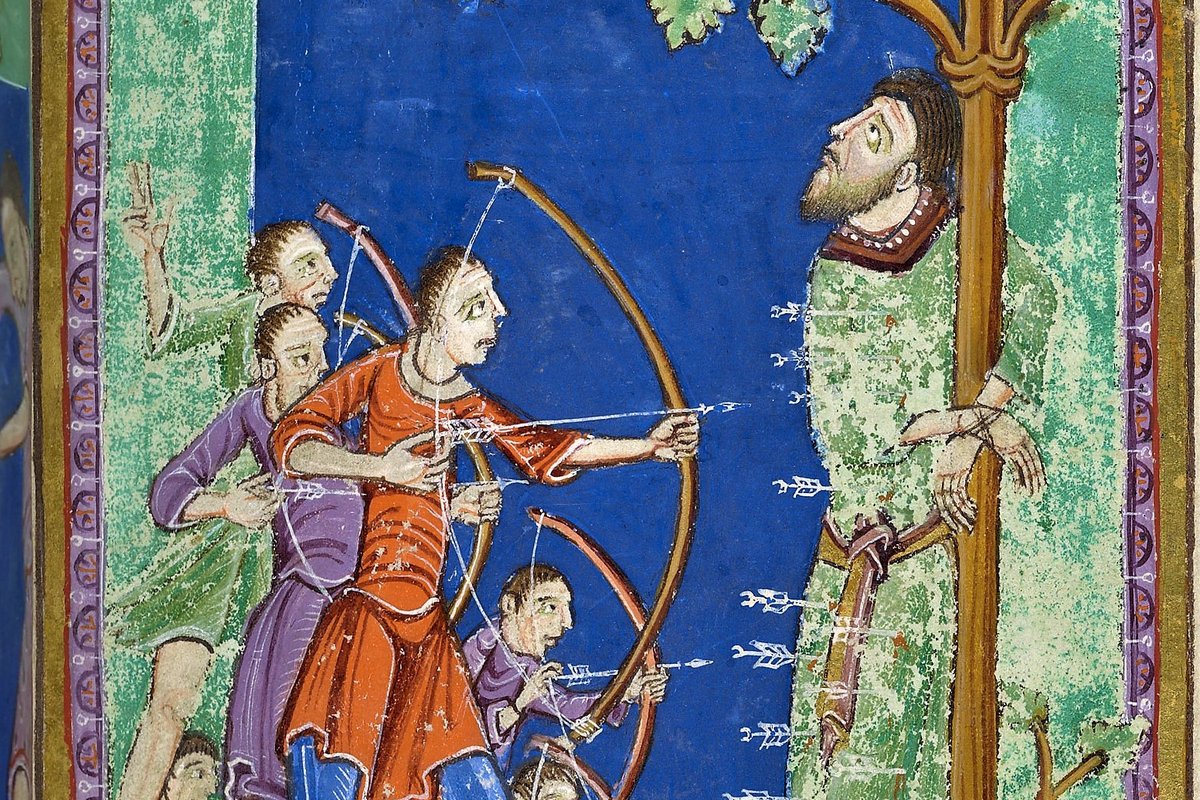
Edward was canonized in 1161 by Pope Alexander III, largely at the urging of King Henry II, who had political reasons of his own for promoting an English royal saint connected to Westminster Abbey. His remains were moved to a splendid new shrine there in 1163, and the date of that translation, October 13, became his feast day, still kept today. He is honored as a patron of difficult marriages and, in some traditions, of the English monarchy itself — a fitting patronage for a king whose own childless marriage, more than anything else he did as ruler, determined the course of English history after his death. Among royal saints connected to English history, his story sits alongside that of another canonized king, Edward the Martyr, though the two are separated by more than half a century and very different circumstances of death.
Trivia
Who was Saint Edward the Confessor?
Why is he called 'the Confessor'?
What did Edward the Confessor build?
How is Edward's death connected to the Norman Conquest?
When is Saint Edward the Confessor's feast day?
You May Also Like
Related Reading