Saint John XXIII, Pope

A peasant's son who became a diplomat
Angelo Giuseppe Roncalli was born in 1881 in Sotto il Monte, a village in the hills near Bergamo, the fourth of fourteen children in a family of tenant farmers with no wealth or influence to speak of. That background stayed visible in him for the rest of his life, even as his career took him about as far from a Bergamo farmhouse as the Church could send a man. Ordained a priest in 1904, Roncalli spent his early years as a seminary teacher and diocesan secretary before the Vatican redirected him into diplomatic service, a track that would occupy most of his working life and shape the instincts he later brought to the papacy.
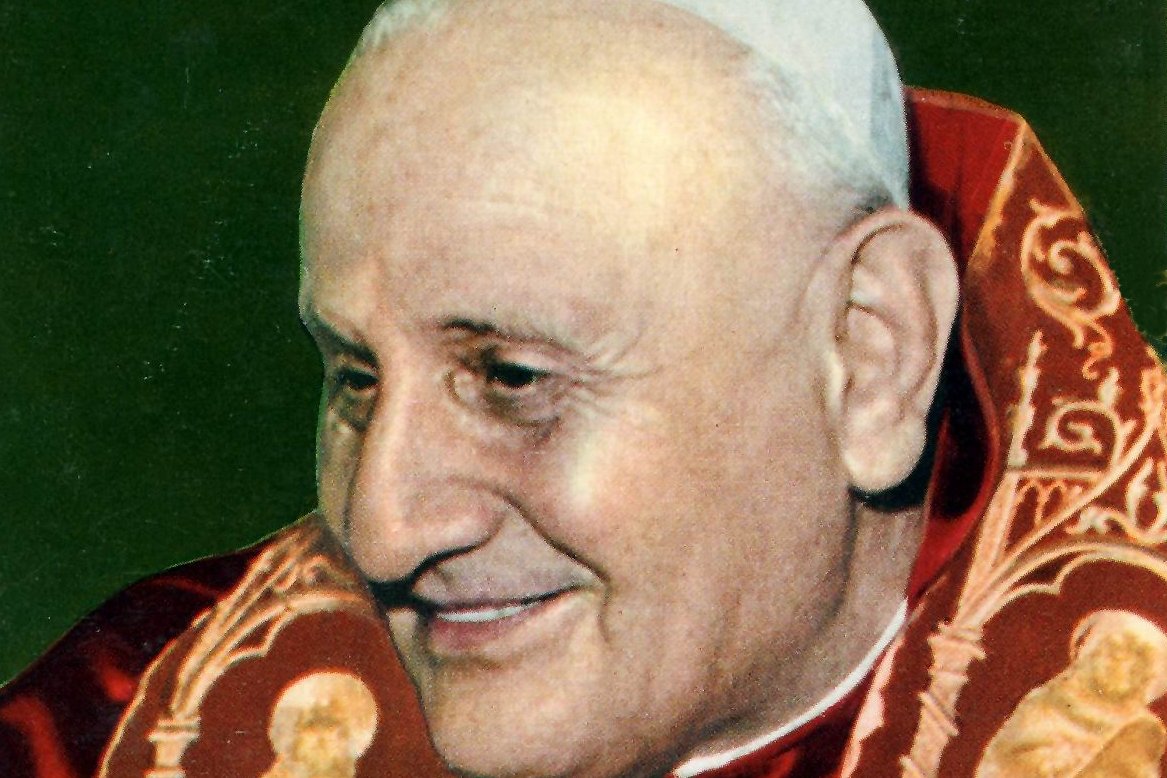
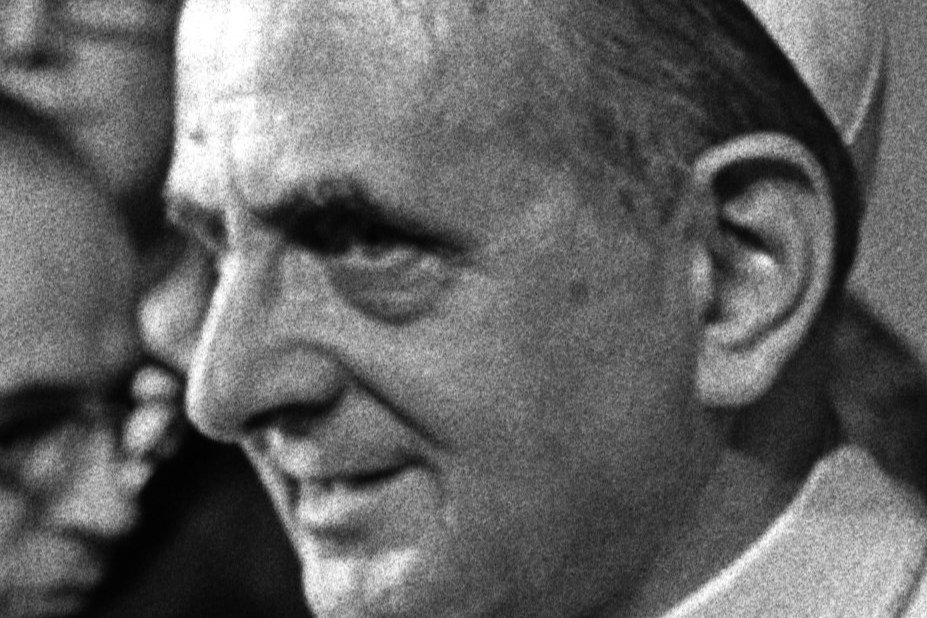
Photograph of Pope John XXIII, 1959, Patriarchate of Venice archive — public domain
Roncalli served as apostolic delegate to Bulgaria through the 1920s and 30s, then to Turkey and Greece, and it was during this period — through the years of the Second World War, while he was based in Istanbul — that he took real personal risk to help Jewish refugees escape Nazi deportation. Using his diplomatic position, he arranged transit visas and issued baptismal certificates that gave Jewish families cover to cross borders and reach safety, an effort historians have since credited with saving thousands of lives. He rarely spoke about this work himself in later years, treating it less as a heroic exception than as the plainly obvious thing to do.
An unlikely election
After the war, Roncalli served as papal nuncio to France, navigating the delicate postwar politics of French Catholicism, before being made a cardinal and appointed Patriarch of Venice in 1953. It was from that post, at age 76, that he entered the conclave following the death of Pope Pius XII in October 1958. The conclave deadlocked for eleven ballots among stronger, younger candidates, and Roncalli emerged as a compromise choice — widely read by observers at the time as a safe, transitional selection who would hold the papacy briefly without disturbing much.
That reading proved almost entirely wrong. Roncalli took the name John XXIII, reviving a name unused by a pope for over five centuries, and from his first months in office showed an instinct for direct, unscripted contact with ordinary people that startled a Vatican accustomed to more formal papal styles. He made unannounced visits to Roman hospitals and, memorably, to the Regina Coeli prison, telling the inmates there that since they could not come to him, he had come to them — a remark that circulated widely and helped cement his reputation as "il Papa buono," the Good Pope, a nickname that has stuck to him ever since.
Calling a council no one expected
On January 25, 1959 — barely three months after his election — John XXIII announced to a small group of cardinals that he intended to convene an ecumenical council, a gathering of the world's Catholic bishops of a kind that had not been held since the First Vatican Council nearly a century earlier. The announcement caught even senior Vatican officials off guard; there had been no clear pressure from within the Church demanding it, and many assumed the "caretaker" pope would spend his remaining years on more modest business.
The Second Vatican Council opened on October 11, 1962, with more than two thousand bishops from around the world gathered in St. Peter's Basilica. John XXIII framed its purpose with a phrase that became famous — aggiornamento, Italian for "updating" or "bringing up to date" — expressing his conviction that the Church needed to open its windows to the modern world rather than simply repeat old formulas at it. He did not live to see the council's conclusion; he died on June 3, 1963, less than a year after it opened, and it fell to his successor, Pope Paul VI, to see the four sessions through to their close in 1965. The council's documents went on to reshape Catholic liturgy, its approach to other Christian denominations and world religions, and its understanding of the role of laypeople — changes still actively discussed and debated within the Church today.
Encyclicals and a lasting reputation
Even in his short papacy, John XXIII left a substantial written legacy. His 1961 encyclical Mater et Magistra addressed Catholic social teaching on economic justice and the widening gap between rich and poor nations, while Pacem in Terris, issued in April 1963 just two months before his death, addressed world peace and human rights during the tense early years of the Cold War — notably, it was addressed not only to Catholics but to "all people of good will," an unusually broad audience for a papal encyclical of that period.
John XXIII was beatified by Pope John Paul II in 2000, and on April 27, 2014, Pope Francis canonized him in a joint ceremony alongside John Paul II — an unusual pairing of two twentieth-century popes canonized together, one remembered for opening a council and the other for carrying its reforms forward for decades afterward. His feast day, October 11, was deliberately fixed to the anniversary of the council's opening rather than the date of his death, a choice that reflects how thoroughly that single decision — made by a man many had expected to do very little — came to define his legacy.
Trivia
Why was Angelo Roncalli expected to be a 'caretaker' pope?
What did Pope John XXIII do that surprised the Church most?
Why is he called 'Good Pope John'?
What did John XXIII do before becoming pope?
When was John XXIII canonized, and what is his feast day?
You May Also Like
Related Reading