Saint Martha of Bethany

A household Jesus loved
Bethany, a small village just outside Jerusalem, appears in the Gospels as a kind of second home for Jesus during his ministry — and at the center of it is the household of Martha, her sister Mary, and their brother Lazarus. John's Gospel states the relationship without qualification: "Jesus loved Martha and her sister and Lazarus" (NABRE, John 11:5). Whatever else is said about Martha across her two Gospel appearances, that's the frame everything else sits inside.
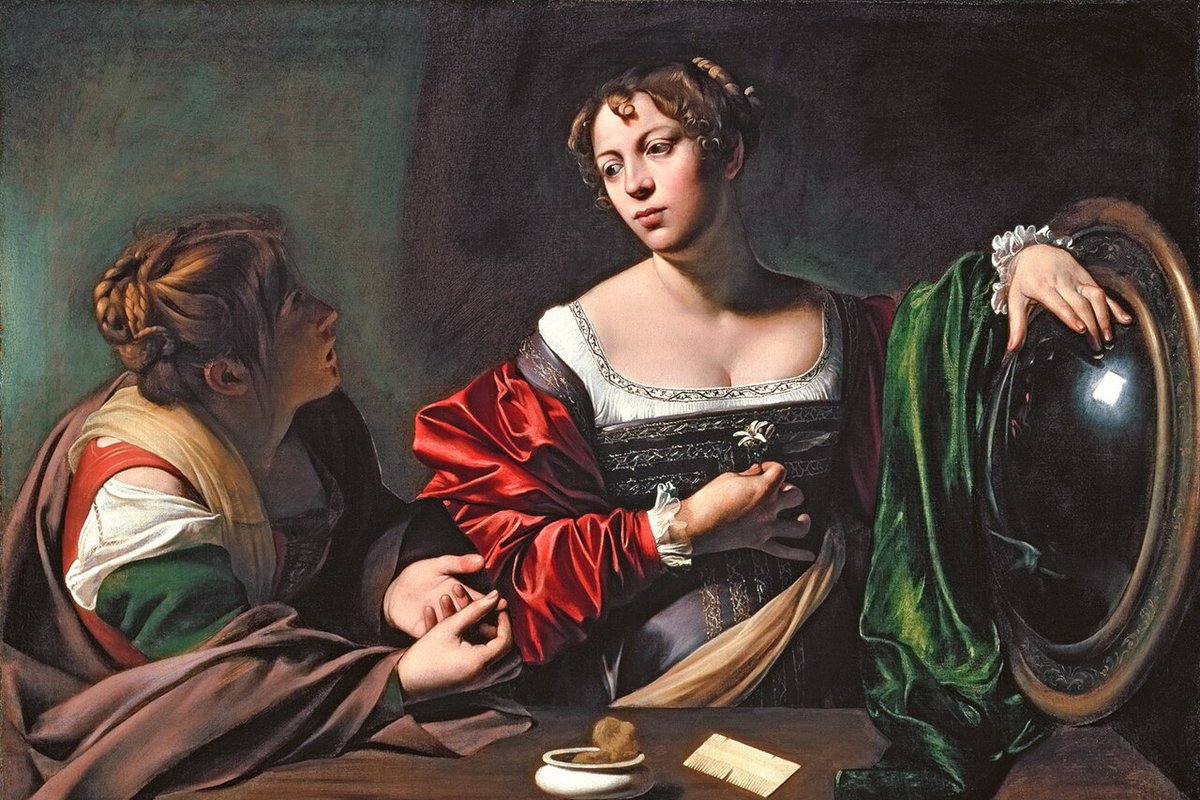
Michelangelo Merisi da Caravaggio, "Martha and Mary Magdalene," c. 1598, Detroit Institute of Arts — public domain.
"Martha, Martha"
Luke's Gospel gives us the scene most people know her by. Jesus and his disciples arrive at the sisters' home; Mary sits at his feet, absorbed in his teaching, while Martha is left managing the practical work of hosting a houseful of guests. Frustrated, Martha comes to Jesus directly: "Lord, do you not care that my sister has left me by myself to do the serving? Tell her to help me" (NABRE, Luke 10:40).
Jesus's answer is often remembered as a rebuke of Martha, but it's worth reading closely, because it's gentler and more specific than that. "Martha, Martha, you are anxious and worried about many things. There is need of only one thing. Mary has chosen the better part and it will not be taken from her." (NABRE, Luke 10:41-42). He repeats her name — a small, tender detail in the Greek text, the kind of address used for someone you're speaking to with real affection, not scolding. The point isn't that hospitality and work are worthless; it's that Martha had let anxiety crowd out the one thing that mattered most in that moment: sitting still long enough to actually listen.
"I know he will rise"
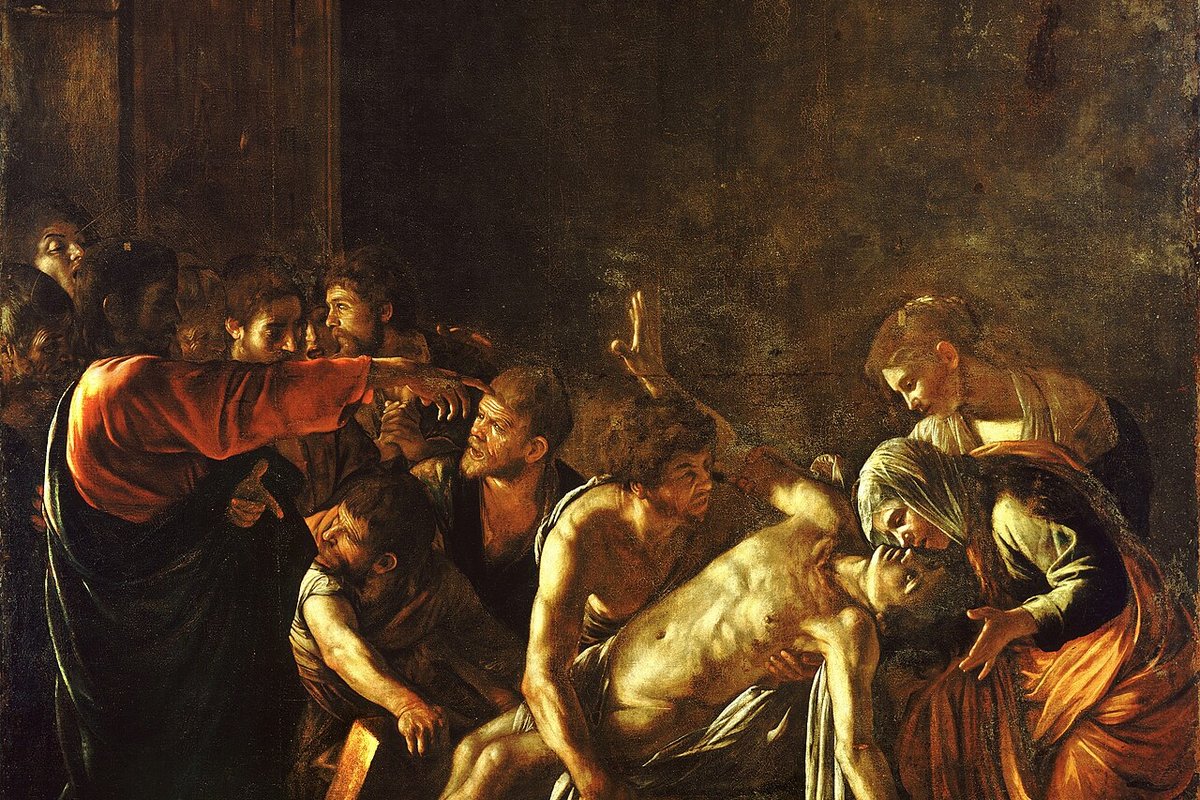
The fuller measure of Martha's character comes later, in John's Gospel, after her brother Lazarus falls ill and dies. By the time Jesus arrives in Bethany, Lazarus has already been in the tomb four days. Martha, hearing that Jesus is coming, doesn't wait at home — she goes out to meet him on the road and says plainly, "Lord, if you had been here, my brother would not have died" (NABRE, John 11:21). It's not an accusation; the next words out of her mouth make that clear: "[But] even now I know that whatever you ask of God, God will give you" (John 11:22).
What follows is one of the most striking exchanges in the Gospels. Jesus tells her, "I am the resurrection and the life; whoever believes in me, even if he dies, will live... Do you believe this?" (NABRE, John 11:25-26). Martha's reply is immediate and unhedged: "Yes, Lord. I have come to believe that you are the Messiah, the Son of God, the one who is coming into the world" (NABRE, John 11:27) — a confession of faith that stands alongside Peter's at Caesarea Philippi as one of the clearest statements of who Jesus is spoken by anyone in the Gospels. Moments later, Jesus calls Lazarus out of the tomb alive, and Martha's declaration is vindicated in the most literal way possible.
A third appearance, easy to overlook
Martha shows up once more in John's Gospel, in a scene that tends to get overshadowed by the drama of Lazarus's raising just before it and Judas's objection just after it. Six days before the Passover of his death, Jesus returns to Bethany for a dinner in his honor, and John notes simply that "they gave a dinner for him there, and Martha served" (NABRE, John 12:2). It's a brief line, easy to read past, but it matters: the household hasn't changed. Martha is doing exactly what she was doing in Luke's account years earlier, and this time nobody corrects her for it. The contrast with the earlier scene isn't that Martha finally learned to stop serving — it's that serving was never the problem in the first place; anxiety was. Here, in the last supper Bethany hosts for Jesus before the Passion, Martha's steady, practical care for her guest reads less like a flaw and more like devotion in its plainest form.
A later legend, and a caution about it
Medieval French tradition, especially strong in Provence, developed an elaborate legend that Martha, Mary, and Lazarus were set adrift from the Holy Land in a boat without oars and washed ashore near what is now the town of Tarascon, where Martha is said to have tamed a man-eating river-dragon called the Tarasque simply by sprinkling it with holy water and leading it into town on her belt like a leashed animal. It's a colorful story, still celebrated locally today, but it has no basis in the Gospels or in the earliest historical sources on Martha's life, and should be understood as regional pious legend rather than anything the Church teaches as fact. The New Testament itself gives no account of what became of Martha after the events recorded in Luke and John.
Patron of an ordinary, essential kind of service
Because of her role serving Jesus in her own home, tradition has made Martha the patron saint of cooks, servants, housekeepers, and hospitality workers — a patronage that could easily be read as a footnote to the "Martha, Martha" scene, except that it misses what John's Gospel adds to her story. Martha wasn't only the one distracted by housework; she was also the one who met grief head-on and spoke one of the boldest confessions of faith in the New Testament. Her feast day, July 29, is shared in the current Roman calendar with her sister Mary and brother Lazarus — a household the Gospels remember, together, as a place Jesus was genuinely at home.
Trivia
Who was Martha of Bethany?
What happened in the "Martha, Martha" episode?
What did Martha say to Jesus after her brother Lazarus died?
Is Martha of Bethany the patron saint of cooks and homemakers?
You May Also Like
Related Reading