Saint Robert of Molesme

A reformer before he founded anything
Robert was born around 1028 in the Champagne region of France, and entered monastic life as a young man, developing over the following decades into a churchman with a genuine, repeated pattern of interest in stricter monastic observance — long before the founding of Cîteaux that would eventually make him famous. He served as prior of a hermit community at Collan and abbot of the monastery of Saint-Michel-de-Tonnerre before being called, around 1075, to lead a group of hermits living at Molesme, in Burgundy, organizing them into a formal Benedictine community with himself as abbot.
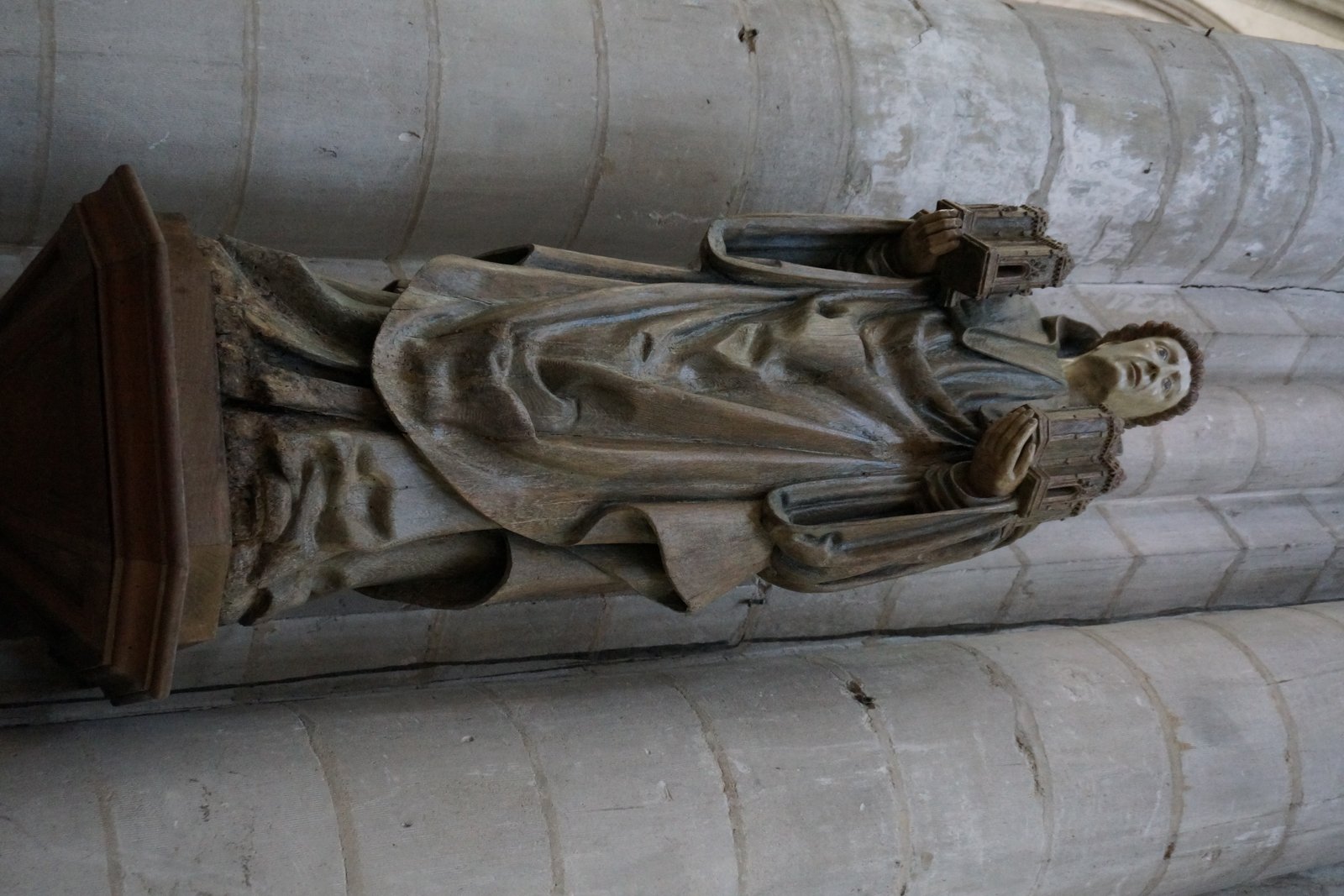
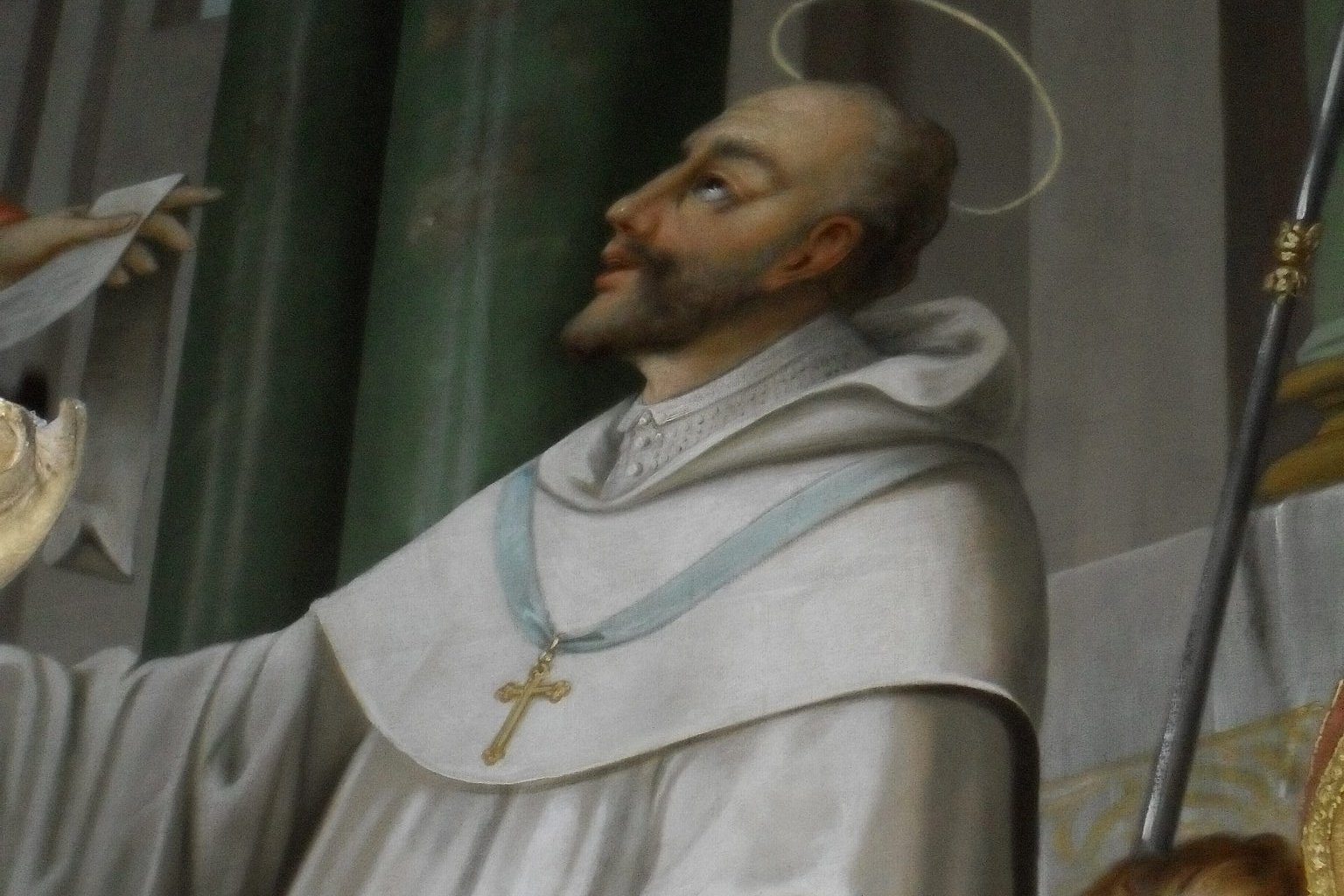
Painted statue of Saint Robert of Molesme, 16th century — used under CC BY-SA 4.0, photograph by G. Garitan.
Molesme itself began, under Robert's leadership, as a reform-minded foundation, but its early success brought a familiar problem: growing donations and reputation brought growing wealth, and within a couple of decades the community had, in the assessment of Robert and a number of like-minded monks within it, drifted toward the same relaxed observance and material comfort that reform-minded monks across the period consistently identified as the central corrupting pressure facing successful Benedictine houses. Robert had already experienced versions of this same pattern at earlier communities he'd tried to lead toward stricter observance, which makes his eventual decision at Molesme less an isolated impulse than the culmination of a longstanding, recurring conviction.
Founding Cîteaux
In 1098, Robert led a group of roughly twenty monks out of Molesme to found an entirely new community, in a remote, marshy site in Burgundy that would become the abbey of Cîteaux — a foundation committed explicitly to a stricter, more literal observance of the Rule of Saint Benedict, rejecting the material comfort and relaxed discipline the group believed had overtaken Molesme and many other established Benedictine houses of the period. This new foundation would eventually give its name, via the Latin Cistercium, to an entire monastic order and reform movement that would reshape Western monasticism over the following two centuries.
Robert's own direct leadership of Cîteaux, though, turned out to be remarkably brief. The monks who remained behind at Molesme, left without their abbot and reportedly struggling under weaker leadership in his absence, petitioned Pope Urban II to order Robert's return, arguing that his departure had left their own community in real difficulty. The pope agreed, and within about a year of founding Cîteaux, Robert was recalled to Molesme, leaving the fledgling reform community he had just established under new leadership — first Alberic, and then, from 1108, Saint Stephen Harding, who would guide Cîteaux through its genuinely difficult early years before Bernard of Clairvaux's arrival in 1112 transformed its fortunes and launched the rapid Cistercian expansion of the following decades.
A founder who didn't get to lead his own foundation
Robert's return to Molesme meant he spent the final thirteen years of his life back at the very monastery whose drift toward comfortable observance had originally driven him to leave — an outcome that reads, on its face, almost as a defeat, but one that Robert appears to have accepted with real obedience to the papal decision rather than resistance. He continued to lead Molesme as abbot for the remainder of his life, apparently working to maintain and improve its observance from within rather than abandoning the effort a second time, even after having already built and then lost direct leadership of what would become a far more historically significant foundation.
This makes Robert's position within Cistercian history genuinely distinctive: he is honored as one of the order's founding fathers, credited with the decisive act of leaving Molesme and establishing Cîteaux in the first place, even though the actual work of building Cîteaux into a lasting, thriving community fell to his successors rather than to Robert himself. It's a founder's story without the founder present for most of what followed — Robert supplied the original conviction and the initial act of departure, and other men, working within the structure he had set in motion, carried the project forward into what it eventually became.
A pattern repeated elsewhere in monastic history
Robert's experience — founding a reform community only to be recalled to the very institution he had left, leaving others to carry his vision forward — isn't entirely unique in medieval monastic history, but the scale of what eventually grew from his brief, interrupted founding act makes his case especially striking. Few other monastic founders launched a movement of Cîteaux's eventual size and influence while personally leading it for less than a single year; Robert's specific contribution sits almost entirely in the initial decision and act of departure, a reminder that a founding moment's historical significance doesn't always correlate with how long the founder himself remained in charge of what came after it.
A founder remembered alongside his successors
Robert died in 1111, having spent his final years back at Molesme rather than at the reform community that would go on to define his historical legacy. His feast is kept on April 29. He is venerated today alongside Alberic and Stephen Harding as one of the three founding fathers of the Cistercian order, a shared recognition that reflects the genuinely collaborative, sequential nature of Cîteaux's early history — a foundation begun by one man, sustained through crisis by a second, and finally transformed into a major movement by a third, with Robert's own specific and essential contribution being the founding act itself, however briefly he was able to remain and lead it in person.
Trivia
Who was Saint Robert of Molesme?
Why did Robert leave Molesme to found Cîteaux?
Why was Robert sent back to Molesme so soon after founding Cîteaux?
What happened to Cîteaux after Robert left?
When is Saint Robert of Molesme's feast day?
You May Also Like
Related Reading