Saint Sharbel Makhluf, Hermit

A farm boy from Mount Lebanon
Sharbel Makhluf was born Youssef Antoun Makhlouf on May 8, 1828, in the small mountain village of Beqa-Kafra in northern Lebanon, the youngest of five children in a poor farming family. His father died when he was young, and Youssef was raised largely by his mother and an uncle, growing up doing farm labor in the terraced hills of Mount Lebanon — a landscape of Maronite Catholic villages, ancient cedar forests, and remote monasteries that had sheltered Christian monastic life continuously since the earliest centuries of the Church, largely because the mountains offered relative protection from the political upheavals that swept the wider region over the centuries.
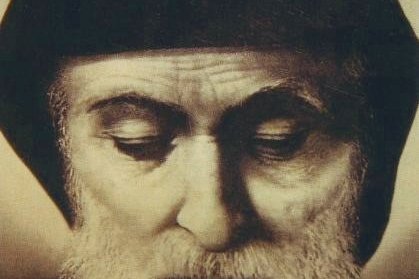
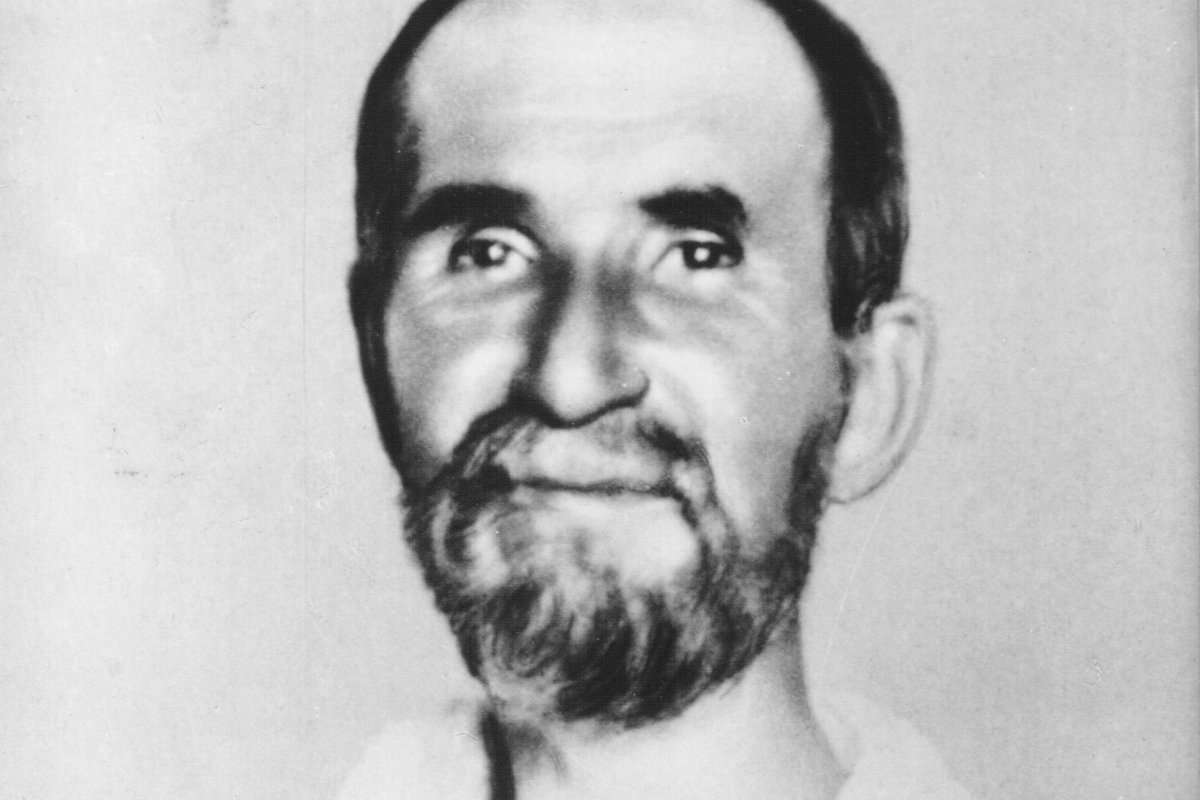
Period photograph of Saint Sharbel Makhluf, Lebanon, late 19th century — public domain.
From childhood, Youssef showed an intense, private devotion to prayer, reportedly spending long hours in a small cave near his village even as a boy. At the age of twenty-three, in 1851, he left his family's farm without fully explaining his intentions in advance and entered the Lebanese Maronite Order at the Monastery of Our Lady of Mayfouq, later transferring to the Monastery of Saint Maron in Annaya, where he took the religious name Sharbel — after a second-century Christian martyr of Antioch — and made his final monastic vows in 1853.
A monk within the Maronite tradition
The Maronite Church, to which Sharbel belonged, is one of the Eastern Catholic Churches — in full communion with the Pope and the Roman Catholic Church, but preserving its own ancient liturgy, spiritual traditions, and monastic customs, rooted in the region of modern-day Lebanon and Syria and named after Saint Maron, a fifth-century hermit-monk whose disciples helped found the Maronite monastic and ecclesial tradition. Monastic and eremitic life — the life of a solitary hermit devoted to prayer, distinct from life in a community — has an especially deep and continuous history within Maronite Christianity, reaching back to the earliest centuries of Eastern Christian monasticism in Syria and Egypt.
Sharbel was ordained a priest in 1859 after further theological study, and for roughly the next sixteen years he lived as a monk within the community at Annaya, known for exceptional personal discipline, a demanding schedule of manual labor and prayer, and a reputation among his fellow monks for holiness that set him apart even within an already rigorous monastic community.
Sixteen years of near-total solitude
In 1875, at the age of forty-seven, Sharbel received permission from his religious superiors to withdraw from the monastic community itself and live as a hermit in a small hermitage attached to the monastery, called Saints Peter and Paul. This was not a step taken lightly or granted casually — the Maronite Order maintained (and still maintains) a formal, carefully regulated path to the eremitic life for monks who had already demonstrated exceptional discernment and discipline within community life, precisely because solitary life carries real spiritual and psychological risks without that foundation.
For the following twenty-three years, until his death in 1898, Sharbel lived an extraordinarily austere existence: extended fasting well beyond ordinary monastic practice, hours of prayer before the Blessed Sacrament, simple manual labor tending a small garden, and very limited contact even with the handful of other hermits who shared the same remote hermitage. He left behind no writings of note, gave no recorded sermons or public teaching, and was known to almost no one outside his own small monastic circle during his lifetime — a life defined entirely by what the Church terms the eremitic vocation, in which, as the Catechism describes it, hermits devote their lives "to the praise of God and salvation of the world through a stricter separation from the world, the silence of solitude and assiduous prayer" (CCC 921).
Death, and an unusual aftermath
Sharbel suffered a stroke while celebrating the Divine Liturgy — the Maronite equivalent of the Mass — on December 16, 1898, and died eight days later, on Christmas Eve of that year, at the age of seventy. He was buried in the monastery cemetery at Annaya without particular fanfare, one more monk among many in a community with a long tradition of quiet holiness.
What followed set his story apart from most. According to accounts recorded by his monastic community, a bright light was reportedly seen around his grave in the weeks after his burial, prompting his superiors to have the grave opened — at which point his body was found notably well-preserved rather than showing the expected signs of decomposition. Over the following decades, his body was examined and reburied multiple times, with witnesses continuing to report an unusual state of preservation for far longer than would ordinarily be expected. Alongside this, an increasing stream of pilgrims to his tomb began reporting physical healings and other favors they attributed to his intercession — a pattern significant enough in scale and consistency that it became central evidence in the Vatican's formal investigation of his cause for canonization, which requires medically inexplicable healings attributed to a candidate's intercession as part of the process.
From a remote hermitage to a canonized saint
Pope Paul VI beatified Sharbel Makhluf on December 5, 1965 — during the closing days of the Second Vatican Council, a detail Paul VI highlighted in his beatification homily as a striking sign that the contemplative, hidden life still had something essential to say to a modern Church actively engaging with the wider world. Paul VI canonized him on October 9, 1977, following continued investigation and confirmation of miracles attributed to his intercession.
Today, the Monastery of Saint Maron in Annaya remains a major pilgrimage site, drawing visitors from across Lebanon and internationally, including many non-Christian pilgrims from the wider region, a detail often cited as a sign of Sharbel's broad appeal beyond confessional lines. His feast is kept on July 24 in both the Maronite calendar and the wider Roman Catholic calendar. For a man who spent nearly a quarter-century deliberately withdrawing from nearly all human contact, Sharbel Makhluf has become, paradoxically, one of the most visited and widely venerated saints to emerge from the modern Middle East — a reminder, much like the tradition surrounding early desert monastics before him, that a life spent almost entirely hidden can still leave behind an unusually visible legacy.
Trivia
Who was Saint Sharbel Makhluf?
What does 'Maronite' mean, and what tradition does Sharbel belong to?
Why is Sharbel Makhluf associated with miraculous healings?
When was Sharbel Makhluf canonized?
What is Saint Sharbel's feast day?
You May Also Like
Related Reading