Hannah's Prayer for a Son

A household with two wives and an old wound
The Book of Samuel opens not with a king or a battle but with a domestic situation familiar from other Old Testament stories: a man, Elkanah, with two wives — Hannah, whom he loves, and Peninnah, who has borne him children while Hannah has none. The text doesn't soften the pain of this arrangement: "her rival used to taunt her constantly to upset her, because the Lord had left her barren" (1 Samuel 1:6), and this happened repeatedly, "year after year," whenever the family made its pilgrimage to worship at Shiloh (1 Samuel 1:7). Elkanah's attempt at comfort — "Am I not more to you than ten sons?" (1 Samuel 1:8) — however well-intentioned, doesn't resolve Hannah's grief; the text simply moves from his words straight into her private anguish.
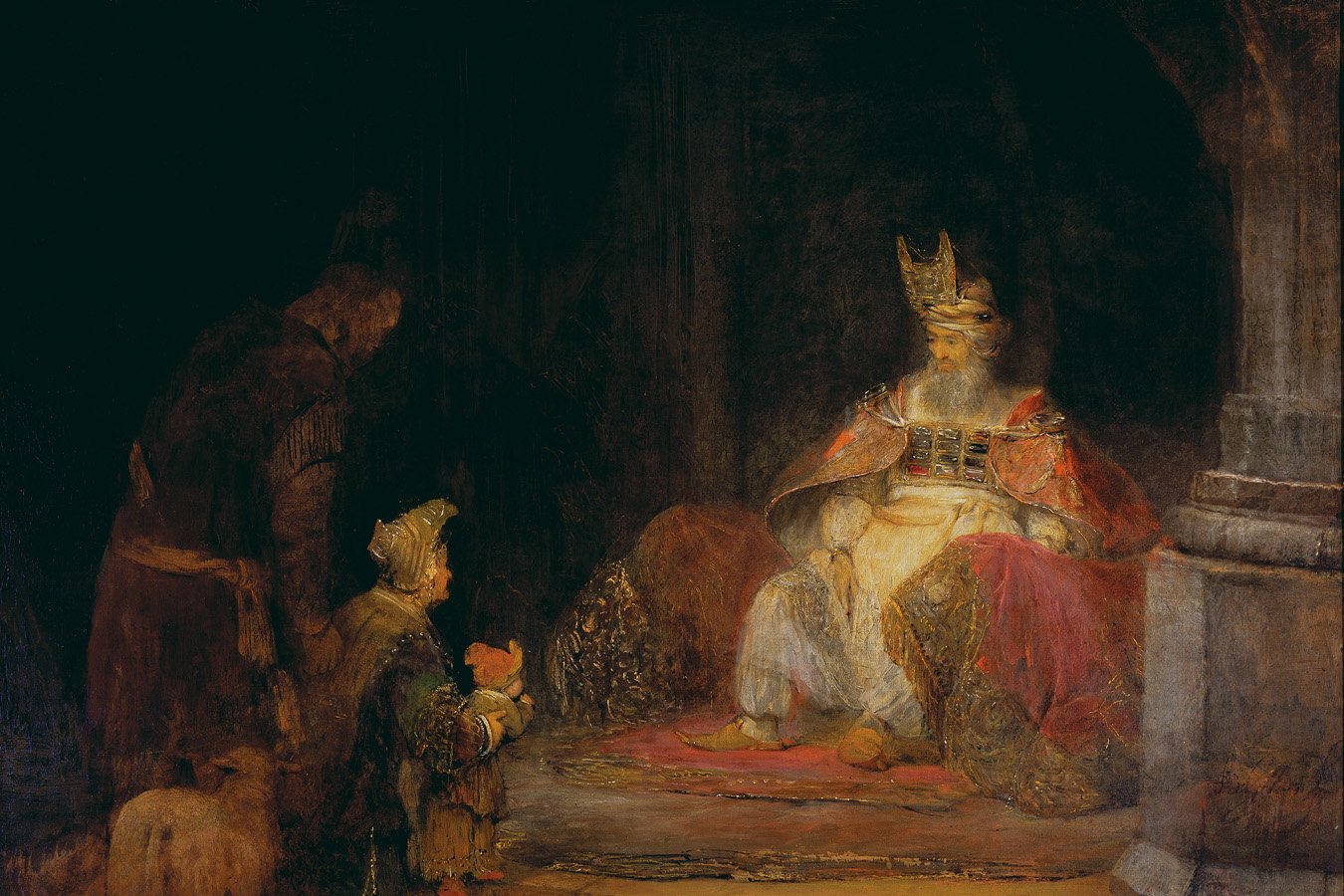
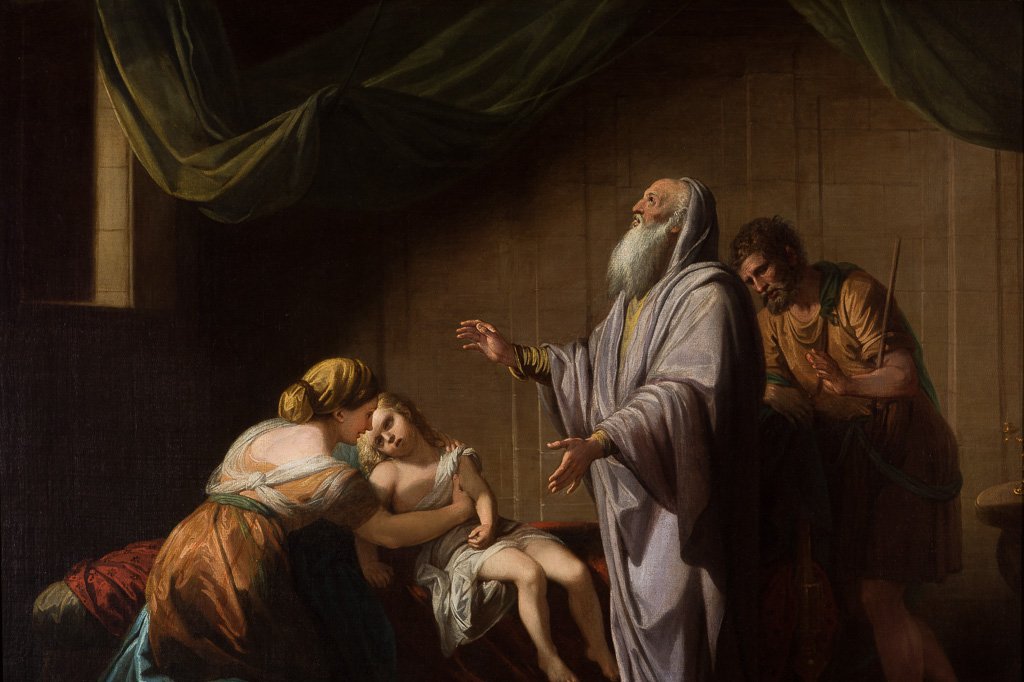
Aert de Gelder, "Hannah Presenting Samuel to Eli," c. 1710. Public domain.
A prayer poured out in silence
At Shiloh, Hannah goes to the sanctuary alone. "In her bitterness she prayed to the LORD, weeping freely, and made this vow: 'O LORD of hosts, if you look with pity on the hardship of your servant, if you remember me and do not forget me, if you give your handmaid a male child, I will give him to the LORD all the days of his life. No razor shall ever touch his head'" (1 Samuel 1:10-11). The vow's final detail — that no razor would touch his head — marks the child as a Nazirite from birth, someone set apart entirely for God's service under a specific set of ancient vows described in the Law (Numbers 6:1-21). Hannah isn't simply asking for a child; she's promising, in advance, to give that child back.
Mistaken for drunk in the middle of her grief
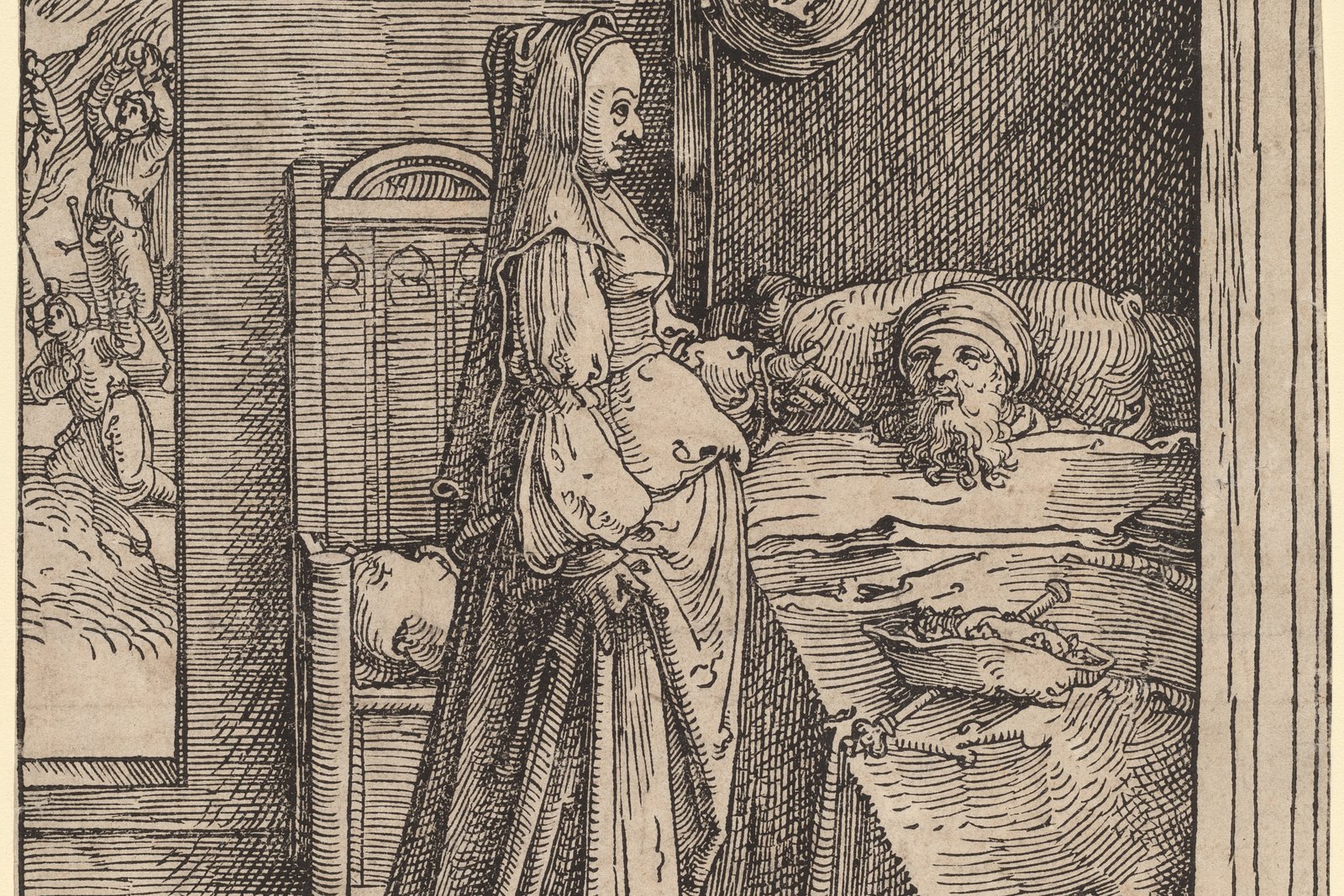
What happens next adds a strange, almost uncomfortable detail to the scene: "Hannah was praying silently; though her lips were moving, her voice could not be heard. Eli, thinking she was drunk, said to her, 'How long will you make a drunken spectacle of yourself? Sober up from your wine!'" (1 Samuel 1:13-14). Eli, the priest presiding at Shiloh, misreads her completely — silent, mouthed prayer wasn't the norm at the time, and her physical distress reads to him as intoxication rather than anguish. Hannah's response is dignified rather than defensive: "No, my lord! I am an unhappy woman. I have had neither wine nor liquor; I was only pouring out my heart to the LORD. Do not think your servant a worthless woman; my prayer has been prompted by my deep sorrow and misery" (1 Samuel 1:15-16). Eli, correcting course, answers with a blessing: "Go in peace, and may the God of Israel grant you what you have requested" (1 Samuel 1:17).
An answered prayer, and a name that remembers it
Hannah conceives, and "at the end of her pregnancy, bore a son whom she named Samuel. 'Because I asked the LORD for him'" (1 Samuel 1:20). The name itself carries her prayer inside it — Hebrew tradition connects "Samuel" to the idea of asking or of being heard by God, so that every time the child's name was spoken, it recalled the exact circumstances of his conception. It's the kind of naming pattern that runs throughout the Old Testament, where a name isn't just an identifier but a permanent, spoken record of what God has done.
Giving back what she asked for
The hardest part of Hannah's story comes after Samuel is born, once she has weaned him — likely a matter of two or three years, per the customs of the time. She brings him to Shiloh herself and tells Eli plainly: "I prayed for this child, and the LORD granted my request. Now I, in turn, give him to the LORD; as long as he lives, he shall be dedicated to the LORD" (1 Samuel 1:27-28). She leaves her young son at the sanctuary to be raised under Eli's care, fulfilling the vow she'd made years earlier in the depth of her grief, without any indication in the text that she wavered from it now that the child she'd longed for was actually in her arms.
A song that echoes for centuries
What follows Hannah's act of dedication is a prayer of praise (1 Samuel 2:1-10) that has drawn close comparison from Christian readers for two thousand years to another song of praise from another mother — Mary's Magnificat in Luke's Gospel (Luke 1:46-55), spoken after the angel Gabriel announces she will bear Jesus. Both songs open with joy in God as the speaker's strength, both dwell on God's pattern of lifting up the lowly and humbling the proud, and both come from women who had just experienced an intervention in their lives that upended their expected circumstances entirely. Catholic tradition has long read Hannah's story as an Old Testament foreshadowing of Mary's own — a mother's radical yes to God, expressed through the gift of a son.
The son Hannah gave away becomes Israel's judge and prophet
Samuel doesn't remain a minor figure after this opening chapter — he grows up to become one of the most consequential figures in Israel's history, the last of the judges and the prophet who anoints both Saul and David as king. His story bridges the era of scattered tribal judges into the era of a unified monarchy, and none of it happens without Hannah's initial vow and her willingness to keep it. Readers interested in what Samuel does once he's grown can find his anointing of Israel's first two kings covered in our article on the kings of Israel: Saul, David, and Solomon.
Aert de Gelder's tender rendering of a hard moment
The painting illustrating this article, by the Dutch artist Aert de Gelder — one of Rembrandt's last students and among the few painters still working in his master's warm, deeply shadowed style well into the 18th century — captures the scene of Hannah presenting young Samuel to Eli at the sanctuary. De Gelder's handling of light, learned directly from Rembrandt, falls gently across mother and son at the exact moment of separation, giving the scene an intimacy that resists turning Hannah's sacrifice into pure triumph — the painting holds both the fulfillment of her prayer and the cost of her vow in the same warm, quiet frame.
Trivia
Why was Hannah so distressed at the start of her story?
What vow did Hannah make when she prayed for a son?
Why did the priest Eli think Hannah was drunk?
What did Hannah name her son and why?
Did Hannah keep her vow after Samuel was born?
Related Reading