The Stoning of Stephen

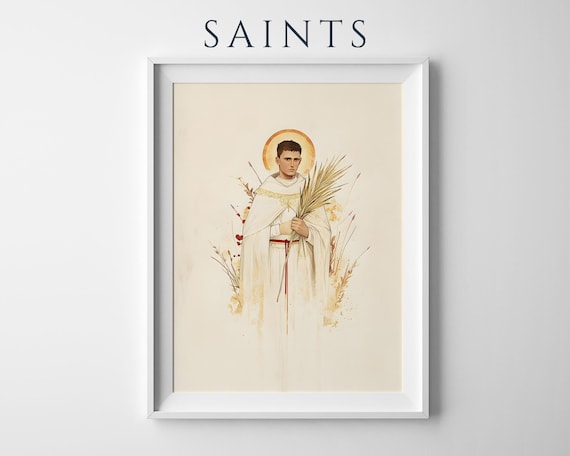
A deacon chosen to serve, not to preach
Stephen enters the New Testament story almost incidentally. As the earliest Christian community in Jerusalem grew, a practical dispute arose over the daily distribution of food to widows, and the apostles decided they needed help managing it so they could focus on prayer and preaching. The community chose seven men for the task, and Stephen is named first among them: "They chose Stephen, a man filled with faith and the holy Spirit" (Acts 6:5). It's a role built around service, not public argument — yet the text moves almost immediately from his appointment to something much larger: "Now Stephen, filled with grace and power, was working great wonders and signs among the people" (Acts 6:8).
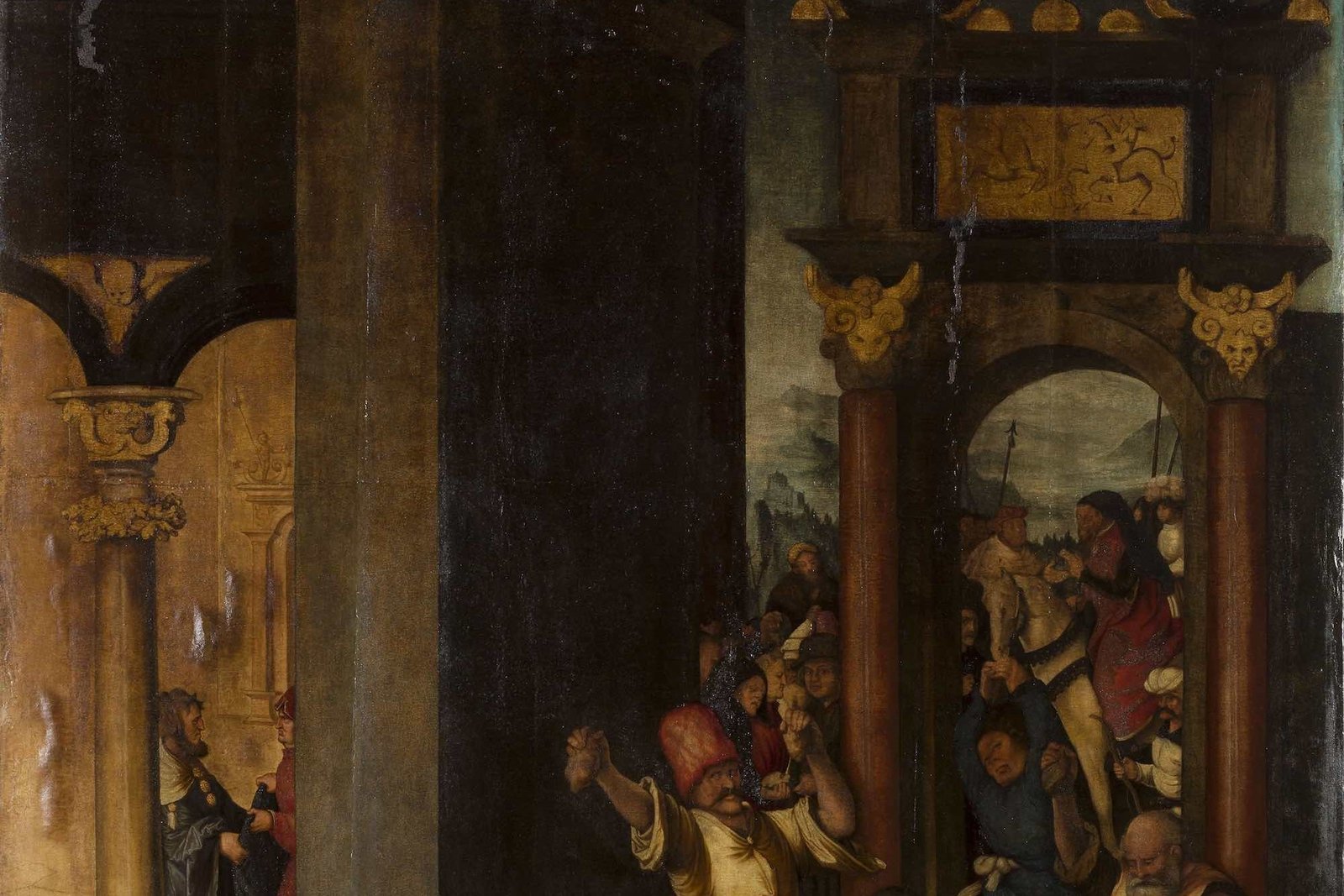
Hans Baldung Grien, "The Stoning of Saint Stephen," 1522. Public domain.
An argument he couldn't lose
Stephen's growing prominence draws opposition. "Certain members of the so-called Synagogue of Freedmen, Cyrenians, and Alexandrians, and people from Cilicia and Asia, came forward and debated with Stephen, but they could not withstand the wisdom and the spirit with which he spoke" (Acts 6:9-10). Unable to defeat him in open argument, his opponents change tactics entirely: "they instigated some men to say, 'We have heard him speaking blasphemous words against Moses and God.' They stirred up the people, the elders, and the scribes" (Acts 6:11-12), bringing him before the Sanhedrin — the same council that had tried Jesus — on the strength of testimony the text explicitly identifies as false.
A face like an angel's, and a long defense
Even under this hostile scrutiny, something remarkable is noted about Stephen: "all those who sat in the Sanhedrin looked intently at him and saw that his face was like the face of an angel" (Acts 6:15). Given the chance to answer the charges, Stephen delivers what becomes the longest single speech in the Acts of the Apostles — a sweeping retelling of Israel's history from Abraham through Moses to Solomon's Temple, building toward a pointed accusation of his own against the council members judging him: that they, like generations before them, had resisted the Holy Spirit and now had betrayed and murdered "the Righteous One" himself (Acts 7:51-52).
A vision of heaven opened
The council's reaction to this closing accusation is immediate and violent: "When they heard this, they were infuriated, and they ground their teeth at him" (Acts 7:54). What Stephen experiences in this moment of mounting fury is described in strikingly specific terms: "But he, filled with the holy Spirit, looked up intently to heaven and saw the glory of God and Jesus standing at the right hand of God, and he said, 'Behold, I see the heavens opened and the Son of Man standing at the right hand of God'" (Acts 7:55-56). It's a rare moment in the New Testament of someone claiming to see, in real time, the glorified Christ in heaven — and Stephen's use of the title "Son of Man," the same title Jesus applied to himself throughout the Gospels, would have landed on the council as a further, deliberate claim about who Jesus was.
A mob, a young man named Saul, and a death outside the city
The council's response leaves no room for further trial: "they cried out in a loud voice, covered their ears, and rushed upon him together. They threw him out of the city, and began to stone him" (Acts 7:57-58). Stoning outside the city walls followed the pattern prescribed for certain capital offenses under Jewish law, carried out here by a mob rather than through any formal sentence being pronounced. Acts includes one small, quiet detail in the middle of the violence that will matter enormously later: "The witnesses laid down their cloaks at the feet of a young man named Saul" (Acts 7:58) — the same Saul who reappears almost immediately afterward, "entering house after house and dragging out men and women, he handed them over for imprisonment" (Acts 8:3), before his own dramatic reversal on the road to Damascus (see our article on the conversion of Saint Paul).
Words that echo the cross
As the stones fall, Stephen's final words closely mirror two things Jesus himself said while dying on the cross. First: "As they were stoning Stephen, he called out, 'Lord Jesus, receive my spirit'" (Acts 7:59) — echoing Jesus's own words in Luke's Gospel, "Father, into your hands I commend my spirit" (Luke 23:46). Then, falling to his knees: "Lord, do not hold this sin against them" (Acts 7:60) — a direct echo of Jesus's prayer from the cross, "Father, forgive them, they know not what they do" (Luke 23:34). Acts closes the account starkly: "and when he said this, he fell asleep" (Acts 7:60), using the gentle early Christian language for death that would become common in how the Church spoke of those who died in Christ.
The first martyr, and the Church's memory of him
Stephen holds a distinct title in Christian tradition — protomartyr, the first martyr, the first follower of Jesus recorded as being killed specifically for his faith. His feast has been celebrated since the earliest centuries of the Church, traditionally observed the day after Christmas, a placement that has always struck commentators as theologically pointed: the day after celebrating Christ's birth, the Church turns immediately to commemorate someone who died bearing witness to what that birth meant. Stephen's story also marks a turning point in Acts itself — his death triggers a wider persecution that scatters the Jerusalem believers "throughout the countryside of Judea and Samaria" (Acts 8:1), which Acts presents not as a defeat but as the mechanism by which the Christian message first spread beyond Jerusalem's walls.
Baldung's violent, crowded scene
The painting illustrating this article, by the German Renaissance artist Hans Baldung Grien, renders the stoning with unflinching physical intensity — Stephen collapsed under the weight of the mob's violence, stones frozen mid-throw, the crowd's faces contorted with the same fury Acts describes. Baldung, a student of Albrecht Dürer working in early 16th-century Germany, was known for exactly this kind of unsparing dramatic realism in his religious scenes, refusing to let viewers look away from the physical brutality that Stephen's calm, forgiving final words stand against.
Trivia
Who was Stephen and what was his role in the early Church?
Why was Stephen arrested and put on trial?
What did Stephen see just before he was killed?
What did Stephen say while he was being stoned?
Who witnessed Stephen's death and what role did he later play?
Related Reading