St. Vitus Cathedral, Prague

A relic, a rotunda, and a name that outlasted the building
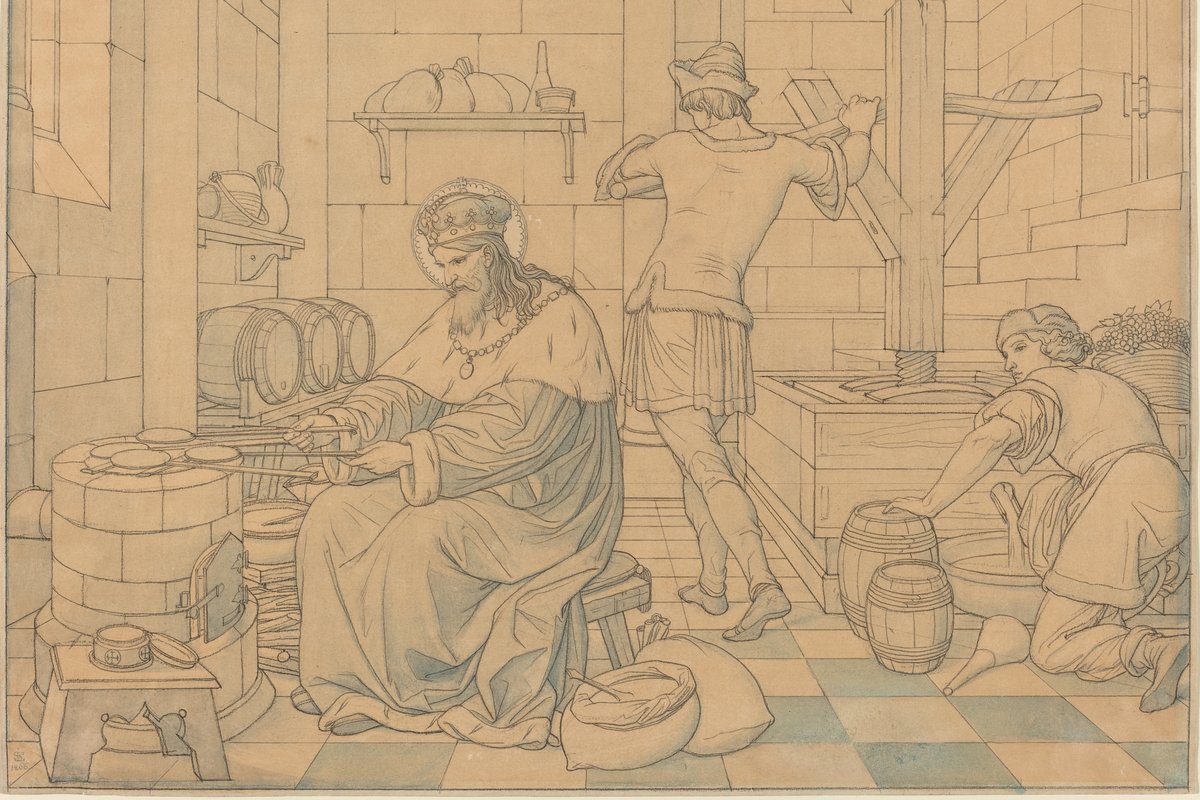
The story of St. Vitus Cathedral begins two buildings before the one that stands today. In 925, Duke Wenceslaus I of Bohemia — the same duke later murdered by his brother and venerated as Saint Wenceslaus — acquired what was believed to be a relic of Saint Vitus, a martyr from late Roman antiquity whose historical details are thin but whose cult had spread widely across medieval Europe. The relic, an arm bone, was a gift from King Henry I of Germany, and Wenceslaus built a round church, a rotunda, on the site inside Prague Castle to house it.
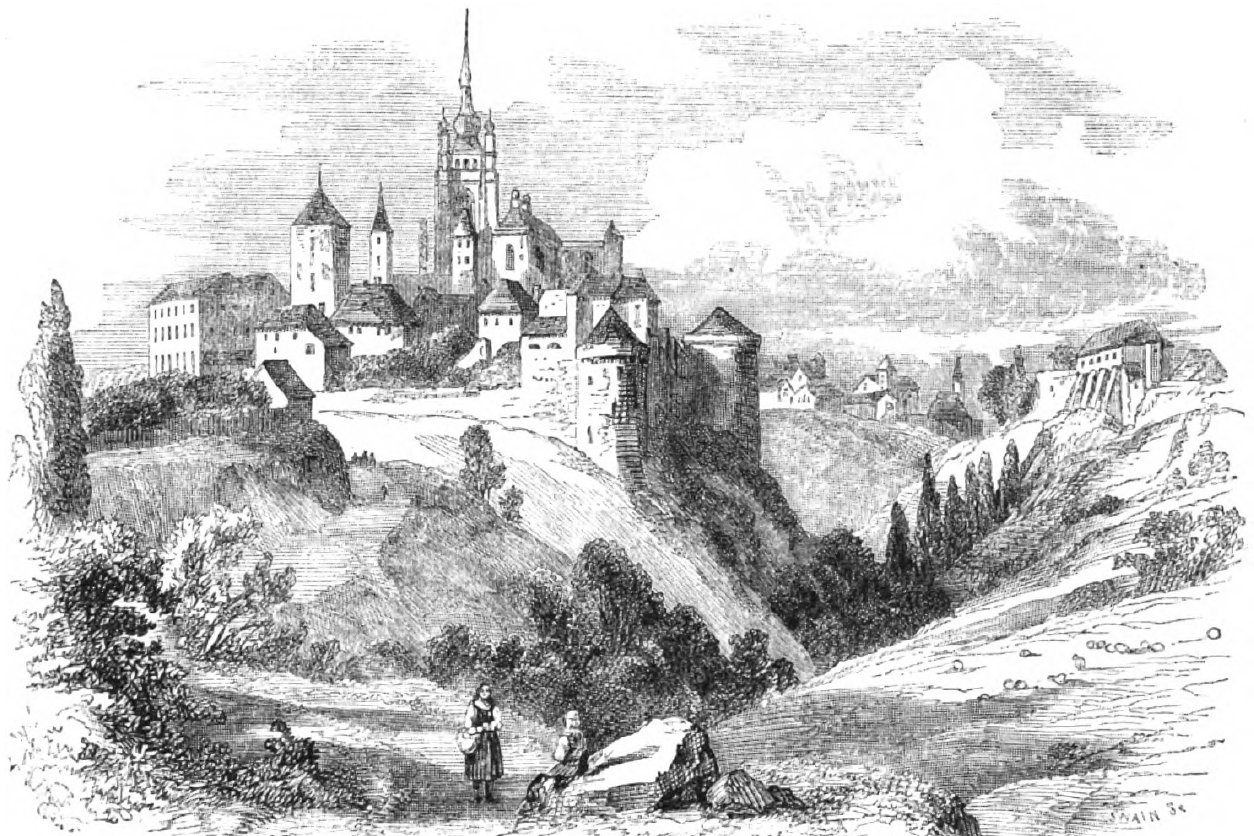
Henry George Hine, Prague — The Cathedral, engraving published in Once a Week, 17 November 1860 — public domain.
That original rotunda gave way in the 11th century to a larger Romanesque basilica as the Prague bishopric grew in importance. But the dedication to Vitus never changed, even as the building around the relic was rebuilt twice more. It's worth being clear about a distinction the shared name can blur: the cathedral honors the martyr Vitus, but it is a building, not a person, and its history — six centuries of construction, wars, fires, and Bohemian royal politics — belongs to the stones themselves as much as to the saint whose name they carry.
Charles IV's ambition and the Gothic cathedral that stalled for centuries
The cathedral recognizable today began in 1344, commissioned by Emperor Charles IV, who had just secured Prague's elevation to an archbishopric and wanted a cathedral to match the city's new status as an imperial capital. He brought in Matthias of Arras, a French architect steeped in the Gothic style then dominating cathedral construction across France, and after Matthias died, the young Peter Parler took over and pushed the design in bolder, more innovative directions — net vaulting, flying buttresses, and decorative work that would influence Central European Gothic architecture for generations.
Progress was strong through the 14th century, but the 15th and 16th centuries were brutal to the project. The Hussite Wars of the 1420s, a religious and political conflict that convulsed Bohemia, halted construction for decades. A catastrophic fire in 1541 damaged what had been completed and further set back the work. By the later 16th century, the cathedral existed as an impressive but visibly incomplete building — a finished Gothic choir and transept grafted onto a stump of a nave, sealed off from the unbuilt western end by a temporary wall so that services could continue in the completed portion. That patched-together arrangement lasted, remarkably, into the 20th century. Serious renewed construction only began in 1873, driven by a 19th-century movement to complete unfinished national Gothic monuments across Europe, and the cathedral was finally consecrated as complete in 1929 — nearly 600 years after Charles IV laid its first stone.
The duke buried inside his own cathedral
Saint Wenceslaus, the duke whose relic-gathering had started the whole site's religious significance, ended up buried within it after his murder in 935, and his tomb remains one of the cathedral's focal points. The chapel built around it, St. Wenceslaus Chapel, is a striking space in its own right, its lower walls covered in semi-precious stones set into golden plaster, decorated with scenes from Wenceslaus's life. It functions as a chapel within the larger cathedral, but its decoration and history give it the weight of a shrine in its own right — not unlike how the tomb of Saint Francis anchors the Basilica of Saint Francis of Assisi in Italy, giving an entire building its center of gravity around one buried figure.
Wenceslaus is far from the only significant burial in the cathedral. Charles IV himself is entombed there, along with several other Bohemian kings and Holy Roman Emperors, and generations of archbishops of Prague. The cathedral has functioned, in effect, as the royal necropolis of Bohemia in much the way Westminster Abbey served English monarchs — a place where political and religious authority were buried side by side, often quite literally beneath the same floor.
Seven keys and a crown that leaves the building only rarely
Above St. Wenceslaus Chapel sits the Crown Chamber, home to the Bohemian crown jewels, including the Crown of Saint Wenceslaus itself, first made for Charles IV's coronation in 1347 and dedicated to Wenceslaus's memory. Access to the chamber is deliberately difficult: the door requires seven separate keys, held by seven different officials — among them the Czech president, the Prime Minister, the Archbishop of Prague, and the Dean of the Metropolitan Chapter — a system designed so that no single person, however powerful, can open it alone. The jewels are put on public display only rarely, and Czech tradition holds a darker note alongside the ceremonial one: legend says that anyone who wears the crown without a legitimate claim to the Bohemian throne will die within a year, a superstition still repeated even by people who don't otherwise put much stock in it.
A cathedral still doing double duty
St. Vitus Cathedral today sits at the heart of Prague Castle, one of the largest ancient castle complexes in the world, and functions simultaneously as an active Catholic cathedral, a national monument, and one of the most visited sites in the Czech Republic. Its full formal name — the Metropolitan Cathedral of Saints Vitus, Wenceslaus and Adalbert — is a reminder that the building carries three separate dedications layered over eleven centuries, even though most visitors and locals alike still simply call it St. Vitus. Between the stained glass (including windows designed by Art Nouveau painter Alphonse Mucha in the early 20th century), the royal tombs, and the crown jewels locked above the Wenceslaus Chapel, the cathedral condenses an unusually large share of Czech national and religious history into a single Gothic footprint — one that took nearly six hundred years, and the ambitions of an emperor, a murdered duke, and a small relic of a Roman martyr, to finally complete.
Trivia
Why is the cathedral in Prague Castle named after Saint Vitus?
How long did it take to build St. Vitus Cathedral?
Who is buried inside St. Vitus Cathedral?
Where are the Bohemian crown jewels kept?
Is St. Vitus Cathedral the same thing as Saint Vitus the person?
Related Reading