Saint Anthony Zaccaria, Priest

From medicine to ministry
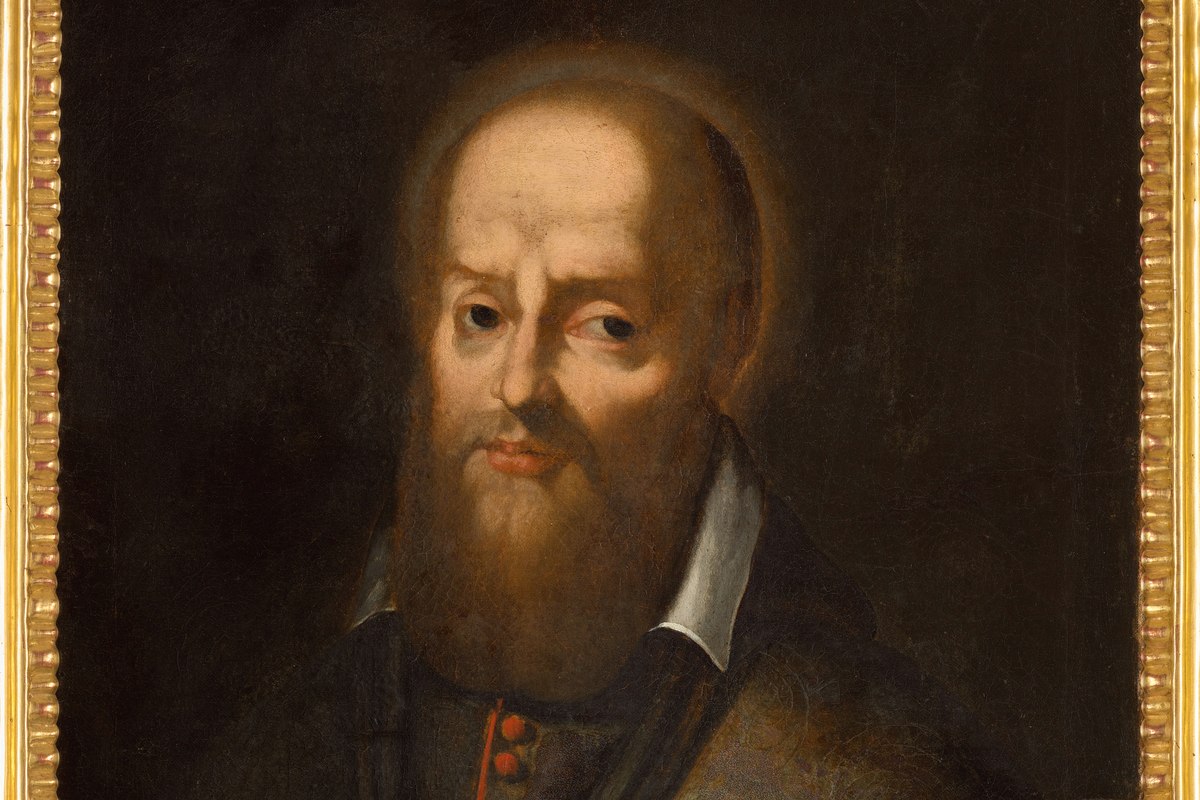
Anthony Zaccaria was born around 1502 in Cremona, a city in the Lombardy region of northern Italy, into a noble family that lost his father while Anthony was still an infant. His mother, Antonia Pescaroli, raised him with a strong emphasis on charity and personal devotion, reportedly limiting her own household spending so she could give more generously to the poor — an example Anthony would later describe as formative to his own sense of vocation. He first pursued a conventional path for a young man of his class and intelligence, earning a doctorate in medicine from the University of Padua around 1524 and returning to Cremona to practice as a physician, treating patients regardless of their ability to pay.
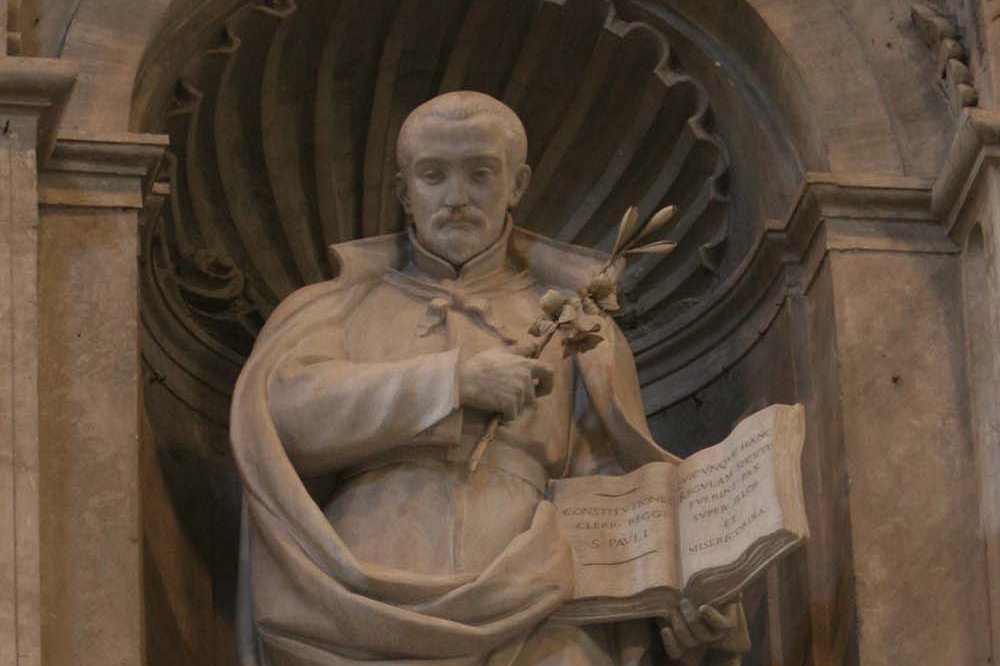
Cesare Aureli, statue of Saint Anthony Mary Zaccaria, 1909, St. Peter's Basilica, Vatican — public domain
Within a few years, however, Anthony concluded that tending to bodies was not enough. He began studying theology alongside his medical work and was ordained a priest around 1528 — a decision that startled some who knew him, since he abandoned a stable and respected profession for one that, in the religiously turbulent Italy of the early sixteenth century, offered far less certainty and considerably more risk.
Reform in an age that badly needed it
The Italy Anthony entered as a young priest was one where clerical corruption, theological confusion, and widespread religious ignorance among the laity had become serious and well-documented problems — the same conditions that, elsewhere in Europe, were fueling the Protestant Reformation. Anthony did not follow the reformers out of the Church; instead, he became part of a current of Catholic reformers working from within, preaching, teaching, and organizing years before the Council of Trent (1545-1563) would formally address many of the same abuses.
Around 1530, working in Milan alongside two like-minded laymen, Bartolomeo Ferrari and Giacomo Antonio Morigia, Anthony founded a new community of priests dedicated to public preaching, catechesis, and reforming clerical and lay discipline. The group took its formal name, the Clerics Regular of St. Paul, from their particular devotion to the Apostle Paul as a model of zealous, itinerant preaching, but they became known popularly as the Barnabites after the Milanese church of San Barnaba, which the order took over and made its center of activity. Anthony also helped establish a related community of religious women, the Angelic Sisters of St. Paul, and a lay confraternity, extending the same reforming spirit to both consecrated women and ordinary laypeople.
Preaching in the streets, and a case for frequent Communion
What distinguished Anthony's approach was its public, almost theatrical directness. He and his companions preached openly in the streets and public squares of Milan and Cremona rather than confining their message to church interiors, a practice that drew criticism from some quarters as undignified for clergy but that reached ordinary people who might never have sought out a sermon otherwise. He also promoted public penance and visible acts of reform, encouraging even the well-off to perform humbling acts of charity as a corrective to the era's frequent clerical vanity.
Perhaps his most lasting influence, though, concerned the Eucharist. At a time when many lay Catholics received Communion only occasionally — annual reception at Easter was common practice for much of the laity — Anthony argued forcefully for frequent, even weekly, Communion, provided it was approached with genuine reverence and proper preparation. This was a notably progressive position for the early sixteenth century, one that some contemporaries viewed with suspicion as overly familiar with something they believed should be approached rarely and with great trepidation. Centuries later, the Church would move firmly in the direction Anthony had urged: Pope Pius X's decrees in the early twentieth century actively encouraged frequent Communion for the faithful, a shift the Catechism still reflects in its teaching that the Eucharist is "the source and summit of the Christian life" (CCC 1324), meant to be received often and fruitfully rather than treated as a rare and distant ritual.
Anthony and the Barnabites are also credited with popularizing the custom of ringing church bells at three o'clock on Fridays, inviting the faithful to pause briefly and recall Christ's death on the cross, and with helping spread the Forty Hours devotion — extended, continuous prayer before the Blessed Sacrament exposed on the altar — a practice that would go on to become widespread well beyond the Barnabites' own communities.
A short life, a lasting order
Anthony's own ministry was cut short. Worn down by the intensity of his preaching, frequent travel between Milan, Cremona, Vicenza, and Guastalla to establish and support his fledgling communities, and demanding personal austerities, he fell seriously ill while returning from a peace-making mission in 1539 and died at his mother's house in Cremona that July, still only in his mid-thirties. Despite his early death, the order he founded endured and grew, eventually establishing houses across Italy, France, and later much of the wider Catholic world, continuing the emphasis on preaching, education, and personal reform that had defined its founder's brief but intense ministry.
He was beatified in 1849 and canonized by Pope Leo XIII in 1897, more than three centuries after his death — a reflection of how the Church's formal recognition of sanctity often follows long after a life is lived, once its lasting fruit has become clear. His feast is kept on July 5. Readers interested in other reforming clergy of the same turbulent Counter-Reformation period, including founders who likewise combined preaching, education, and institutional reform, may also want to read about Saint John Vianney, whose pastoral zeal centuries later echoed much of the same conviction that ordinary Catholic life could be renewed one parish, one confession, one Communion at a time.
Trivia
Who was Saint Anthony Zaccaria?
Why are Anthony Zaccaria's followers called Barnabites?
What did Anthony Zaccaria teach about receiving Communion?
What is the custom of the '40 Hours' devotion associated with?
When was Anthony Zaccaria canonized, and what is his feast day?
You May Also Like
Related Reading