Saint Benedict Joseph Labre

A young man rejected by every monastery he tried
Benedict Joseph Labre was born in 1748 in Amettes, a village in northern France, the eldest of fifteen children in a prosperous merchant family. From boyhood he showed an intense, almost single-minded pull toward religious life, and an uncle who was a parish priest took him in to prepare him for the priesthood. But Labre's path toward a settled vocation kept dead-ending. He applied to join the Trappists, the Carthusians, and the Cistercians — several of the most demanding and austere monastic orders in the Church — and was turned away by each of them in turn, usually on the grounds that his health was too delicate and his temperament too solitary for the structured, communal discipline those orders required.
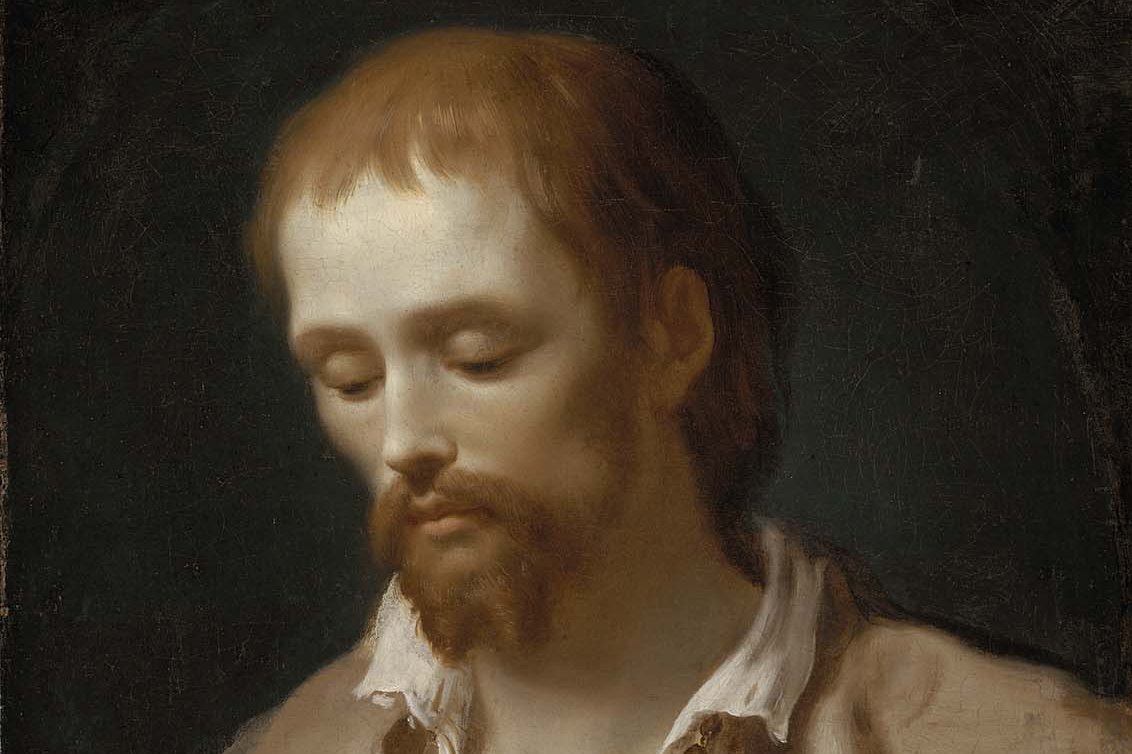
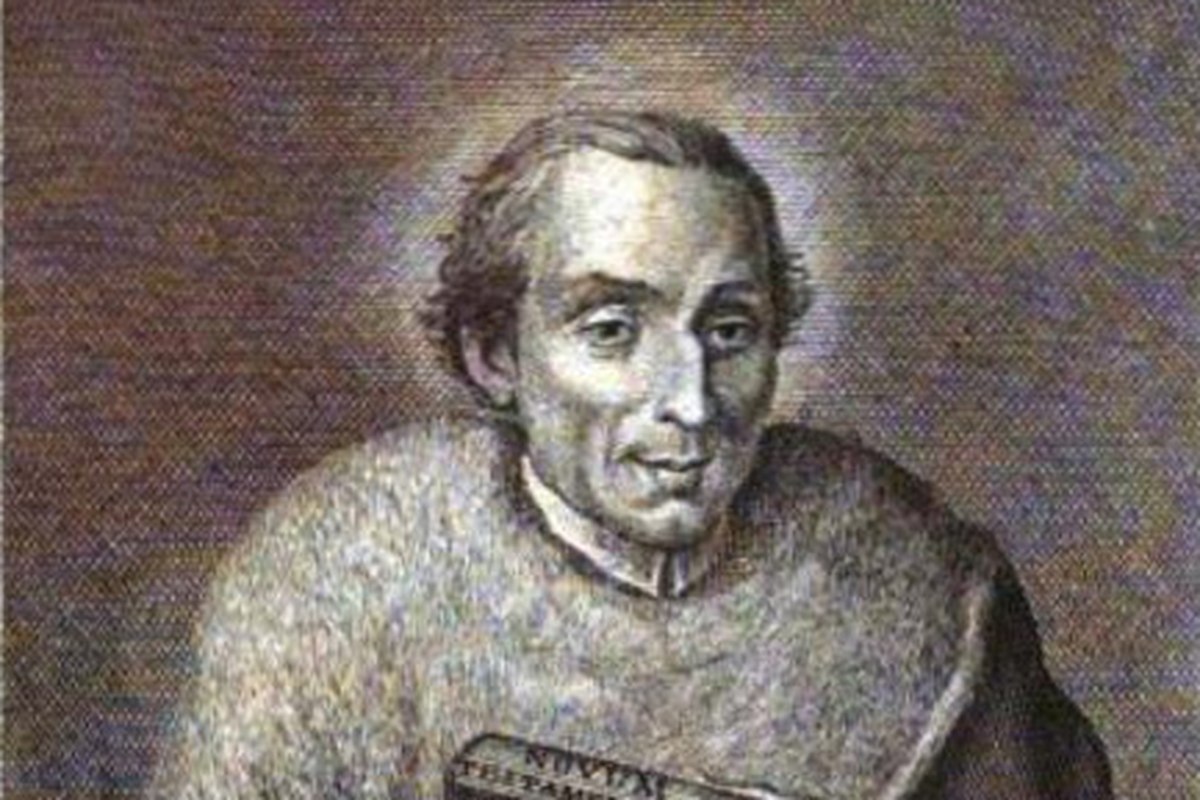
Antonio Cavallucci, Portrait of Saint Benedict Joseph Labre, 1795, Wikimedia Commons — public domain.
Most young men rejected this many times by religious communities would have given up on the idea of consecrated life altogether. Labre instead concluded, gradually and after considerable inner struggle, that God was calling him to a different and much stranger kind of religious poverty — one lived not inside cloister walls but on the open road, without habit, vows, or fixed address, imitating in his own way the wandering poverty of medieval pilgrim-saints. In 1770, at twenty-two, he set out on foot from France and did not really stop walking for the rest of his life.
Thirteen years on pilgrimage
For the next several years, Labre walked to nearly every major pilgrimage shrine in Catholic Europe: Rome, Loreto, Assisi, Naples, and Santiago de Compostela in Spain among them, covering an extraordinary distance almost entirely on foot and largely without money. He slept in doorways, church porches, and ruins, wore the same threadbare clothes until they were rags, and lived on whatever scraps of food or small alms strangers gave him — and even then he was known to give most of it away again to beggars he judged poorer or more desperate than himself. Visitors and clergy who encountered him along the way often described a man who was filthy, silent, and easy to overlook, yet who spent hours each day absorbed in prayer, particularly before the Blessed Sacrament exposed for adoration in the churches he passed through.
By the late 1770s, Labre had effectively stopped traveling and settled into a fixed, if still homeless, routine in Rome, sleeping rough near the Colosseum and spending long stretches of each day praying in the city's churches, especially before the Forty Hours devotion — the exposition of the Eucharist for continuous adoration — wherever it was being held in the city that week. Rome's clergy and ordinary residents gradually came to recognize him, not as a curiosity but, for a growing number of them, as a man whose visible poverty concealed a genuinely remarkable interior life. Confessors who heard him described an intensity of prayer and self-denial that seemed entirely out of proportion to his ragged, unremarkable appearance.
Death on the church steps and instant reputation for holiness
On April 16, 1783 — Wednesday of Holy Week — Labre collapsed on the steps of the church of Santa Maria dei Monti in Rome. He was carried into a nearby butcher's house, where he died within hours, not yet thirty-five years old. What happened next is one of the more startling turns in any saint's story: within a day, word had spread through the neighborhood that the ragged, silent beggar so many Romans had learned to walk past was dead, and that he had been, by all local accounts, a man of extraordinary holiness. Crowds reportedly gathered almost immediately, and accounts from the period describe children in the street calling out that "the saint is dead" even before any formal Church process had begun.
The devotion that sprang up around Labre in the days and weeks after his death was unusually spontaneous and popular — the kind of reputation for sanctity that normally takes decades to build had, in his case, apparently been forming quietly among the poor of Rome for years without most of the city's clergy fully noticing. The formal process was, by comparison, slower: he was beatified in 1860 and canonized by Pope Leo XIII in 1881, nearly a century after his death.
A patron drawn from his own rejection
Labre's story sits in an interesting relationship to other saints who chose radical poverty within recognized religious communities, such as Francis of Assisi, whose Franciscan movement Labre's own wandering, unattached poverty echoes even though he was never formally part of it. Where Francis built an order around voluntary poverty, Labre lived something closer to it entirely outside institutional structure, largely because those structures had repeatedly turned him away.
That history is precisely why his patronage today centers so specifically on the homeless, on beggars, and on people who struggle with mental illness or social rejection — the very categories of person Labre himself was routinely mistaken for and avoided as, right up until the moment of his death revealed what those who actually took the time to notice him had already begun to suspect. His feast is kept on April 16, the anniversary of his death, and his tomb remains at the church of Santa Maria dei Monti in Rome, the same church on whose steps he collapsed.
Trivia
Who was Saint Benedict Joseph Labre?
Why did Benedict Joseph Labre become homeless instead of joining a monastery?
What did Benedict Joseph Labre actually do during his years of homelessness?
How did Benedict Joseph Labre die and what happened afterward?
What is Benedict Joseph Labre the patron saint of?
You May Also Like
Related Reading