Saint Dulce Pontes

A comfortable childhood turned toward the poor
Maria Rita de Souza Brito Lopes Pontes was born on May 26, 1914, in Salvador, the capital of the Brazilian state of Bahia, into a reasonably comfortable middle-class family — her father worked as a dentist. From an early age, by the accounts gathered later in her canonization process, she showed a persistent concern for people living in poverty around her, reportedly bringing homeless people home for meals and inviting them to sleep in the family's storage areas, to her parents' considerable alarm. This early, somewhat undisciplined instinct toward direct charity would define the rest of her life, even as the scale and organization of her work grew far beyond anything a teenager improvising at home could have managed.
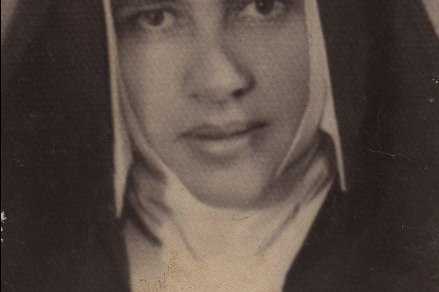
Photographer unknown, circa 1935, before her entry into religious life — public domain.
Entering religious life
At 19, in 1933, she entered the Congregation of the Missionary Sisters of the Immaculate Conception (later reorganized as the Sisters of the Immaculate Conception of Mother of God), taking the religious name Sister Dulce. Bahia in the 1930s had large populations of the urban poor, sick, and homeless with little access to formal healthcare or shelter, and Sister Dulce, even as a young nun still under formation, began working directly with them, largely on her own initiative and often without her superiors' full enthusiasm for the scale of what she was attempting.
The chicken coop that became a hospital
The most frequently told story from her early ministry describes Sister Dulce, in 1935, converting an unused chicken coop on the grounds of her convent into an improvised clinic and shelter for sick and homeless people she encountered in the streets of Salvador, because there was nowhere else to bring them. It was an unauthorized, resource-poor solution to an urgent problem she saw directly in front of her rather than a planned institutional project, and it reportedly caused real friction with her religious superiors, who had neither budgeted nor formally sanctioned the space for that use.
Rather than abandon the effort, Sister Dulce kept expanding it over the following decades, gradually formalizing what had begun as an improvisation into an increasingly organized charitable operation. In 1949 she founded what would eventually become the Santo Antonio Charitable Works Foundation (Obras Sociais Irma Dulce, commonly known by its acronym OSID), a network of hospitals, clinics, and social assistance programs in Salvador that grew, over the following decades, into one of the largest philanthropic healthcare organizations in Brazil, treating hundreds of thousands of poor patients a year by the time of her death.
A body wearing down from decades of work
The physical toll of decades spent doing hands-on charitable and organizational work in difficult conditions caught up with Sister Dulce in her later years. She developed serious respiratory problems and heart disease, and for much of her final decade she required supplemental oxygen and used a wheelchair, continuing her fundraising and administrative work for OSID even as her own health declined sharply. Her visible, persistent activity despite her own serious illness became, for many Brazilians, as much a part of her public reputation as the scale of the institution she'd built.
International recognition
In 1988, near the end of her life, Sister Dulce's decades of work among Brazil's poor earned her a nomination for the Nobel Peace Prize, an unusual level of international recognition for a Catholic religious sister working primarily within one Brazilian state. She also received visits and recognition from Pope John Paul II during his trips to Brazil, and her public profile by the time of her death extended well beyond Catholic or even specifically Brazilian circles, into wider international humanitarian recognition.
A meeting with the Pope in the middle of her hospital
One of the most frequently retold episodes of Sister Dulce's later career took place during Pope John Paul II's 1980 visit to Brazil, when the Pope made a point of visiting her hospital complex in Salvador in person rather than simply receiving her at a formal event. Accounts of the visit describe Sister Dulce, already dealing with serious health problems of her own, using the moment not for personal recognition but to press the Pope directly about the material needs of her patients — a characteristic reflection of how she approached even the most prestigious encounters of her public life. The relationship between Sister Dulce and the wider Church hierarchy in Rome grew closer in the years that followed, helping lay the groundwork for the formal canonization process that would open after her death.
A charitable network that outlived its founder
What distinguishes Sister Dulce's legacy from many other twentieth-century founders of charitable institutions is the sheer continuity of the organization she started. The Santo Antonio Charitable Works Foundation did not shrink or dissolve after her death in 1992, as sometimes happens when a single dynamic founder's personal energy and fundraising ability disappear — it continued to expand, remaining one of the most important providers of free healthcare to the poor in Bahia and, more broadly, one of the largest philanthropic institutions of its kind anywhere in Brazil well into the twenty-first century. That durability is itself part of why the Brazilian bishops pursued her canonization cause with particular energy: Sister Dulce's holiness was inseparable, in the eyes of those who advanced her cause, from the institutional structure of care she had left behind, still serving new generations of patients long after the chicken coop where it began had been replaced by hospital wards.
Death and canonization
Sister Dulce died on March 13, 1992, in Salvador, after decades of declining health. She was beatified by Pope Benedict XVI in 2011 and canonized by Pope Francis on October 13, 2019 — becoming the first saint to have been born in Brazil, a milestone widely celebrated across Brazilian Catholicism given the country's status as home to the world's largest Catholic population.
Feast day
Her feast is celebrated on August 13.
Related reading
Readers interested in modern saints defined by direct, hands-on charitable work among the poor may also want to read about Saint Katharine Drexel, an American heiress who devoted her considerable fortune and her life to serving marginalized communities, or Saint Marianne Cope, a religious sister who built and ran hospitals for patients others refused to treat.
Trivia
Who was Saint Dulce Pontes?
What did Sister Dulce actually build?
Why was Sister Dulce nominated for the Nobel Peace Prize?
Was Sister Dulce a trained doctor or nurse?
When is Saint Dulce Pontes's feast day?
You May Also Like
Related Reading