Saint Jeanne Jugan

A servant's life in Brittany
Jeanne Jugan was born in 1792 in Cancale, a fishing town on the Brittany coast of France, into a poor family that grew even poorer after her father was lost at sea when she was four years old. She grew up doing hard domestic and farm labor, and as a young woman worked for years as a servant and later as a hospital aide in the nearby port town of Saint-Servan, gaining direct, sustained experience of exactly the kind of physically demanding, low-status caregiving work that would define the rest of her life. She never married, having reportedly turned down at least one serious proposal in her youth, and by her fifties was working as a companion and caregiver to an elderly woman while supplementing her modest income by spinning wool.
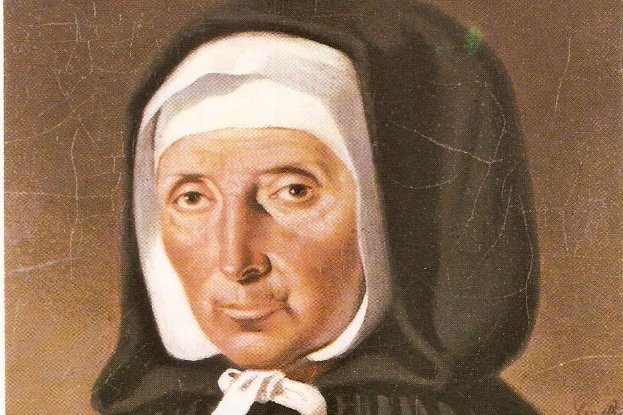
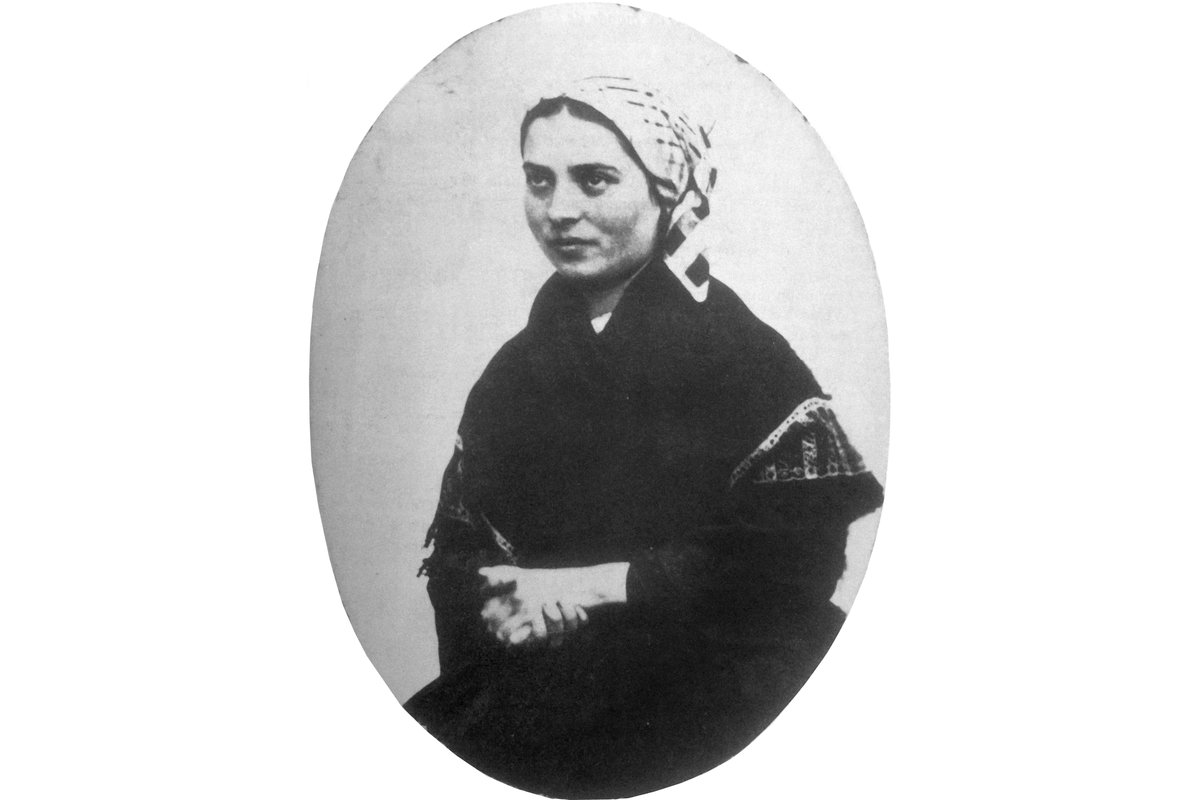
Portrait of Jeanne Jugan, 1885, Wikimedia Commons — public domain.
Nothing about Jeanne's circumstances in 1839 — no wealth, no religious training, no institutional backing — suggested she was about to found anything at all. She was simply a poor, aging domestic worker doing what poor, aging domestic workers did to get by.
One bed given away in the winter of 1839
That winter, Jeanne encountered Anne Chauvin, a blind, paralyzed widow with no family able or willing to care for her and no place to live. Jeanne's response was immediate and, in its own quiet way, total: she carried the older woman up to her own bedroom, put her in her own bed, and moved herself into the unheated attic space above. It was not a calculated first step toward founding a religious order — by every account, Jeanne simply saw an old woman with nowhere to go and gave her the only thing she had to offer, her own bed.
Word of the act spread through Saint-Servan's poor and working-class neighborhoods, and within a short time more elderly people in similar need were being brought to Jeanne's door. She began taking in more residents than her small living space could reasonably hold, begging door to door in the town to cover the growing cost of food and care — a practice of active, direct solicitation for the poor that would remain central to the community's identity for the rest of its history. A handful of other women, moved by what they saw, began joining her in the work, and by the mid-1840s a genuine, if still informal, community had taken shape around this original act of shared hospitality.
Growth, and a founder pushed aside
The community Jeanne had unintentionally started grew with real speed through the 1840s and 1850s, opening additional homes for the elderly poor in other French towns and eventually beyond France's borders, formalizing gradually into what became known as the Little Sisters of the Poor. As the congregation sought the kind of formal ecclesiastical recognition it needed to expand and secure its future, a priest named Auguste Le Pailleur, who had become closely involved in guiding its formal development, moved — deliberately and over a period of years — to have himself credited publicly as the community's founder, sidelining Jeanne from leadership and eventually from most public association with the work she had actually begun.
Jeanne accepted this demotion without public objection, spending her final decades within her own congregation in a position of quiet obscurity, largely unknown even to many of the community's own newer members as the woman whose single act of charity toward Anne Chauvin had started everything. It is a striking and genuinely unusual episode in the history of a religious founder — closer, in its dynamics of quiet self-effacement in the face of institutional politics, to the kind of humility later associated with figures like Andre Bessette, another humble lay figure whose own recognition within his community came only gradually and long after his most significant work was already done.
Death, and a truth restored later
Jeanne Jugan died at the community's motherhouse in La Tour Saint-Joseph, France, on August 30, 1879, having spent her final years in a role so diminished that her own congregation's official histories, for a time, barely mentioned her by name as founder. It was only in the decades following her death, through later historical investigation by the Church and by her own congregation, that the full record of what had happened — Le Pailleur's maneuvering, and Jeanne's genuine founding role — was thoroughly reconstructed and publicly restored.
Pope Benedict XVI canonized Jeanne Jugan on October 11, 2009, formally recognizing both her extraordinary charity and, implicitly, the quiet endurance with which she had accepted decades of being denied credit for it. Her feast is kept on August 30. The Little Sisters of the Poor she started with one shared bed in 1839 continue today in dozens of countries, caring for the elderly poor on the same basic principle that animated Jeanne's original act: give what you have to whoever needs it more.
Trivia
Who was Saint Jeanne Jugan?
How did the Little Sisters of the Poor actually begin?
Why was Jeanne Jugan removed from leadership of the community she founded?
When was the truth about Jeanne Jugan's role as founder restored?
When was Jeanne Jugan canonized?
You May Also Like

Related Reading