Saint Wilfrid of York

A Northumbrian noble turns to Rome
Wilfrid was born around 633 into a Northumbrian noble family and entered religious life at Lindisfarne as a young man, trained within the Irish monastic tradition established there under Saint Aidan. Unlike many of his Lindisfarne-trained contemporaries, however, Wilfrid became increasingly drawn toward Rome rather than Ireland as the center of authoritative Christian practice. He traveled to Rome as a young man — an arduous, genuinely unusual journey for an Englishman of his era — and returned convinced that the English Church needed to align itself more closely with continental, Roman liturgical customs rather than the distinct practices that had developed within the Irish monastic tradition.
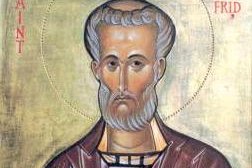
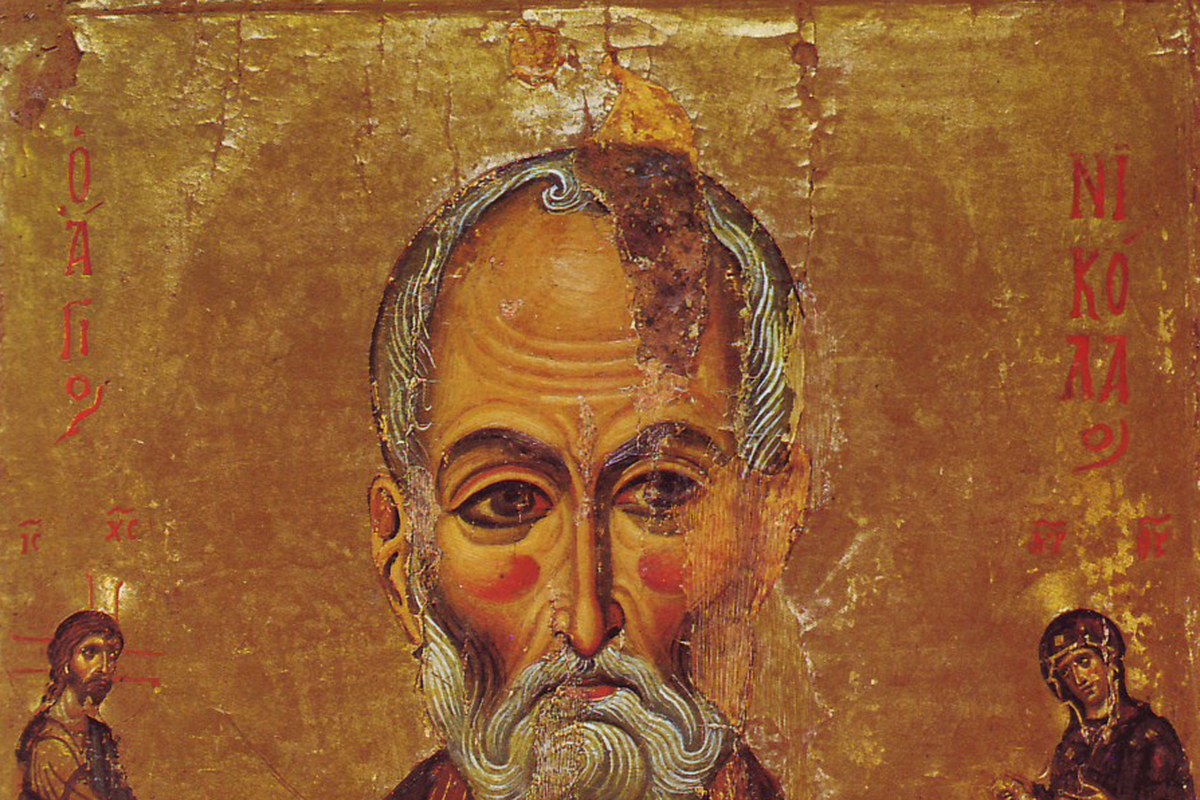
Aidan Hart, icon of Saint Wilfrid of York — used under Creative Commons Attribution-ShareAlike license.
That conviction placed him on a collision course with the Irish-influenced clergy who then dominated the Northumbrian Church, setting up the central conflict of his early career.
The Synod of Whitby
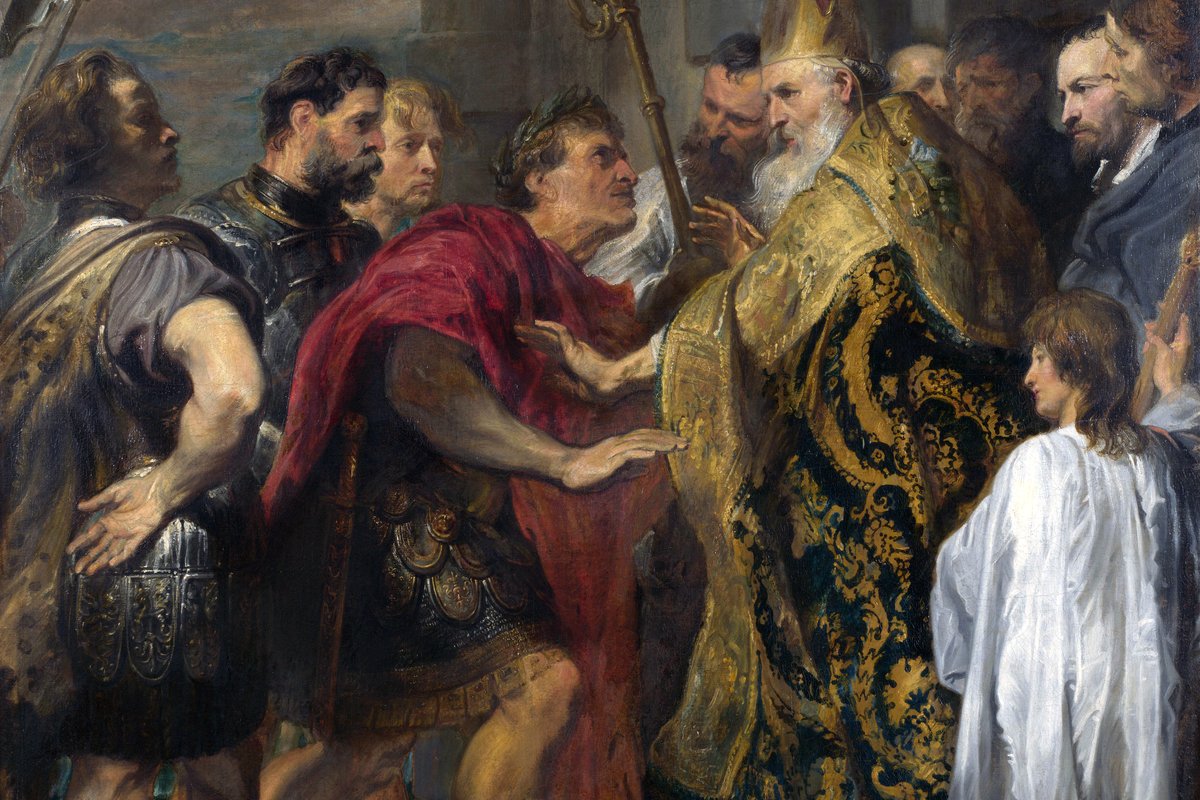
By 664, the disagreement between Irish and Roman customs in Northumbria — most visibly over how to calculate the date of Easter, which under the two systems could sometimes fall weeks apart — had become disruptive enough that King Oswiu convened a synod at Whitby to settle the matter definitively for his kingdom. Wilfrid served as the leading advocate for the Roman position, arguing forcefully that Rome's practice carried the authority of Saint Peter himself, to whom Christ had given the keys of the kingdom of heaven. The argument persuaded Oswiu, and Northumbria formally adopted Roman customs — a decision that rippled outward across the English Church in the following decades and marked Wilfrid, still only in his early thirties, as one of the most consequential churchmen of his generation.
Wilfrid was made bishop shortly afterward, eventually settling into the important see of York, but his subsequent career would prove far more turbulent than this early triumph might have suggested.
Repeated conflict and exile
Wilfrid's difficulties stemmed largely from disputes over the size of his diocese. Archbishop Theodore of Canterbury, working to bring greater structural order to the English Church, sought to divide Wilfrid's unusually large Northumbrian diocese into smaller, more manageable sees. Wilfrid resisted fiercely, appealing directly to Rome — traveling there in person on more than one occasion to argue his case before the pope, who on at least one occasion ruled in Wilfrid's favor, though English kings did not always honor those papal rulings when they conflicted with local political interests.
The dispute cost Wilfrid dearly. He was driven from his diocese more than once by Northumbrian kings unwilling to accept Rome's interventions in what they considered a domestic matter, spending substantial stretches of his career in exile, imprisonment, or uncertain standing rather than settled in his own see.
Turning exile into mission: the conversion of Sussex
It was during one of these periods away from Northumbria that Wilfrid accomplished what may be his single most significant achievement. Sussex, the kingdom of the South Saxons, remained the last major Anglo-Saxon territory still largely pagan by the later seventh century. Wilfrid arrived there during a period of famine and is credited not only with preaching successfully to King Æthelwealh's people but also with teaching them improved deep-sea fishing techniques — a practical intervention, according to Bede's account, that eased the famine and opened local hearts considerably further toward the new religion he was proposing. Sussex's conversion under Wilfrid effectively closed the chapter on organized paganism among the major Anglo-Saxon kingdoms.
A builder as much as a bishop
Wilfrid's career left a striking physical legacy alongside its political and missionary drama. At Ripon and Hexham, he built stone churches on a scale and with a level of architectural ambition that had few equals in Anglo-Saxon England at the time, importing skilled masons and glaziers and drawing directly on continental and Roman building techniques he had observed during his travels abroad. Bede and Wilfrid's own biographer both describe the church at Hexham in particular as a building of remarkable size and beauty, with a crypt, multiple levels, and elaborately carved stonework that contemporaries considered without parallel north of the Alps. These building projects were not incidental to Wilfrid's broader agenda — they were a deliberate statement, expressed in stone rather than argument, of the same conviction that had driven his stand at Whitby: that the English Church should look toward Rome, and toward Roman standards of craftsmanship and permanence, rather than settle for the simpler wooden and modest stone churches more typical of the Irish monastic tradition.
A vivid, contested portrait
Much of what is known about Wilfrid in close personal detail comes from the Life of Wilfrid, written by a monk named Eddius Stephanus not long after Wilfrid's death, at the request of Wilfrid's own supporters at Ripon — a source that is invaluable precisely because it is so partisan, presenting Wilfrid as a heroic, wronged champion of Roman orthodoxy against scheming kings and rival bishops. Bede's own, roughly contemporary account is more measured and occasionally critical, hinting at a man whose evident talent and conviction were matched by real stubbornness and a taste for confrontation that repeatedly complicated his relations with kings, fellow bishops, and even the Archbishop of Canterbury himself. Reading the two accounts side by side gives modern readers an unusually vivid, if inevitably contested, picture of a major Anglo-Saxon churchman — one of the few from this period whose personality, and not merely his official acts, comes through with any real clarity across thirteen centuries.
Final years and feast day
Wilfrid's later years continued to involve disputes over his diocesan boundaries and standing, resolved only partially before his death around 709 or 710. He was buried at Ripon, one of the monasteries he had founded and clearly favored throughout his career, and is remembered by Bede — despite Bede's own generally more sympathetic leanings toward the Irish monastic tradition Wilfrid had worked to supplant — as a bishop of real energy, learning, and consequence.
His feast is celebrated on October 12. Readers interested in the wider Northumbrian church of Wilfrid's era, shaped by the same tensions between Irish and Roman tradition that defined his career, may also want to read about Saint Aidan of Lindisfarne, whose earlier missionary foundation at Lindisfarne trained Wilfrid himself before his turn toward Rome, or Saint Chad of Mercia, whose own irregular consecration was reviewed by the same Archbishop Theodore whose diocesan reforms Wilfrid spent so much of his career resisting.
Trivia
Who was Saint Wilfrid of York?
What was the Synod of Whitby, and what role did Wilfrid play in it?
Why was Saint Wilfrid exiled from his diocese?
How did Saint Wilfrid convert the kingdom of Sussex?
When is the feast of Saint Wilfrid?
You May Also Like

Related Reading