The Life of Saint Peter — Fisherman to Pope

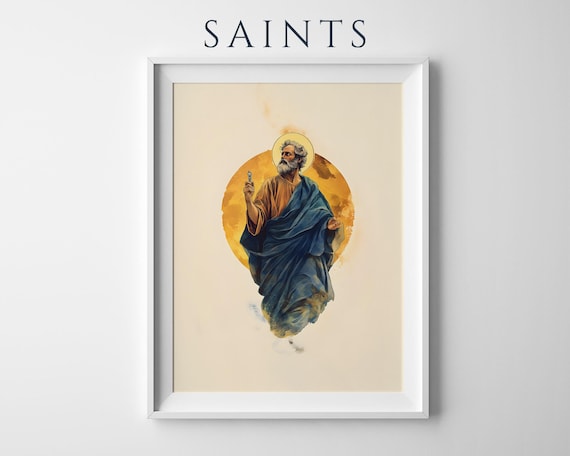
A fisherman called off his boat
Peter's story begins in the most unremarkable way possible: mending nets on the Sea of Galilee, working the family trade alongside his brother Andrew. The Gospels differ slightly in how they stage his call — Mark and Matthew describe Jesus simply walking by and telling Simon and Andrew to follow him, while Luke sets the moment after a miraculous catch of fish so large it nearly sank the boat, leaving Simon so overwhelmed he fell at Jesus's knees saying, "Depart from me, Lord, for I am a sinful man." Whichever version one reads first, the outcome is the same: a working fisherman with a boat, a livelihood, and a family left it all behind at a stranger's word.
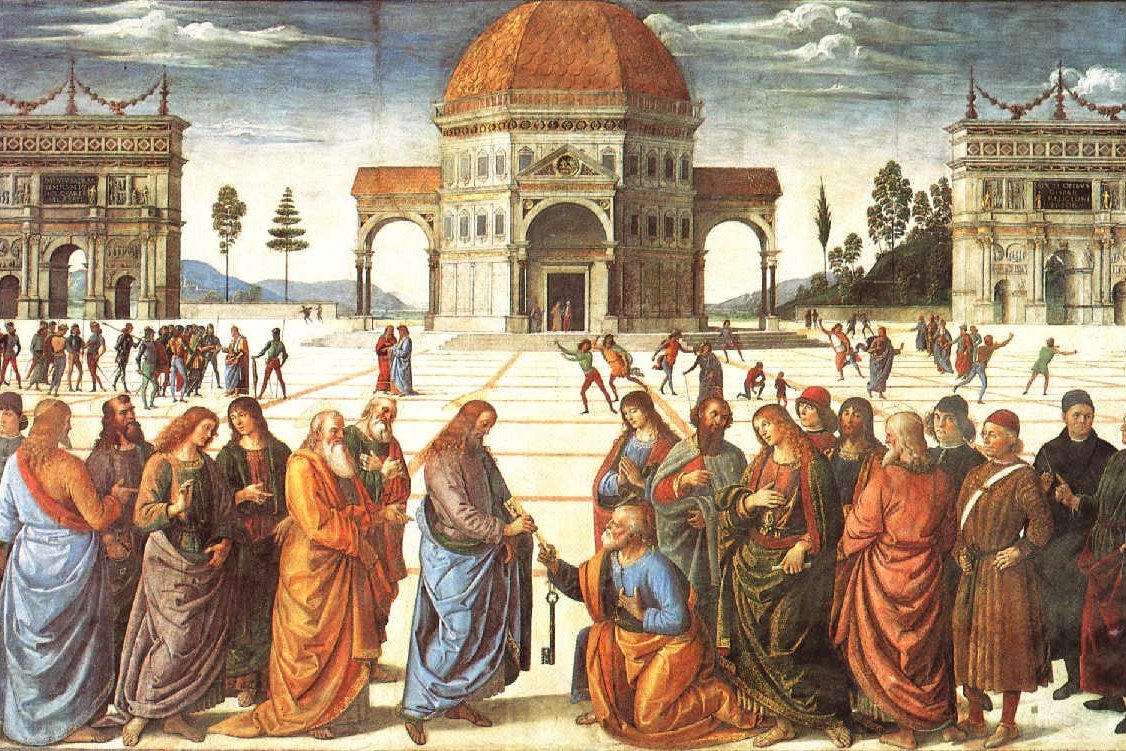
Pietro Perugino, The Delivery of the Keys, 1481-1482, Sistine Chapel, Vatican City — public domain.
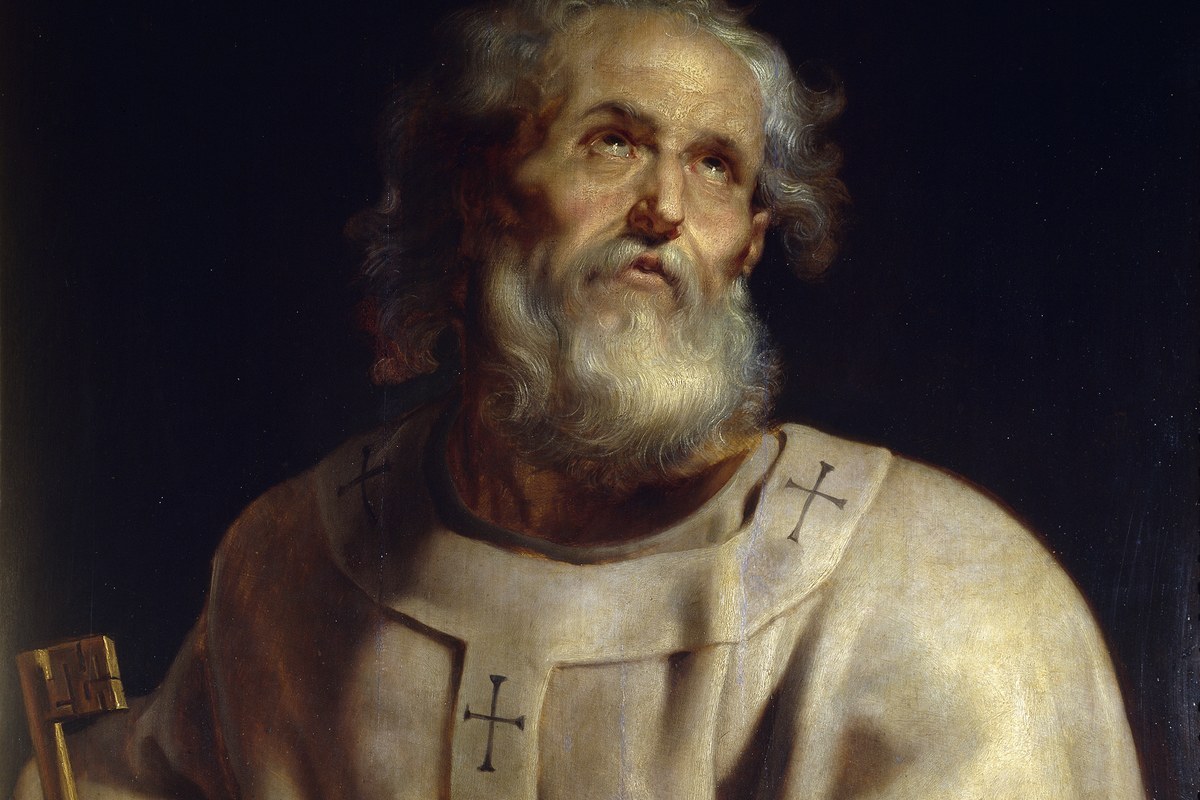
That stranger renamed him almost immediately. The full weight of the new name comes later, at Caesarea Philippi, when Jesus asked the Twelve who they believed him to be, and Simon answered for them: "You are the Messiah, the Son of the living God" (Matthew 16:16, NABRE). Jesus's reply gave Simon the name that would define his whole legacy: "you are Peter, and upon this rock I will build my church, and the gates of the netherworld shall not prevail against it. I will give you the keys to the kingdom of heaven" (Matthew 16:18-19, NABRE). Catholic tradition reads this moment as the founding of the papacy itself — Peter singled out among the Twelve for a role of leadership that the Church holds continues today in the bishops of Rome.
Impulsive, outspoken, and often wrong
What makes Peter such a compelling figure across the Gospels is how rarely he gets things right on the first try. He's the one who walks on water toward Jesus and then sinks the moment he notices the wind. He's the one who, moments after his great confession at Caesarea Philippi, rebukes Jesus for predicting his own suffering and death, and is rebuked in turn with some of the sharpest words Jesus directs at any of his followers: "Get behind me, Satan!" He's the one who insists, at the Last Supper, that Jesus will never wash his feet, then swings to the opposite extreme and asks for his hands and head washed too. None of this reads like the biography of a carefully chosen executive. It reads like a man whose conviction consistently outran his understanding — impulsive, loyal, and slow to grasp exactly what he'd committed himself to.
That pattern reaches its lowest point during the Passion. Peter draws a sword to defend Jesus at his arrest in Gethsemane, an act of loyalty Jesus immediately overrules, telling him to put the sword away. Hours later, in the high priest's courtyard, that same loyalty collapses entirely: three times Peter is asked if he knows Jesus, and three times he denies it, the last time "invoking a curse and swearing, 'I do not know the man,'" before the rooster crowed exactly as Jesus had foretold at supper. Luke adds one of the most devastating single lines in the Gospels: "the Lord turned and looked at Peter," and Peter, meeting that look, "went out and began to weep bitterly" (Luke 22:61-62, NABRE). It is not narrated as villainy — it's narrated as the collapse of a frightened man's courage, made unbearable by how much he had promised only hours before.
Restored, and given a mission
The Gospel of John doesn't leave Peter in that failure. In one of the Resurrection appearances by the Sea of Galilee — the same waters where his story began — the risen Jesus asks Peter three times, once for each denial, "do you love me?" and three times commissions him in response: "Feed my lambs... Tend my sheep... Feed my sheep." It's widely read as a deliberate, structured act of restoration, undoing the three denials one at a time and reestablishing Peter's role as shepherd of the community Jesus was leaving behind. The full arc of that role, and what it came to mean for the early Church, is treated at length in Saint Peter the Apostle.
Leader of the early Church
After the Ascension and Pentecost, Peter emerges in the Acts of the Apostles as the clear leader of the young Christian community in Jerusalem — the one who preaches on Pentecost itself, the one whose healing of a lame beggar draws the first recorded confrontation between the apostles and the Jewish authorities, and the one whose vision of a sheet lowered from heaven, filled with animals both clean and unclean, opens the door to admitting Gentile converts without requiring full observance of Jewish law, a pivotal moment in the Church's earliest self-understanding.
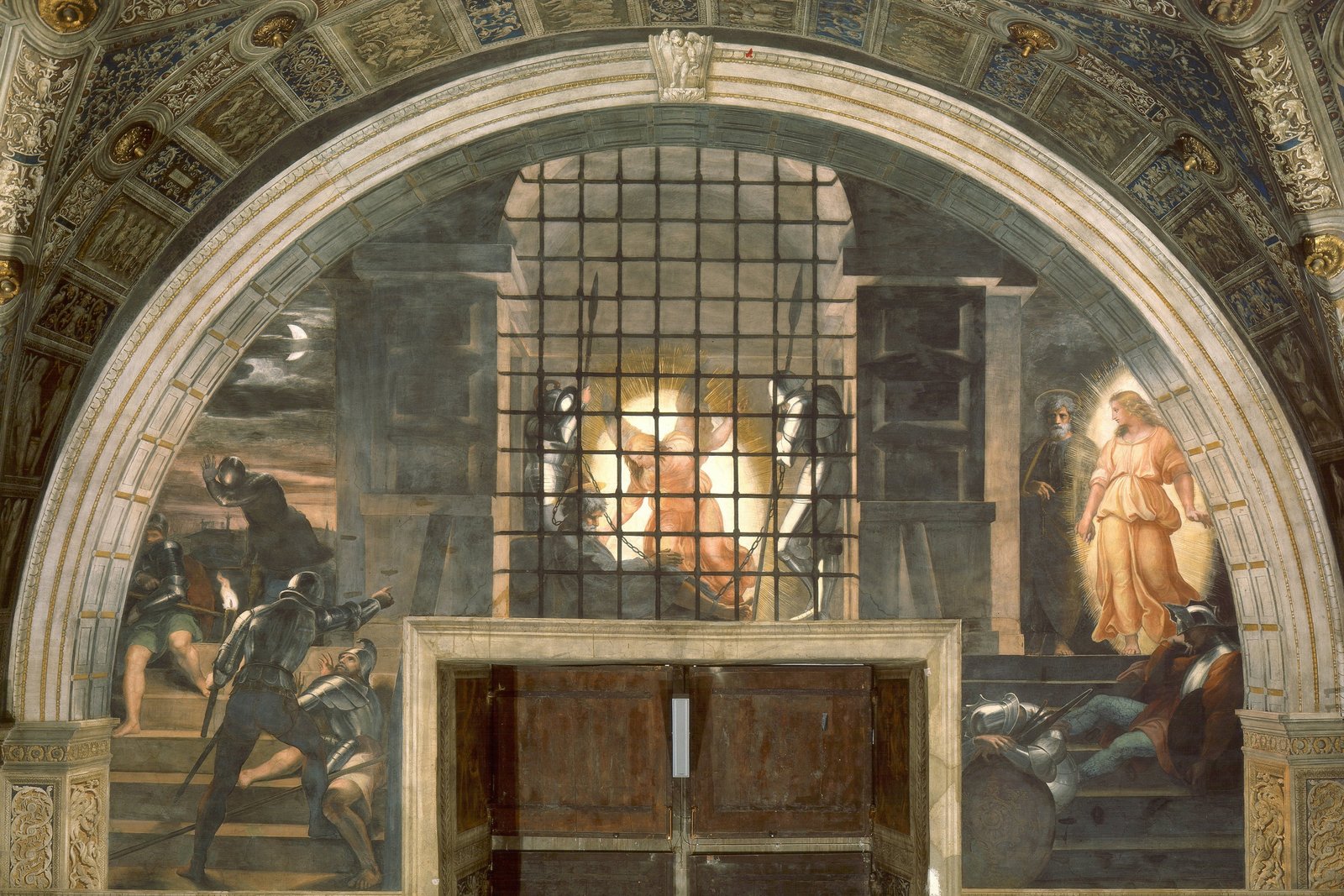
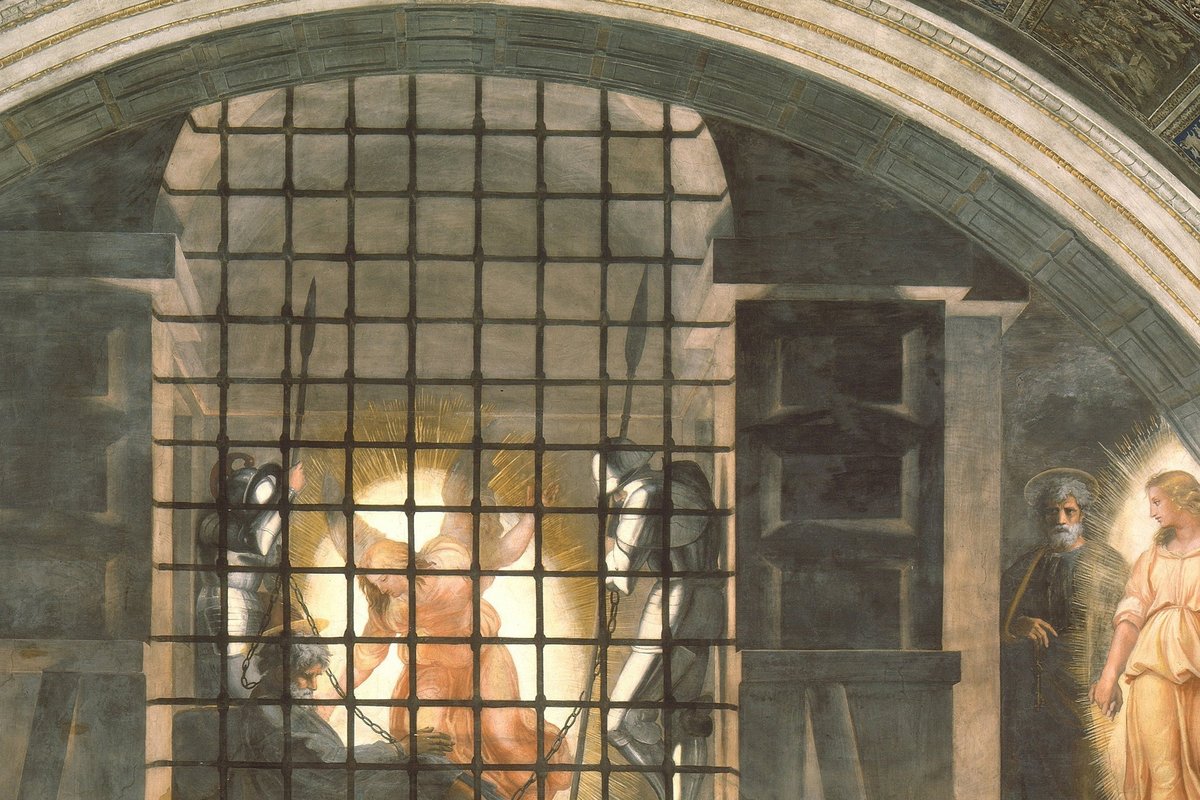
One of the more dramatic episodes from this period is covered in The Angel Freeing Peter from Prison, where Peter, imprisoned by King Herod Agrippa and due to be executed, is led out of a guarded cell in the middle of the night by an angel, chains falling from his wrists as the iron gate to the city opens on its own. It's one of several moments in Acts where Peter's leadership and the young Church's survival appear directly, visibly protected.
Rome, martyrdom, and a legacy shared with Paul
Later tradition and the writings of the early Church Fathers place Peter's final years in Rome, where he is believed to have led the Christian community until his martyrdom during the persecution under the emperor Nero, traditionally dated to the mid-60s AD. According to that same tradition, Peter asked to be crucified upside down, considering himself unworthy to die in the same manner as Jesus. His connection to that final chapter of his ministry, and his enduring bond with the other great apostle of the early Church, is honored jointly in Saints Peter and Paul, Apostles, while the authority Catholic tradition holds he passed down to his successors as bishop of Rome is commemorated every February 22 in the feast covered in The Chair of Saint Peter — not a piece of furniture, but a symbol of the teaching authority the Church holds Peter first exercised and passed on.
The Catechism describes the pope, as Bishop of Rome and Peter's successor, as "the perpetual and visible source and foundation of the unity both of the bishops and of the whole company of the faithful" (CCC 882). From a fisherman startled into leaving his nets, to a man who denied Christ three times in one terrified night, to the figure Catholic tradition names as the first pope — Peter's arc is, in the end, less a story about getting everything right than about being entrusted with something enormous anyway, failures included.
Trivia
What was Saint Peter's original occupation?
Why did Jesus rename Simon as Peter?
Did Peter really deny knowing Jesus three times?
How did Saint Peter die?
Why is Peter considered the first pope?
Related Reading