Christian Mystics, Visions, and the Interior Life

A tradition older than the word for it
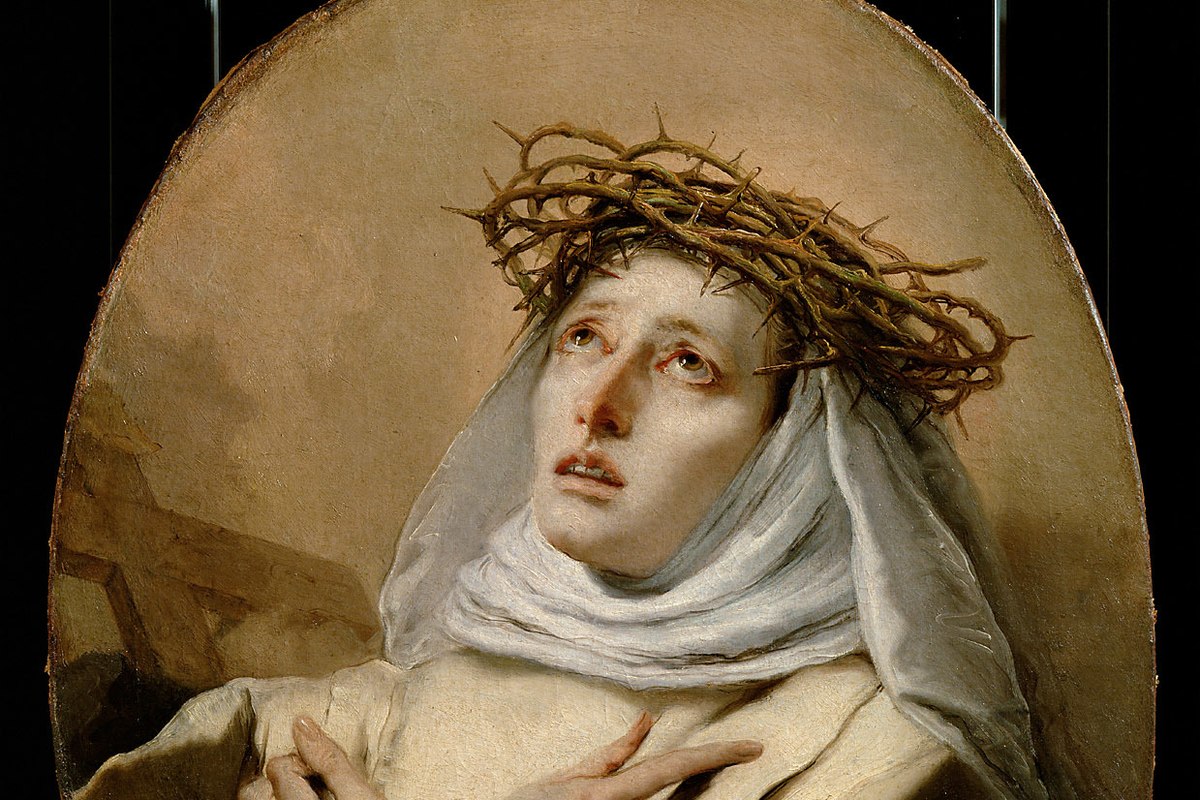
The word "mysticism" is a relatively modern label placed over something much older: the conviction, present from Christianity's earliest centuries, that God can be directly experienced, not just believed in or reasoned about. The desert monks and nuns of fourth-century Egypt already knew this. So did the medieval visionaries of the Rhineland, the reforming nuns of Counter-Reformation Spain, and an Armenian monk writing centuries before either of them was born. What connects these wildly different people isn't a shared method or a shared century — it's a shared claim: that at some point, God became unmistakably, overwhelmingly present to them, and that the experience was too significant not to write down.
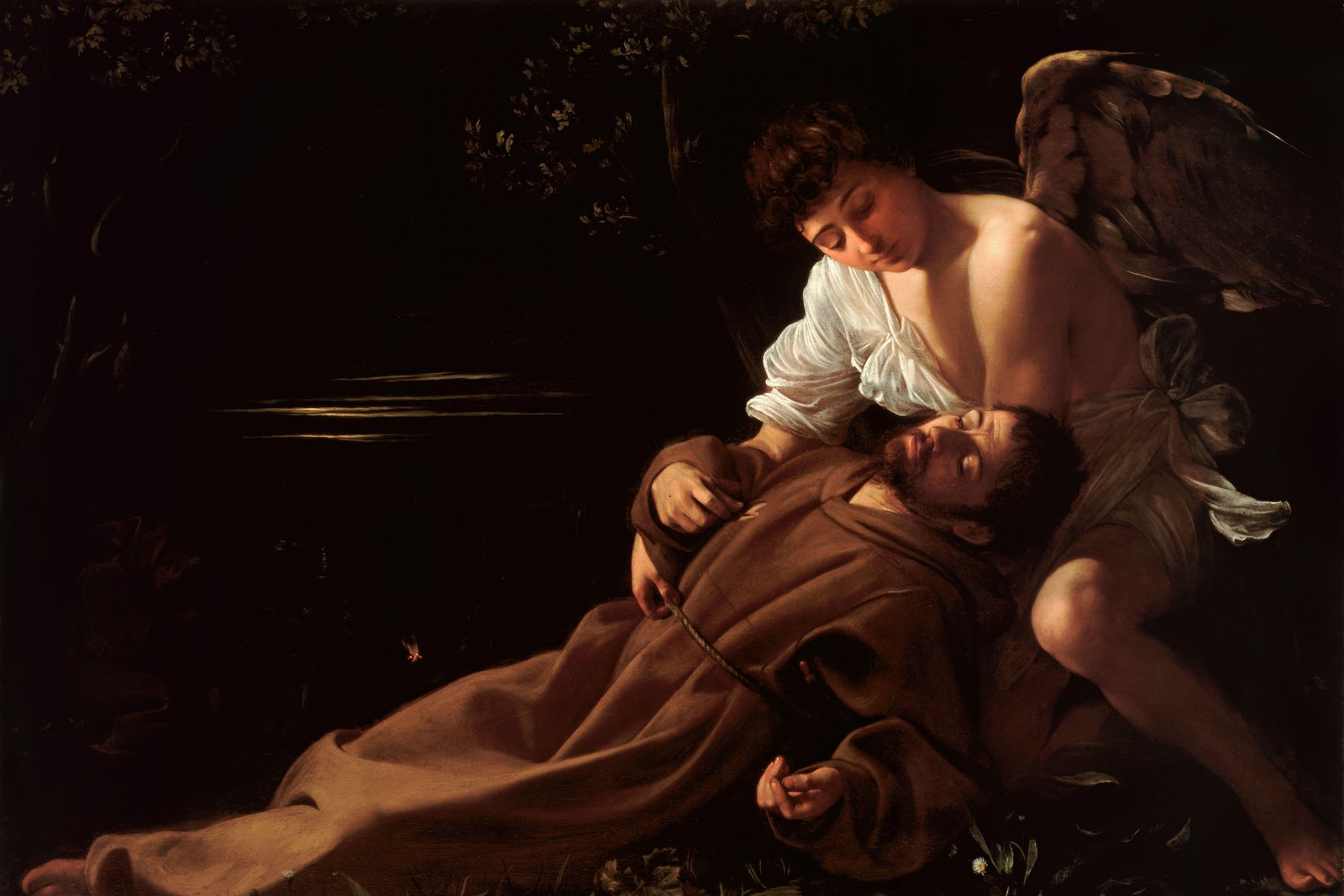
Caravaggio, Saint Francis of Assisi in Ecstasy, c. 1594, Wadsworth Atheneum, Hartford — public domain.
The Church has always treated these accounts carefully. Private revelation, even when formally approved, is never placed on the same level as the Bible or Church doctrine — it's tested against both, not treated as an addition to them. That caution hasn't stopped some of history's most extraordinary mystics from being canonized, and a remarkable number of them from being named Doctors of the Church, a title reserved for saints whose writing shaped Catholic theology itself.
Desert and early-church mystics
Christian mysticism didn't begin in a medieval convent — it began in the silence of the Egyptian desert and the crowded pulpits of the early Church, well before "mystical theology" was a phrase anyone used.
- Saint Syncletica of Alexandria — a wealthy, beautiful young woman who gave away her fortune and walled herself into a tomb with her blind sister, only to find students showing up at her door seeking her guidance.
- Saint Olympias of Constantinople — inherited one of the largest fortunes in the Eastern Roman Empire, gave nearly all of it away, and was exiled for refusing to abandon her friend and spiritual guide, John Chrysostom.
- Saint Euphrasia — a child promised in marriage by the Byzantine imperial court who begged instead to join a desert monastery, and later, free to claim her inheritance as an adult, gave it away entirely.
- Saint John Chrysostom — the greatest preacher of the early Church, whose eloquence earned him the nickname "golden-mouthed" before he died from a forced march ordered by an empress he had offended.
Medieval visionaries
The high and late Middle Ages produced an extraordinary concentration of mystics whose visions were carefully recorded, often by the sisters living alongside them.
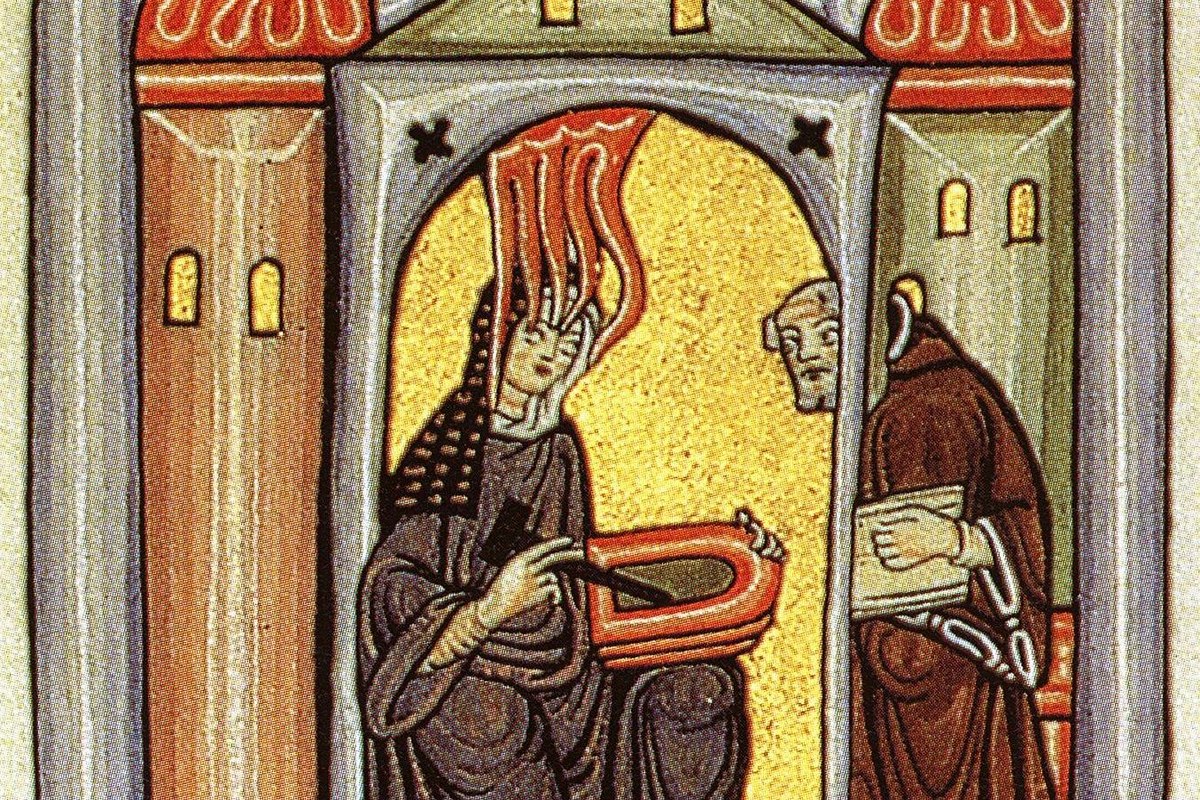
- Saint Hildegard of Bingen — a medieval abbess whose childhood visions became a formally validated theological work, remembered today as composer, scientist, and Doctor of the Church all at once.
- Saint Gertrude the Great — a German Benedictine nun whose private visions of Christ's heart, recorded in her Herald of Divine Love, shaped centuries of later Sacred Heart devotion.
- Saint Mechtild of Hackeborn — for years, two fellow nuns secretly wrote down everything she said about her visions; when she found out, she reported feeling distressed rather than flattered.
- Blessed Jan van Ruusbroec — a Flemish mystical writer whose theology was accused of pantheism by a Paris theologian; Ruusbroec insisted he meant union with God in love, not a merging of essence, a real medieval theological dispute rather than later folklore.
- Saint Gregory of Narek — an Armenian monk who never set foot in Rome, whose church wasn't even in communion with the pope, and who was declared a Doctor of the Church nearly 900 years after his death.
Doctors of mystical theology
A handful of mystics didn't just report their experiences — they turned them into rigorous, lasting theology, work serious enough that the Church later named them Doctors for it.
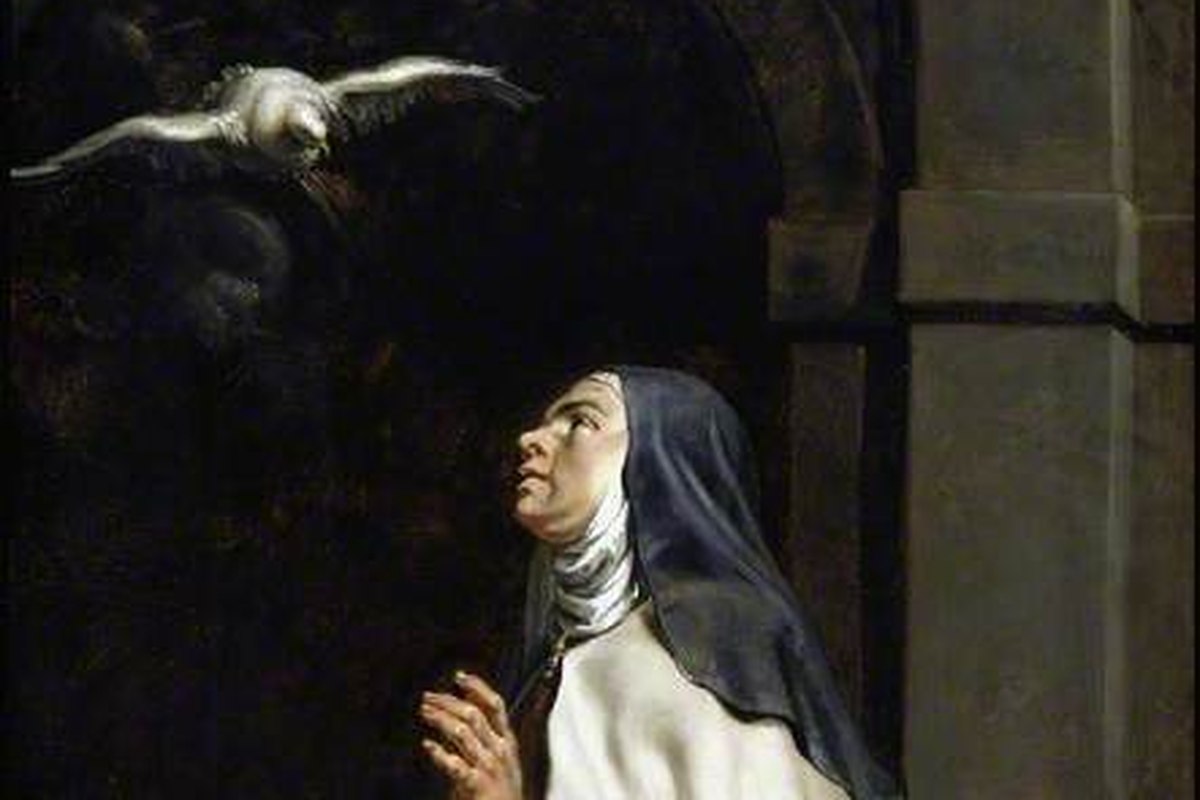
- Saint Teresa of Ávila — one of the first women ever named a Doctor of the Church, remembered for reforming the Carmelite order and for describing what she said an angel did to her heart during a vision.
- Saint Mary Magdalene de Pazzi — a Florentine noblewoman who entered a Carmelite convent seeking silence and instead had ecstasies so vivid that her sisters wrote down her words for forty consecutive nights.
Why their inner lives still matter
What makes this list worth reading together, rather than saint by saint, is how consistent the underlying claim stays across a thousand years and several very different cultures: that the interior life isn't a private hobby tacked onto religious practice, but the place where these particular people say they actually met God. Whether a reader takes every reported vision at face value or not, the sheer historical range — a desert widow, a German abbess, a Spanish reformer, an Armenian monk — says something on its own about how persistently this claim has resurfaced across the Christian world.
Want to read more about the theologians and reformers who shaped Catholic thought? Browse the full Saints category for more.
Trivia
What is Christian mysticism, exactly?
How does the Catholic Church decide whether a mystic's visions are authentic?
What is a Doctor of the Church, and how many mystics hold that title?
Were medieval mystics mostly monks and nuns, or did laypeople have visions too?
Why do so many mystics describe their experiences as physically overwhelming?
You May Also Like
Related Reading